Momo Notices
Your First Pen Pal Letter: Examples for Adults—and a Black-and-White Film
Write your first pen pal letter with three examples for adults, simple ways to make them your own, and a black-and-white film about correspondence.
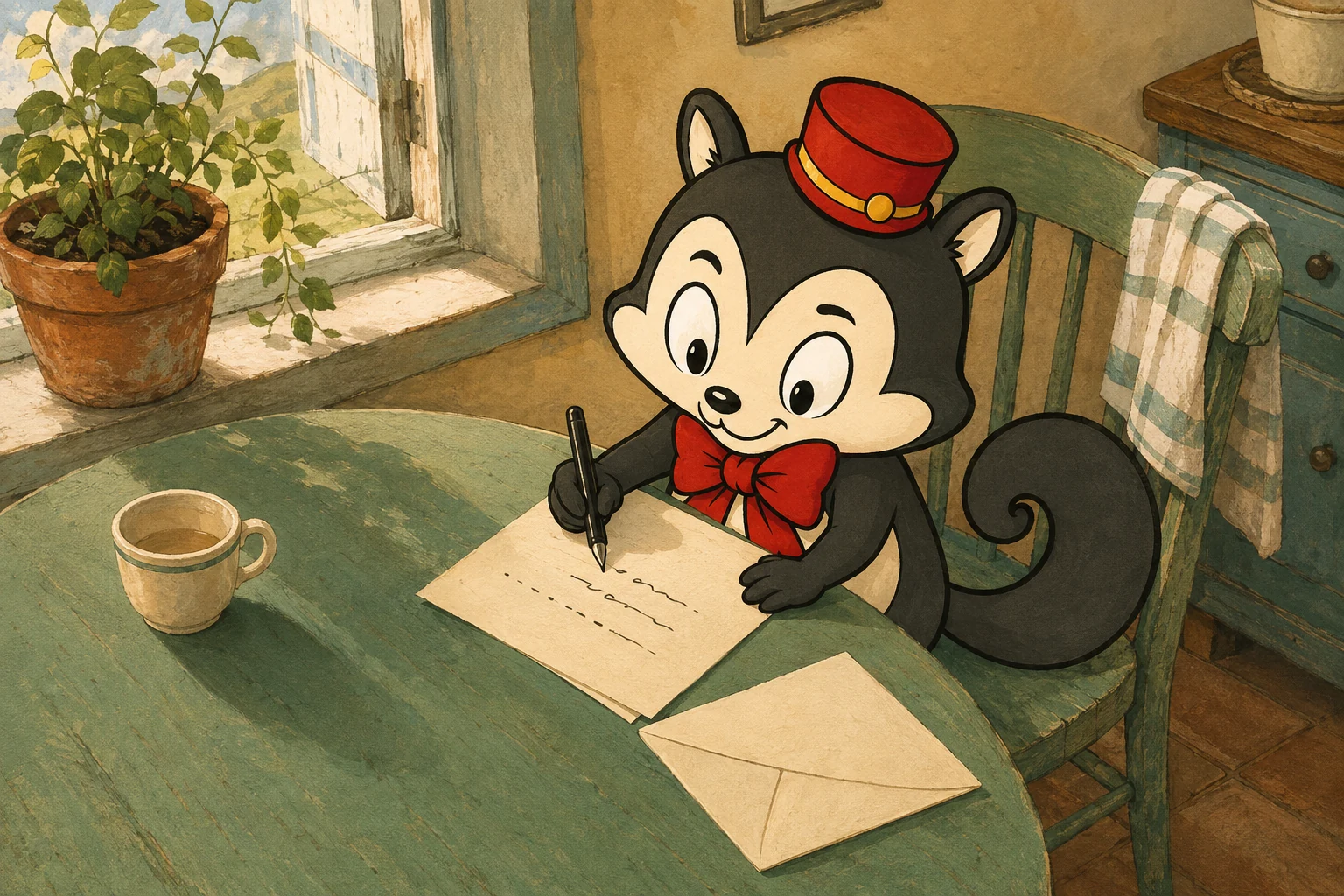
For a first pen pal letter, introduce yourself briefly, say why you wanted to write, share something concrete from your day, and offer an easy question to pick up. Finish with a friendly sign-off. That is a useful starting shape, with room to leave things out or change the order. You can begin with an ordinary week and a few honest sentences.
Three first pen pal letter examples for adults
These three fictional examples are written for adults who have already agreed to exchange letters.
A. A short, easy first letter
Hi Alex,
I’m Sam, and I’m glad we’ve decided to write to each other.
I’ve just started a jigsaw of a seaside town. The buildings are going well, but I keep putting pieces of sky into the sea. It’s taking over the table.
What do you like to do when you have an evening to yourself?
All the best,
Sam
Make it yours: Choose this approach if a long introduction is stopping you from starting. Replace the jigsaw with something you have actually been doing: watching a programme, sorting a cupboard, trying a new breakfast. The other person could respond to that detail or tell you about their own evenings. You have given them a starting point without asking for their life story.
B. Start with something in their profile
Dear Morgan,
It was your windowsill plants that made me want to write. You mentioned growing things in a small flat, which is something I’ve recently started trying too.
I’m Casey. I have two pots of herbs by the kitchen window, so I’m still very much a beginner. Last weekend I used most of the parsley in one meal. The plant now looks rather bare, and I’m leaving it alone for a while.
I like having something to check on when I get home from work. Even on a day when I’ve done very little else, I tend to stop and see whether there’s a new leaf.
Is there a plant you’ve particularly enjoyed growing? I’d be interested in hearing about something that didn’t go to plan, too.
I’m pleased we’ve arranged to exchange letters. It will be nice to have someone to talk plants with.
Best wishes,
Casey
Make it yours: This suits someone who has noticed a specific shared interest. Replace the plants with something the other person really mentioned, then add your own recent experience of it. You do not need matching expertise. Here, Morgan could describe a favourite plant, an unsuccessful attempt or the pleasure of checking on something they are growing.
C. Begin with an uneventful week
Hello Rowan,
I’m Jamie. Since we agreed to try writing letters, I’ve been waiting for a more eventful week. This one has mostly involved work, washing and trying to remember what I went to the shops for. So I thought I’d start with that.
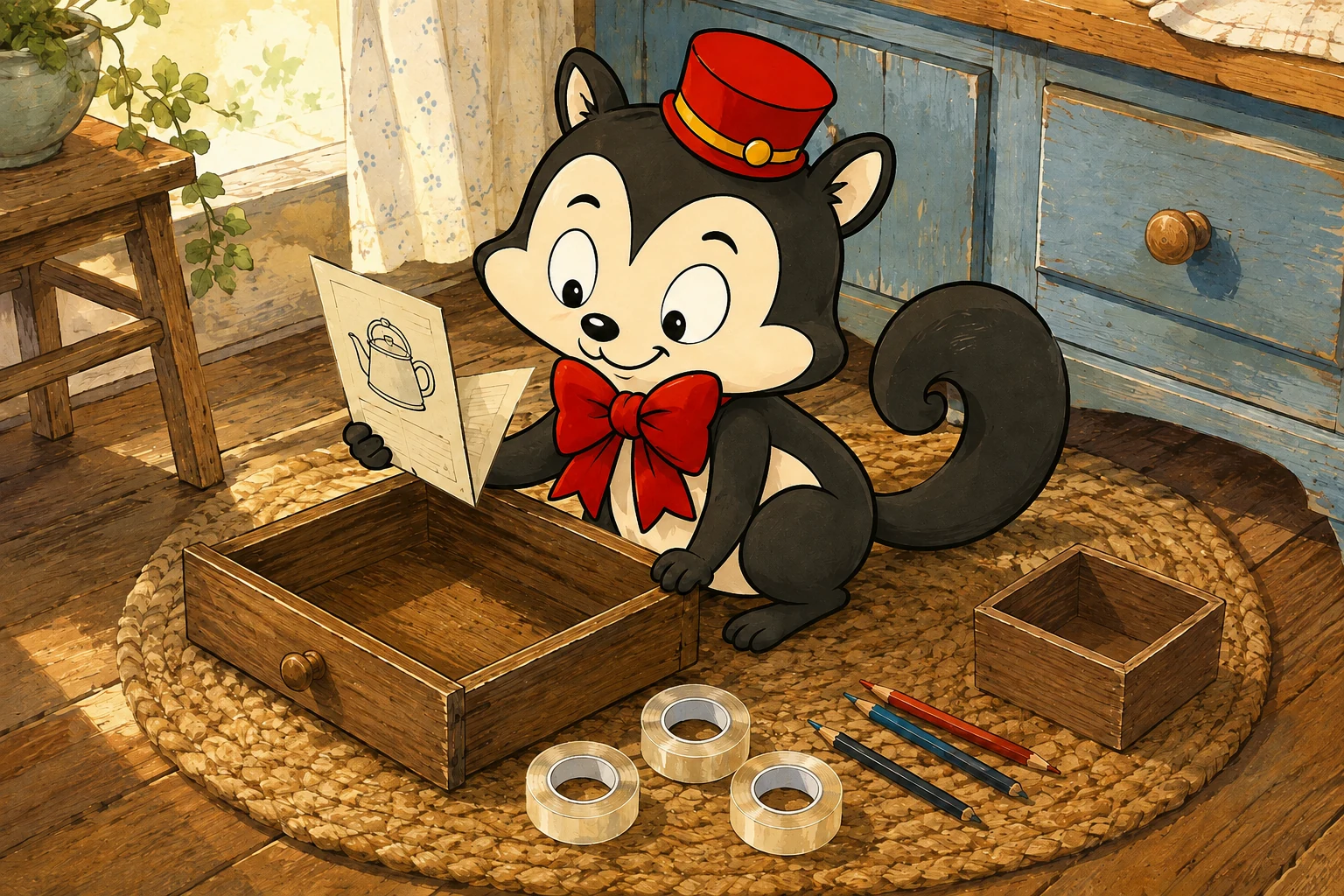
Yesterday I sorted out a drawer that wouldn’t close properly. It contained three half-used rolls of sticky tape and the instruction booklet for a kettle I no longer own. I had been pushing everything back in for months rather than looking through it.
The drawer closes now. It was a small job, but I’m pleased to have stopped getting annoyed with it every morning. I’m usually quite happy to leave these things until they become inconvenient.
Have you changed anything small at home recently, or is there something you’ve been meaning to get round to?
I’d be glad to hear whatever part of your week you feel like sharing.
Take care,
Jamie
Make it yours: Use this when a list of hobbies tells you little about what to write. Choose a small event you remember clearly, then add what you thought about it. Jamie offers a mild frustration and a small satisfaction, leaving Rowan room to answer about their own habits or an unrelated part of the week. Your event does not need a funny ending or a lesson.
Turn a sample into your own letter
Keep the example’s approach and replace the details with your own. Start by choosing one true thing you want to share. Then ask yourself what you would say about it if someone were sitting with you: what happened, what you liked, or what you are still wondering about.
A broad statement can stay in the letter. One extra sentence can give the other person more to respond to:
- ‘I like reading.’ → ‘I’ve been reading a collection of short stories, usually one before bed. I like being able to finish something before I turn out the light.’
- ‘I enjoy cooking.’ → ‘I’ve been trying to make a packed lunch I still want to eat by lunchtime. This week’s success was leftover potato salad.’
- ‘Not much has happened.’ → ‘The supermarket has moved everything around. I went in for washing powder and came out with biscuits, but no washing powder.’
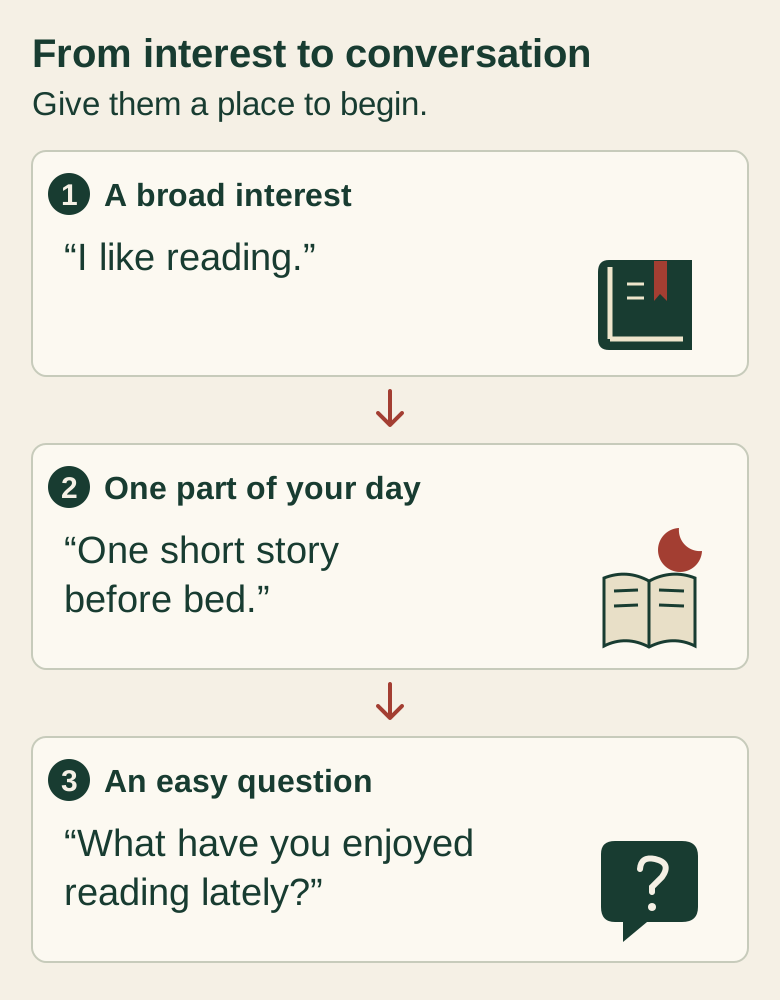
Use the same move from general to specific with details from your own day. A preference, a routine or a small annoyance can be enough. You can also simply say why you would enjoy corresponding—perhaps you would like to get to know someone through conversations that continue from one letter to the next.
Before sending, read your draft aloud. Replace anything you would never normally say. If ‘Dear’ feels comfortable, use it; if you would naturally say ‘Hi’, that works here too. You do not have to preserve the sample’s vocabulary to keep its friendly tone.
A simple structure to adapt
Use this to decide what goes where. Replace the brackets, remove the prompts and join the parts in a way that sounds like you. You can leave out a part that adds nothing.
Hi [their name],
I’m [the name you use]. [Why you wanted to write to this person, or a brief reference to your agreement to exchange letters.]
[Something you have been doing, noticing or thinking about recently.] [One detail, followed by your reaction to it.]
[An easy question connected to that topic, or something they have already mentioned.]
[An optional friendly closing sentence.]
Best wishes,
[Your name]
Age, occupation and location are optional parts of the introduction. You can add a broad region or something general about your work if it helps, but the letter can introduce you through what you choose to talk about.
If you have not agreed to exchange letters yet
A first approach can be shorter than the examples. Use the contact route the person has offered for new pen pals, mention what interested you, and ask whether they would like to correspond. ‘Would you be interested in exchanging letters?’ fits this stage. Save ‘I’m glad we’ve decided to write’ for after you have agreed.
Give them something easy to answer
Choose a question you would enjoy answering yourself. It helps to offer your own experience alongside it, as the examples do. That gives the recipient something to respond to even if they do not have an answer to the exact question.
You might ask:
- What have you enjoyed doing recently?
- You mentioned [an interest]—what do you enjoy about it?
- Is there a meal you keep coming back to?
- Have you found anything useful or enjoyable lately that you would recommend?
Pick what fits the letter; there is no need to use the whole list. Leave room for the other person to take the conversation elsewhere. Questions about income, relationships, exact whereabouts or painful experiences ask for more than you need to begin a friendship.
How much should you write—and how polished should it be?
A few short paragraphs are a reasonable place to start. Example A is a complete first letter. If you have more to say about a shared interest, give that subject more space, as in Example B. Stop when you have introduced yourself, offered something to talk about and reached a natural ending. You can save other topics for later.
Aim for readable rather than immaculate. If handwriting is difficult, type and print the letter, or use the digital format you have agreed on. If you write by hand, leave space between paragraphs and use ink that is easy to see. A crossed-out word does not require a fresh sheet.
If English is not your first language, use words you know and sentences you can comfortably understand. You may want to mention that you are still learning. You can ask whether the other person would enjoy a language exchange, but there is no need to make either of you responsible for correcting every mistake.
Ordinary paper is fine. For post, use an envelope that fits it and the correct postage. Special stationery, drawings and decorations are optional. You do not need to buy anything ornamental, and a gift is not part of the introduction. Leave out extras you have not agreed to exchange; the letter gives you enough to begin with.
End warmly, without setting a deadline
‘All the best’, ‘Best wishes’ or ‘Take care’, followed by your name, can finish the letter on their own. If you want a closing sentence, try ‘I’d be glad to hear about your week if you feel like writing.’ You can express interest without asking for a quick reply or a promise of lasting friendship.
Avoid committing yourself to a schedule you may not want to maintain. If correspondence continues, you can discuss what pace suits you both. Post can be delayed or lost. [1] People also need time and opportunity to write. A slow reply does not, by itself, explain how someone feels about you.
Choose what to share, including where to receive post
A public profile, an introductory online message and a postal address exchange serve different purposes. You can describe your interests publicly while keeping your full name, home address and workplace details private. An initial message can stay with the same general topics.
For letters sent directly between you, agree privately on the names and postal addresses to use. Share an address where you can receive post and that you are comfortable giving to this correspondent. If you use a penfriend scheme, check how it shares details and what you have agreed to. Neither arrangement requires you to publish an addressed envelope online.
Treat the other person’s address and letter as private too. Ask before sharing either. Postcrossing’s own community guidelines likewise distinguish private postal exchange from making addresses and messages public. [1]
If you are not ready to share a receiving address, you can agree to continue online. Before posting, check the recipient’s details and your postal operator’s addressing and postage guidance.
A black-and-white film for letter writers: The Shop Around the Corner
Once your letter is ready, The Shop Around the Corner (1940) offers a different kind of correspondence to enjoy. Ernst Lubitsch’s black-and-white romantic comedy stars James Stewart and Margaret Sullavan as Alfred and Klara, colleagues in a Budapest shop. They clash at work while becoming attached through letters, unaware that the person they are writing to is the colleague they find so irritating. [2]
For someone beginning a correspondence, one pleasure to follow is the difference between how Alfred and Klara regard each other at work and how they imagine the person behind the letters. Notice how much room a written exchange leaves for imagining its writer, and what happens when everyday encounters complicate that imagined person. You can also enjoy the anticipation of another letter: the relationship continues in what each person hopes to read next.
Our guide to The Shop Around the Corner offers a further introduction. You can enjoy the film’s anticipation, misunderstandings and affection after sending a much simpler letter of your own.
References
- Postcrossing, ‘Postcrossing Community Guidelines’, ‘Postal services are not always perfect’ and ‘Keep private information private’.
- Roger Fristoe, ‘The Shop Around The Corner’, Turner Classic Movies, 16 December 2002.
On screen
Films discussed
- The Shop Around the Corner (1940) · Ernst Lubitsch
Want a recommendation shaped around your evening? Ask Momo what to watch next →