Trail Nº 04
When the screen bursts into colour
The 'colour miracles' of the black-and-white age — and why this site keeps a little colour.
Choose tonight’s film
- 01
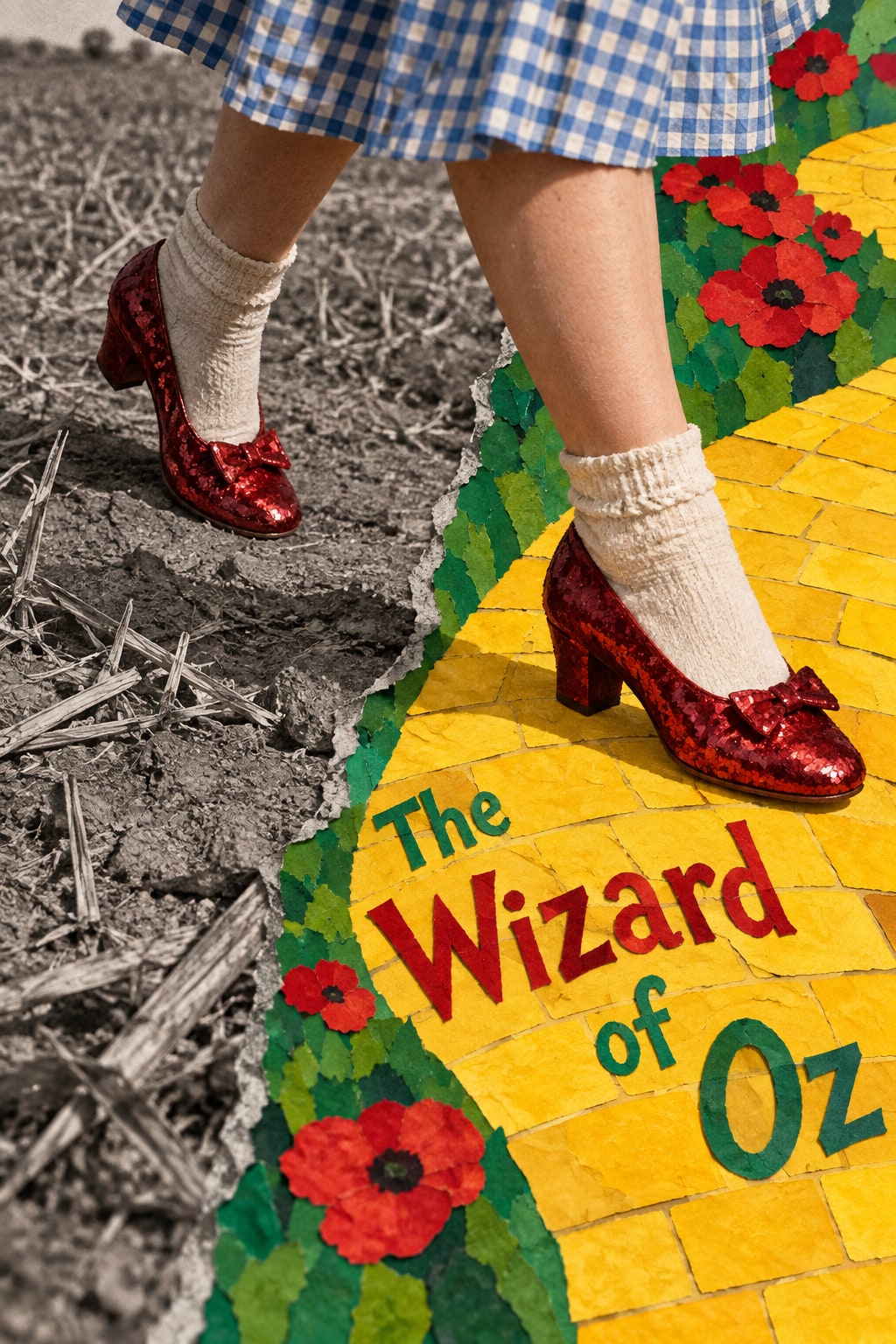
The Wizard of Oz (1939) If you only watch one
Start here for the change itself. Colour marks a boundary between worlds; the contrast gives the arrival its force.
Runtime shown: BFI 98-minute presentation record.
- 02
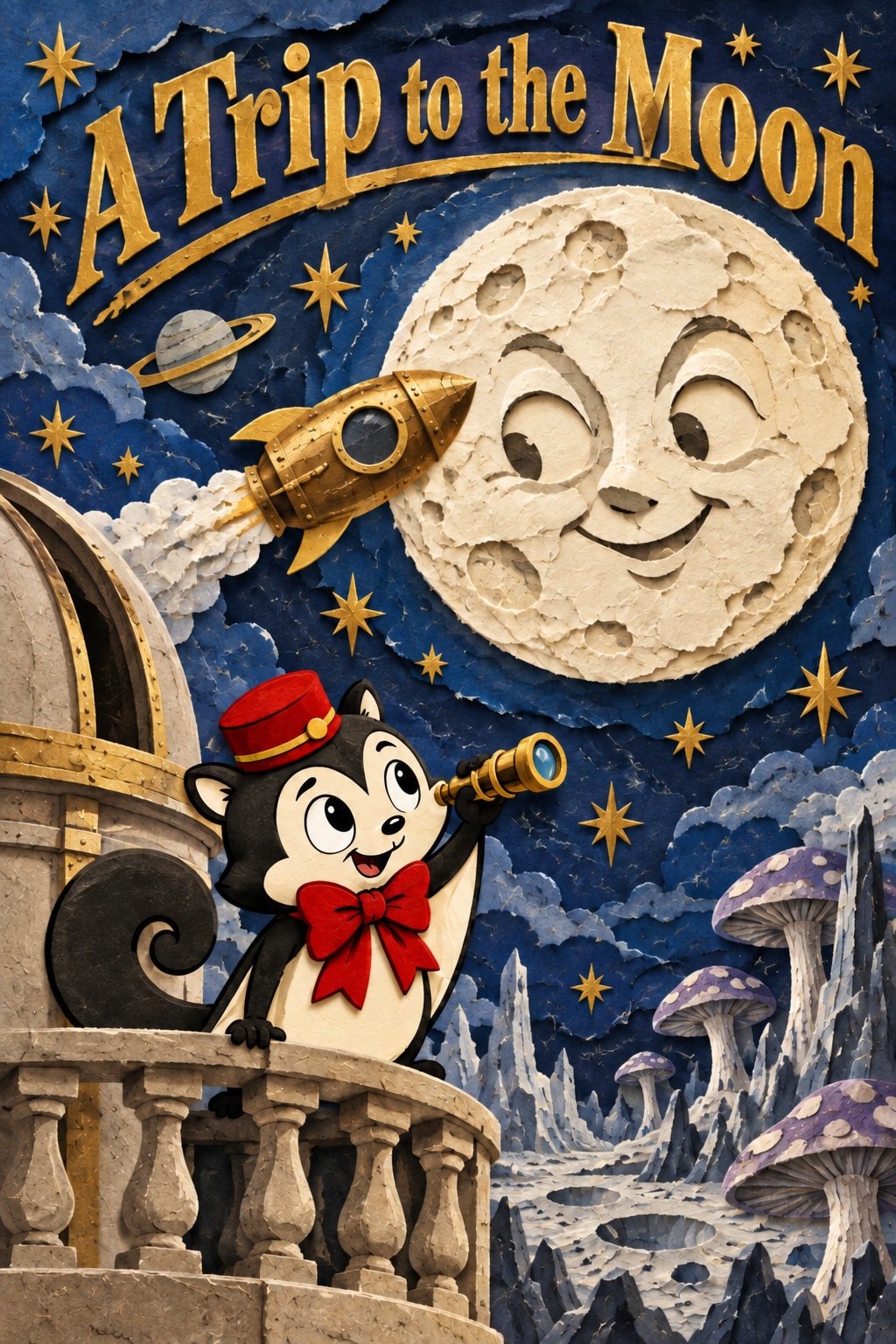
A Trip to the Moon (1902)
For this comparison, choose the restored original-colour version. Colour belongs to the painted fantasy across the journey, rather than arriving at a single doorway. A monochrome copy cannot show you that difference.
Choose the colour restoration, not just the title
Lobster Films lists the restored colour film at 15 minutes, with several musical options. Its DVD/Blu-ray package is French-language only and also includes a black-and-white version as a bonus. The 11-minute BFI presentation listed on our Film page is a separate record; that runtime does not identify this colour restoration. Check the edition and language before choosing a copy.
Why this order works
Start with The Wizard of Oz, where colour arrives as a threshold you can feel: the familiar world gives way to something suddenly heightened. It makes the idea of colour as an event immediate, not technical. Then step back to the restored colour version of A Trip to the Moon, whose smaller, handmade wonder lets colour feel playful and precious rather than seamless. The reverse journey is the point. Instead of tracing a tidy march toward realism, it reveals two different kinds of enchantment — one expansive, one miniature. Seen together, they explain why Monocurator treats colour as an accent: rare enough to notice, warm enough to remember.
More trails
Further reading
Sources
Finished the trail? Ask Momo for the next film →