See Films Differently Film Music
Three Songs That Stay After the Film Ends
Five unforgettable songs in movie scenes—from Saturday Night Fever and Pig to Sing Street, Love Me Tonight and San Francisco—and what each one changes.
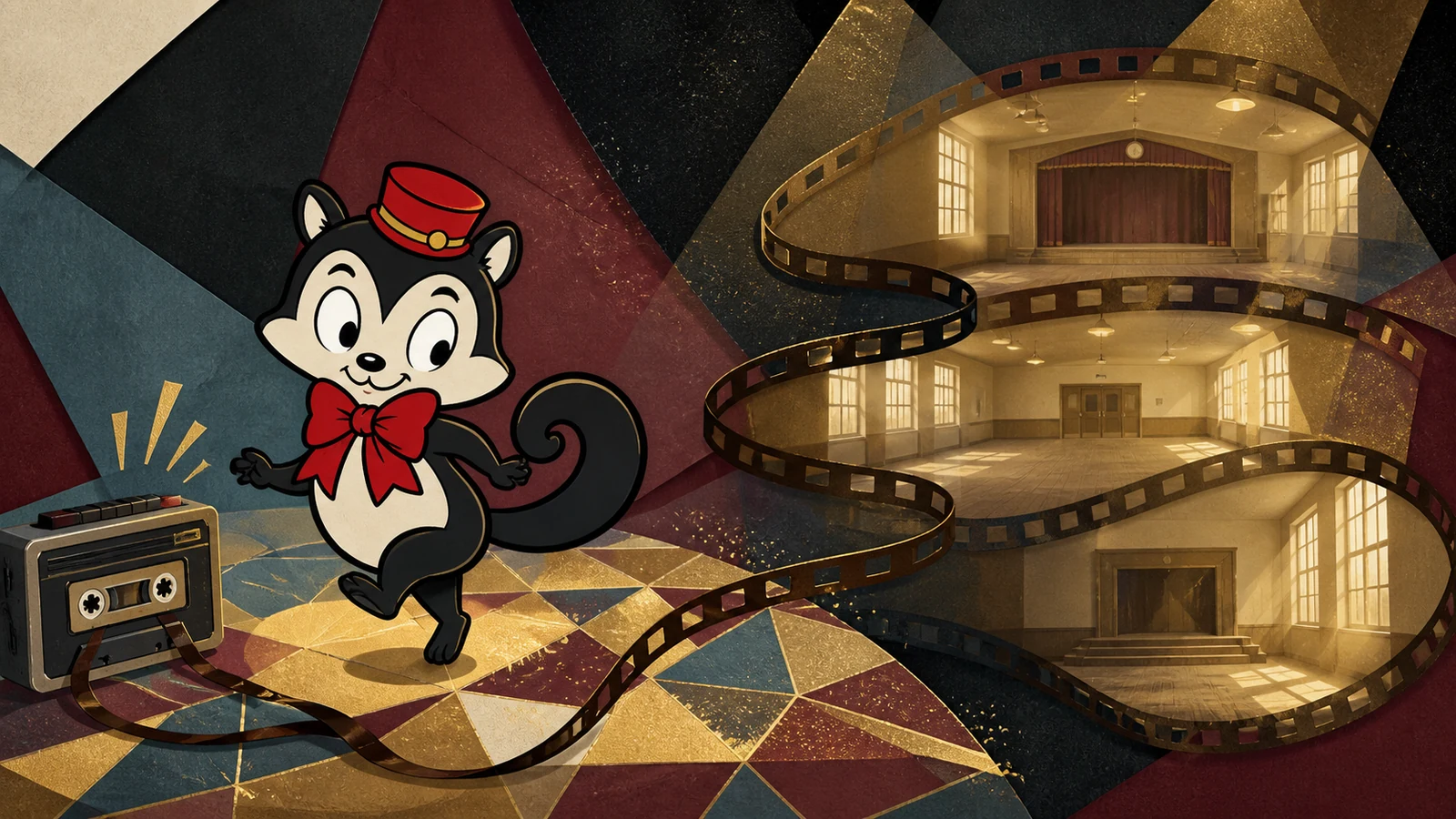
Every time the song plays, the scene returns with it. These are three songs that a film has made impossible to hear alone.
Spoiler note
This essay discusses the dance competition in Saturday Night Fever, the ending of Pig, a late sequence in Sing Street, and the final scene of the black-and-white film San Francisco. A short warning appears before the largest revelations, so you can skip any section you would rather meet for yourself.
There are countless songs I like because they appeared in films. A smaller number have become inseparable from a particular room, a quality of light, or the expression on an actor’s face. Even when I mean to listen only to the music, the scene comes back.
The three songs here belong to that smaller group. One accompanies a young man carrying an uncertainty he cannot yet name. One holds the voice of someone who is no longer there. One gives perfect form to an event that never happened. Each time the music starts, a few minutes of cinema begin moving again.
Five film-song scenes at a glance
| Song | Film | What the song changes in the scene |
|---|---|---|
| “More Than a Woman” | Saturday Night Fever | Public attention becomes a private rhythm between two dancers. |
| “I’m On Fire” | Pig | A cover becomes a cassette carrying an absent person’s voice into the present. |
| “Drive It Like You Stole It” | Sing Street | An ordinary school hall becomes the ideal life Conor can imagine but does not yet have. |
| “Isn’t It Romantic?” | Love Me Tonight | Editing lets one melody cross distance and connect two people before they meet. |
| “The Battle Hymn of the Republic” | San Francisco | A displaced crowd borrows a shared pace before the city has been rebuilt. |
The first three are the personal list at the centre of this essay. The final two are a black-and-white-film coda: not extra names added to reach five, but two different demonstrations of what a song can do to cinematic space and time.
3. “More Than a Woman” — Bee Gees, Saturday Night Fever
Many people remember Saturday Night Fever (1977) as a preservation of disco at its most glamorous: the white suit, the illuminated floor, the Bee Gees’ falsetto. “More Than a Woman” offers a different kind of beauty from Tony Manero’s sharper solo dancing.
The moment that stays with me is the competition dance performed by Tony and Stephanie to the Bee Gees recording. [1]
The introduction begins and the pair walk on to the floor. The surrounding spectators watch them. Tony receives that attention without shrinking from it, moving towards the centre, keeping his distance from Stephanie, then allowing the song’s smooth tempo to take over.
Being watched does not make him stiff. The more the room looks, the more natural his movement becomes. For the length of the dance, he has nothing to explain. Whatever remains uncertain outside the music, he knows the next step.
The softness of “More Than a Woman” suits that confidence. The rhythm rises lightly; the layered voices glide rather than press. Tony and Stephanie do not seem to compete with one another. Their movements continue as if each were testing and answering the other’s breath: his arm guides her, her response opens the next shape.
Hundreds of eyes are on them, yet a quieter time forms between the two dancers. Although this is a public competition, the performance has little of the strain of announcing a winner. The spectators’ gaze, the floor changing colour, the two bodies and the Bee Gees’ voices all seem to move at one speed.
The introduction alone is enough to bring back Tony’s entrance and the faces turned towards him. It is less that the song recalls the scene than that the scene has become part of the song.
2. “I’m On Fire” — Cassandra Violet and Tyler Rydosz, Pig
This section reveals the ending of Pig.
Pig (2021) begins as the story of a man searching for a stolen animal. Its destination is quieter: Michael Sarnoski has described the film in terms of grief, mortality and the long process by which loss enters a person’s understanding of the world. [2] [3]
Near the end, Rob returns to his cabin and plays a cassette on which his late wife sings “I’m On Fire”.
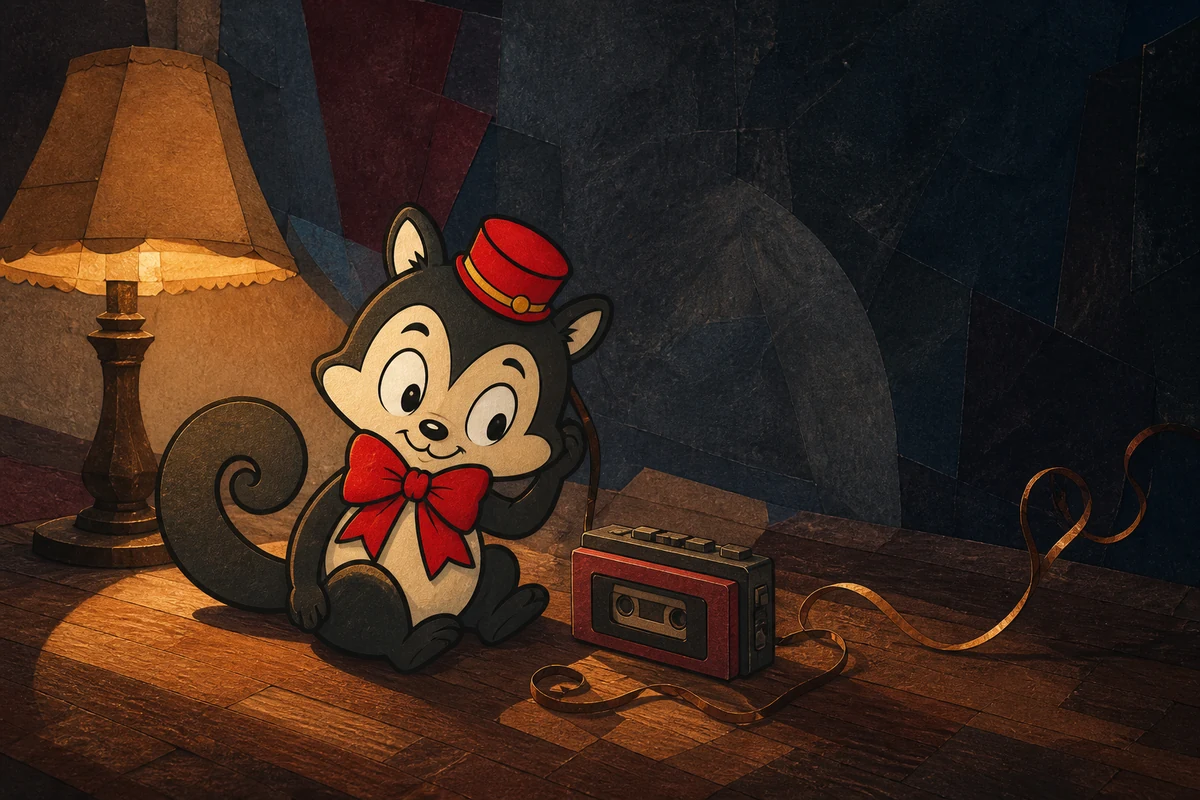
The scene does not ask a large orchestral score to speak on Rob’s behalf. He chooses the tape and presses play. Compared with the cleaner 2-minute 45-second single released under Cassandra Violet’s name, the film narrows and softens the sound until it resembles a well-worn cassette. [4] The exact texture heard in the scene is therefore particular to the film, rather than the version listeners find on the single.
The difference is small, but it changes the emotional object. The released track can be heard as a cover version. In the film, it becomes a private recording that has spent years carrying a voice forward. Some clarity has been lost; in its place is the sensation of time having passed through the sound.
A recording is a strange thing. The person who took the breath is absent, yet the breath, pitch and tremor of the voice still move the air now. The past does not remain sealed in memory: for the length of the tape, it becomes present sound.
Rob’s wife does not return. The cassette does not undo loss. It makes the identity of the absence audible.
The cast credits give that quiet a visual form. Small white serif letters sit within broad black margins, with dotted lines joining character names to performers. Rob’s name meets Nicolas Cage’s across that space. For me, the spare layout lets the last scene linger as I begin to read the names of the people who made it. [5]
That is why the song retains the film’s silence when heard elsewhere. Music cannot rescue a person from the past, but it can take a listener close to where the past is kept. Rob’s act is more intimate than an explanation of grief. It is a call addressed to someone who can no longer answer.
1. “Drive It Like You Stole It” — Sing Street
This section reveals a late sequence in Sing Street.
In Sing Street (2016), Conor starts a band at his new school. The plan begins as a hurried way to impress a girl; through imitation, costume, new songs and repeated attempts, music becomes a language for answering the world around him. [6]
When “Drive It Like You Stole It” begins, the drab school hall suddenly becomes a prom out of an idealised 1950s American film. Clothes, light and movement turn brilliant. The band performs as if it has always known how to fill a stage. Everyone Conor wants to see appears in the role he wants them to play. Affection, family and success occupy one frame without contradiction.
None of it is happening.
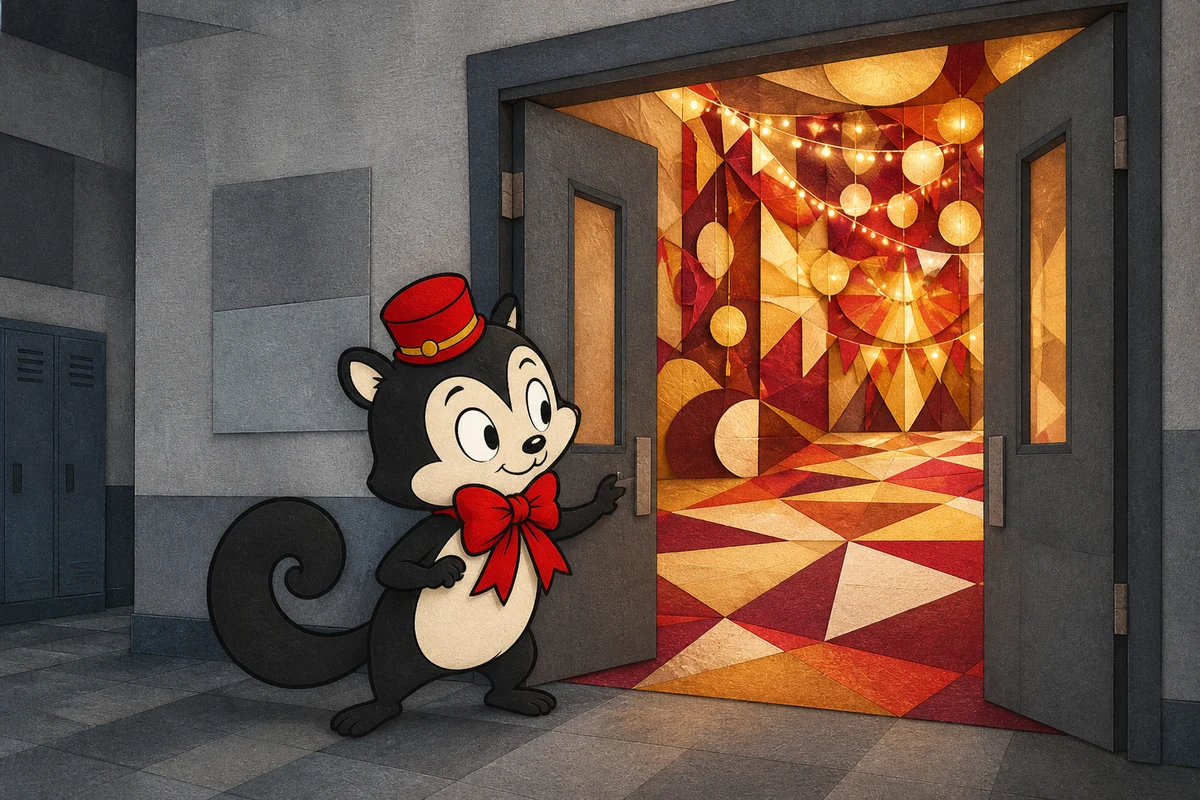
The sequence exists in Conor’s imagination. Gary Clark, who co-wrote the song, recalls John Carney explaining that the music did not need to sound like the real school band because the scene was taking place in the band members’ heads. The polish is part of the fantasy. We hear less what these boys can play at that moment than the best sound they are capable of imagining themselves making. [7]
Does that knowledge diminish the splendour? It does the opposite. Because the happiness is imagined, every detail can be reread as a wish. Whom did Conor want to arrive? Whose smile did he need? What version of himself did he want them to see? A realistic prom might have told us what happened. This invented one tells us what is missing.
“Drive It Like You Stole It” is more than a simple picture of the future. It is a brief trailer for a life in which the damaged present has been repaired and leads cleanly into something better. Conor does not possess that life. He may never possess it in precisely the form shown here.
The fantasy is still truthful. Desire can sometimes identify an absence more accurately than realism. When the song ends and the hall returns to itself, Conor knows what he has seen.
This song comes first because the most joyous scene among the three never exists in the film’s reality. Its absence makes it unforgettable. Music cannot give Conor his ideal life, but for a few minutes it draws the outline in full light.
And in black and white?
A site devoted to black-and-white film, and not one black-and-white film in the top three.
It would be dishonest to adjust a personal list simply to remove that small incongruity. Songs had been making impossible things briefly present on screen long before colour became standard, however. Two black-and-white films make a fitting coda, each carrying music in a different direction.
“Isn’t It Romantic?” — Love Me Tonight
In Rouben Mamoulian’s Love Me Tonight (1932), “Isn’t It Romantic?” is not an ordinary love song passed directly from one singer to one beloved.
A melody begun in Paris travels from person to person, through vehicles and across the countryside, until it reaches a distant château. The woman who finally receives it has not yet met the man who started it. Harvard Film Archive describes how movement, music, dialogue and editing join two people separated by both space and social position. Richard Barrios, writing for the Library of Congress, places this travelling-song sequence at the centre of the film’s formal invention. [8] [9]
The song does more than state a character’s feelings. Editing gives it motion. Each time a phrase ends in one place and is resumed by someone elsewhere, the geography of the film contracts. The central pair have not met, but within the melody they already occupy the same scene.
In Saturday Night Fever, music grants a young man a few minutes in which movement requires no explanation. In Pig, it lets a past voice sound in the present. In Sing Street, it shows an unrealised life in advance. Love Me Tonight creates a connection between two people before their story has begun. The song becomes a courier crossing the distance.
“The Battle Hymn of the Republic” — San Francisco
This section discusses the ending of San Francisco.
W. S. Van Dyke’s San Francisco (1936) places the 1906 earthquake and fire at its climax. After the city collapses and the central characters join a crowd of displaced people, “The Battle Hymn of the Republic” begins. The AFI catalogue records the ending: the crowd sings “Glory, Glory, Hallelujah” while walking back towards the city. [10]
The scene’s direct religious and patriotic feeling may strike a modern viewer as forceful. Some will hesitate as individual suffering is gathered into a communal song. That hesitation need not be explained away.
Alongside the three songs above, though, the ending acquires another shape. Those songs make room for private experiences: an uncertainty suspended, a lost person heard again, a future imagined. What does not yet exist in San Francisco is a rebuilt city.
The crowd is not singing because recovery is complete. Homes, streets and ordinary lives remain destroyed. Music cannot rebuild them. For the moment, it can only draw scattered bodies into a shared pace and direction.
Here a song becomes temporary scaffolding for a community.
The scene a song carries
When “More Than a Woman” plays, Tony steps back on to the illuminated floor. “I’m On Fire” carries the quiet around a cassette and the act of listening for a reply that cannot come. “Drive It Like You Stole It” turns a grey hall into a prom that never took place.
We may think we are replaying only a song. The scene is playing too.
Music gives cinema rhythm, atmosphere and feeling. Cinema returns the favour by placing a new time inside the music: a few minutes without uncertainty, the voice of someone lost, a life not yet lived. In black and white, that power can travel farther still—to two people before they meet, or to a city before it is rebuilt.
When a film ends, its images stop moving.
The song carries the scene outside.
References
- Norman Wexler, Saturday Night Fever: Screenplay (Paramount Pictures, 1977); Saturday Night Fever, directed by John Badham (Paramount Pictures, 1977).
- NEON, PIG Press Notes (2021), including Michael Sarnoski’s director’s statement and the film’s music credits.
- Austin Film Festival and PBS, ‘On Writing/Directing Pig: A Conversation with Michael Sarnoski’, 30 August 2022.
- Cassandra Violet, ‘I’m on Fire (from the Motion Picture Pig)’, single, 16 July 2021. The comparison with the film’s cassette-like treatment is based on direct listening.
- Pig (2021), directed by Michael Sarnoski: end-credit cast list.
- BFI Player, ‘Sing Street (2016)’ (accessed 19 August 2026).
- Jake Kring-Schreifels, ‘The Movie Song Guru’, The Ringer, 26 September 2023.
- Harvard Film Archive, ‘Love Me Tonight’, 20 August 2016.
- Richard Barrios, ‘Love Me Tonight’, National Film Registry essay, Library of Congress.
- American Film Institute, ‘San Francisco’, AFI Catalog of Feature Films (accessed 19 August 2026).
On screen
Films discussed
- Saturday Night Fever (1977) · John Badham
- Pig (2021) · Michael Sarnoski
- Sing Street (2016) · John Carney
- Love Me Tonight (1932) · Rouben Mamoulian
- San Francisco (1936) · W. S. Van Dyke
Continue exploring on Monocurator
Want a recommendation shaped around your evening? Ask Momo what to watch next →