See Films Differently Film history
Was That Old Film Staged? What the Camera Can Still Tell Us
Real streets, staged traffic and fictional outings: what A Trip Down Market Street and People on Sunday can establish about everyday life.
A person can walk along a real street because a filmmaker asked them to. The street, the person and the walk all existed in front of the camera. Whether this was something they would have done without the camera is a separate question.
That is the difficulty with treating an old film as a window onto everyday life. An image may preserve a place while arranging what happens there. Sometimes production records help us separate the two. Sometimes the film gives us a clue. Often, the most useful answer is specific to one action or object, rather than a verdict on the whole film.
A real street, with traffic worth questioning
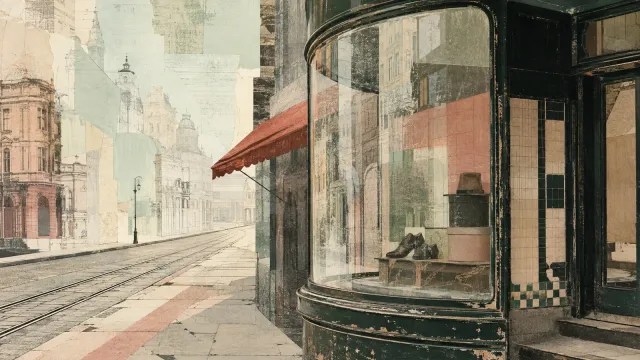
The Miles Brothers’ A Trip Down Market Street (1906) carries a camera through San Francisco towards the Ferry Building. It was filmed from a cable car and made for Hale’s Tours theatres: the journey itself was the attraction. Film historian David Kiehn documents that production context. [1]
The Library of Congress catalogue makes a more particular observation. Motor cars repeatedly circle the moving camera, and the catalogue suggests that the automobile traffic was staged to make the street look prosperous and modern. Its qualification matters: this is an inference about the cars’ repeated appearances, not a finding that every pedestrian and vehicle followed instructions. [2]
A car passing the camera is evidence that the car was there. Several appearances by the same car cannot simply be counted as several independent examples of ordinary traffic. The street remains a record of a place; its apparent bustle needs a different kind of scrutiny.
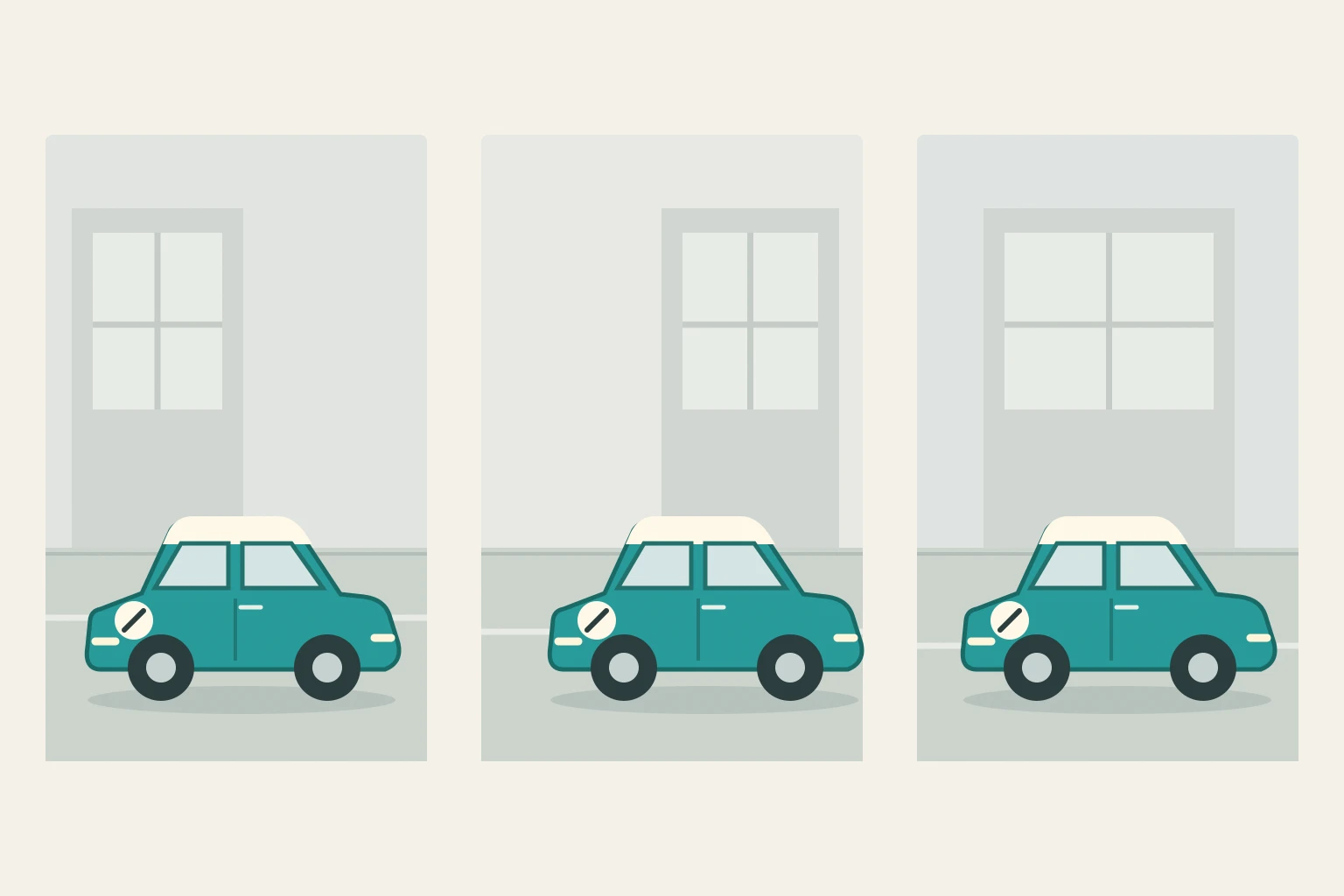
This is more useful than declaring the film fake. It tells us which claim has become difficult to make. We can still examine the space vehicles occupy and the route through the city. Calling the traffic representative of an average day would require evidence beyond this particular ride.
A real job does not make a romance a record
People on Sunday (Menschen am Sonntag, 1930), directed by Robert Siodmak and Edgar G. Ulmer, mixes Berlin locations with a fictional weekend outing. Noah Isenberg’s account explains how its performers used their own names and roles drawn from their occupations. Brigitte Borchert, for example, worked selling records. [3]
That occupation connects a screen identity with a life beyond the production. It does not establish that the relationships in the story record her private life. A real job and an invented courtship can belong to the same character.
Nor would improvisation settle the question. Isenberg reports Borchert’s later recollection of scenes being worked out during production. [3] Making something up together is still a way of making a scene. A moment can feel unforced because the performers have room to respond, without having been secretly observed or left entirely to chance.
The useful distinction is between the experience someone brings to a performance and the situation the film asks them to perform. Both can contribute to its sense of life.
Which version are you watching?
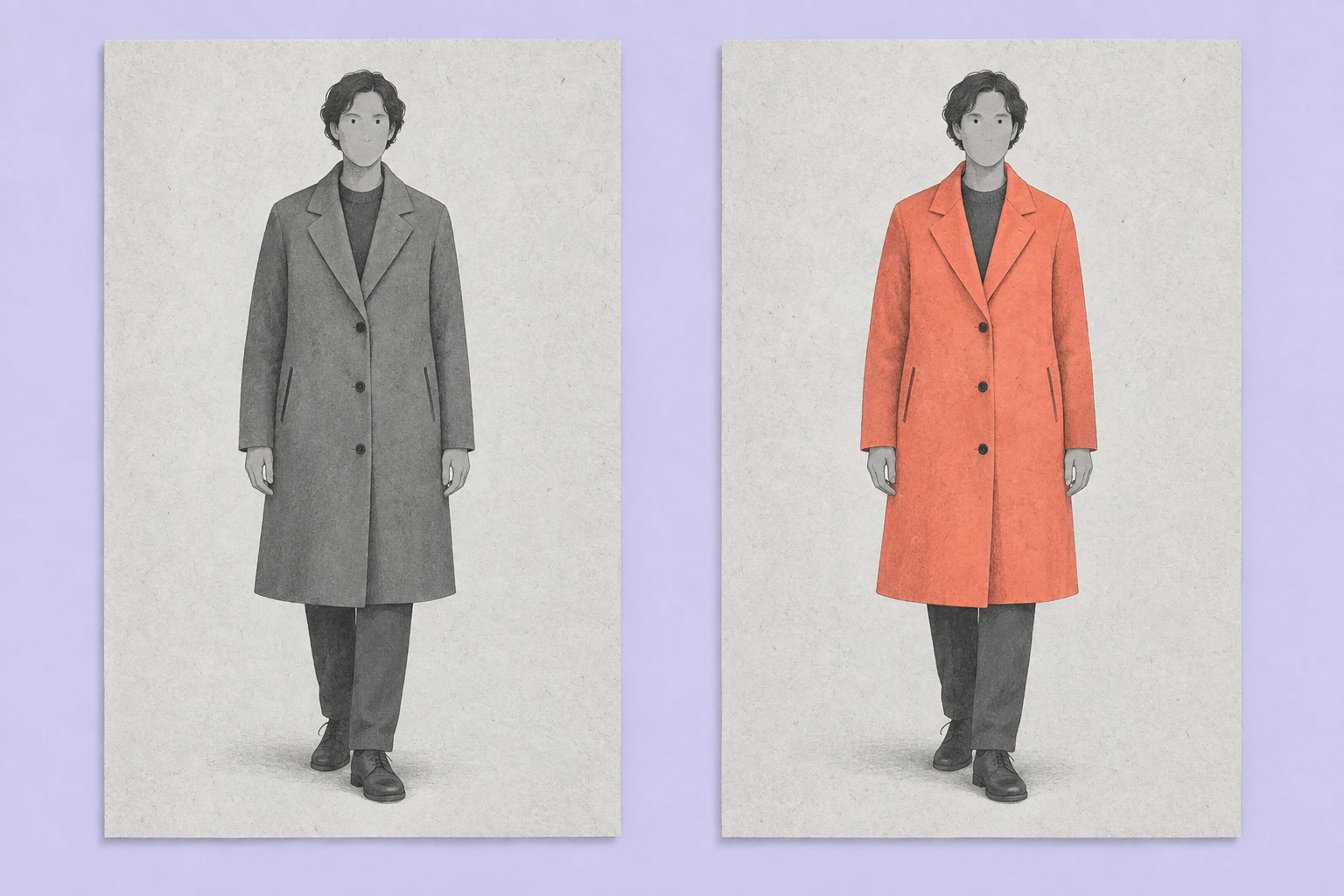
There is another stage to consider before treating an image as historical evidence: what happened to it after filming. Barry Mauer and David Morton’s study of Market Street follows its reuse, including Ernie Gehr’s slowed-down Eureka and a later digitally colourised version by Denis Shiryaev. [4] Those changes belong to the image’s subsequent life. An added colour does not, by itself, establish the colour of a garment in 1906. Altered timing needs to be accounted for before we use the movement to judge somebody’s pace. The version matters as well as the original occasion.
Ask what you want the image to establish
The word real often bundles together three different questions:
| Question | What would help answer it? |
|---|---|
| Was this place or object in front of the camera? | Identifying the location, object and circumstances of filming. |
| Did this action happen without being arranged for the film? | Production accounts, other takes or evidence about the particular action. |
| Was it typical of life then? | Records extending beyond this film and this occasion. |
One answer does not supply the next. Even an unprompted event might be unusual. Equally, a carefully staged scene might draw on familiar routines. A convincing performance cannot tell us, by itself, how often people behaved that way.
There is still plenty of pleasure here. In Market Street, try keeping track of a returning car instead of treating each arrival as a new piece of traffic. In People on Sunday, follow the outing while allowing the performers’ working lives and their fictional relationships to remain distinct. Neither approach requires abandoning the story or turning every frame into a research assignment.
Looking at the background can open a film up. Asking how that background reached the screen gives the curiosity somewhere precise to go: towards the thing you can see, the action that may have been arranged, and the larger claim the image has not yet earned.
References
- David Kiehn, ‘The Brothers Who Filmed the Earthquake’, San Francisco Silent Film Festival, 2006. Production context and the cable-car route.
- Library of Congress, ‘A trip down Market Street before the fire’. Catalogue discussion of repeated automobile appearances and apparently staged traffic.
- Noah Isenberg, ‘People on Sunday: Young People Like Us’, The Criterion Collection, 27 June 2011. Locations, casting and the reported recollection of improvisation.
- Barry Mauer and David Morton, ‘A Trip Down Market Street: A Century of “Eureka” Moments’, Historical Journal of Film, Radio and Television 43(1), 2023, pp. 1–19; first published online in 2022. The sections on Gehr’s reworking and the later digital version; author-shared text.
For the next unexpected question, follow the Journal in your RSS reader.
On screen
Films discussed
- People on Sunday (1930) · Robert Siodmak and Edgar G. Ulmer
Further reading
Read next in the Journal
Want a recommendation shaped around your evening? Ask Momo what to watch next →