Director doorway
Where to Start with Akira Kurosawa
A five-film beginner watch order: Rashomon, Yojimbo, Ikiru, High and Low, then Seven Samurai. Compare runtimes and choose a first film for your mood.
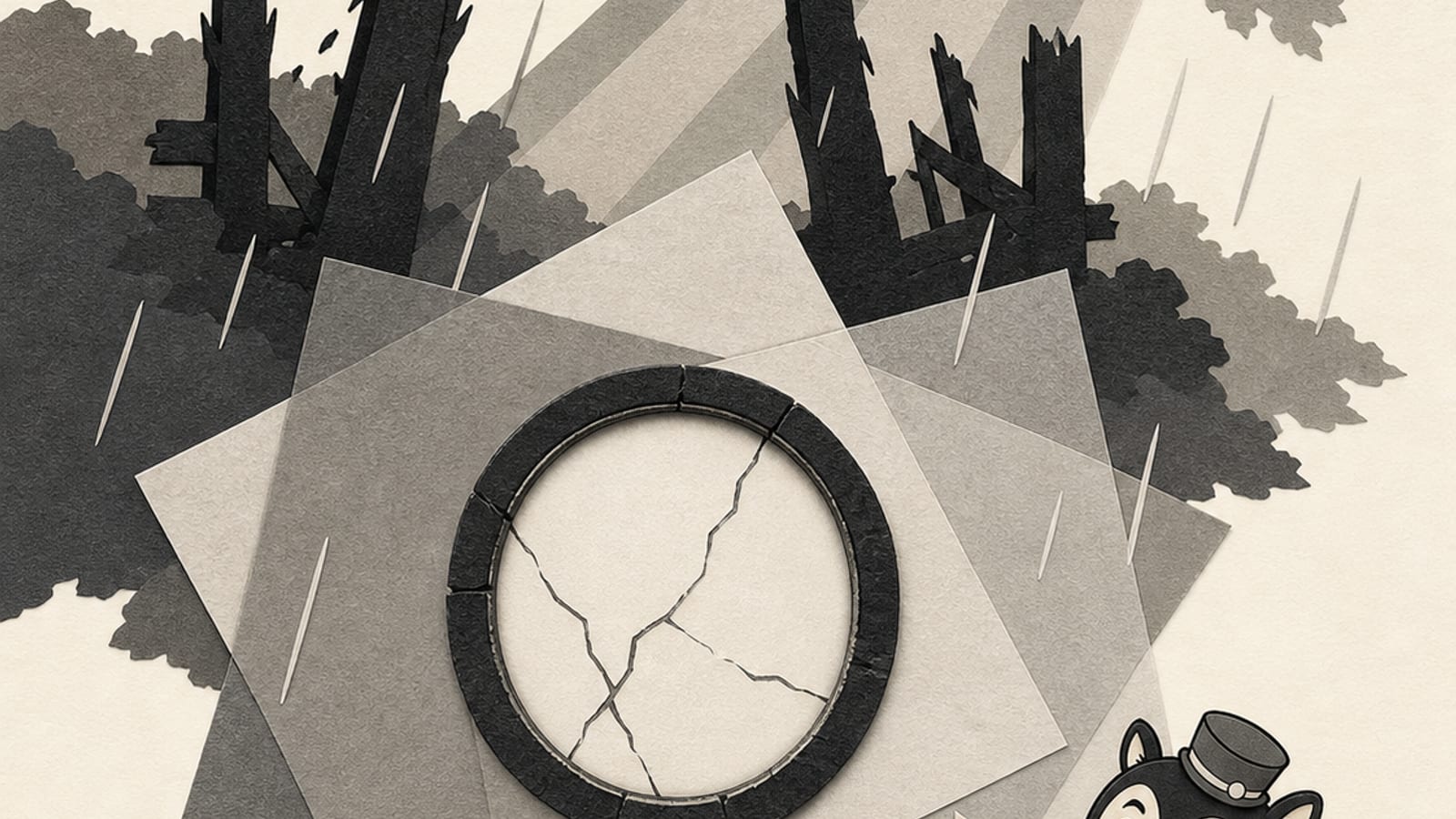
The shortest answer: start with Rashomon. It is an 88-minute mystery, it establishes its situation quickly, and it introduces Kurosawa’s use of weather, movement, faces, and competing testimony without asking for an epic-length evening.
That answer is not a ranking. If mystery is not tonight’s mood, choose High and Low for crime, Yojimbo for fun, Seven Samurai for an epic, or Ikiru for an emotional drama.
Akira Kurosawa does not require preparation so much as a good first door. His films can be swift, funny, frightening, compassionate, or enormous. The mistake is assuming that the enormous one must come first. Browse Akira Kurosawa films in Monocurator to keep his currently covered films together; this practical Kurosawa watch order makes a smaller promise and preserves the same five-film route.
Choose tonight’s starting point
| If you want… | Start with | Official listed runtime | Why this door works |
|---|---|---|---|
| A compact mystery | Rashomon | 88 min | The central conflict arrives quickly, while the contradictory accounts give you something immediate to follow |
| Dry comedy and action | Yojimbo | 110 min | A simple town conflict makes Kurosawa’s timing, blocking, and humour easy to enjoy |
| A humane drama | Ikiru | 143 min | It shows the compassionate, contemporary side of a director too easily reduced to samurai films |
| A crime thriller | High and Low | 143 min | Suspense and spatial design carry a demanding moral problem |
| A full-evening epic | Seven Samurai | 207 min | Its scale becomes inviting once you already trust Kurosawa’s changes of pace |
The runtimes above are the current listings on the Criterion pages checked for this guide. They identify those catalogue presentations; a service or disc listing should still be checked for territory, language, subtitles, and edition details before you pay.
The five-film route
1. Rashomon — the quickest complete introduction
Rashomon (1950) begins at a ruined gate in heavy rain and returns to one violent event through accounts that refuse to agree. That structure sounds academic when summarized. On screen, it is immediate: bodies move through a bright forest, confidence changes from one telling to the next, and every witness seems to perform a version of the self they can live with.
At 88 minutes, it is the easiest place to discover several Kurosawa pleasures at once. The camera moves. The weather matters. A philosophical question is carried by a gripping situation rather than delivered as a lecture.
How to ease in: do not turn the film into a puzzle with one hidden correct answer. Notice what changes in posture, tone, and point of view. Let the contradictions become the subject.
Choose this first if you want a mystery, a compact runtime, or a film that gives you plenty to discuss immediately afterward.
2. Yojimbo — the relaxed, funny doorway
If Rashomon leaves you expecting solemnity, Yojimbo (1961) is the useful correction. A wandering samurai arrives in a town divided by two corrupt gangs and begins testing how easily each side can be manipulated. Toshiro Mifune’s hero appears lazy because he is usually thinking faster than everyone around him.
The pleasure is practical. Watch who occupies the street, who hangs back, and how long Kurosawa delays violence after everyone has prepared for it. Distance and hesitation often create the joke before a sword does.
How to ease in: you do not need to memorize every gangster. Both factions are bad; follow the bargains and reversals. The town’s geography will soon do much of the explaining.
Choose this first instead of Rashomon if you want action, dry comedy, or the most visibly relaxed evening of the five.
3. Ikiru — the emotional center
Ikiru (1952) announces its central fact early: an exhausted civil servant is dying. The film is not built around whether he will escape death. It asks what a meaningful action can look like inside a bureaucracy designed to move responsibility from one desk to another.
Takashi Shimura’s Watanabe is awkward, frightened, and never converted into a polished inspirational hero. That is why the film’s compassion lands. Kurosawa allows comedy, grief, institutional cruelty, and small public action to occupy the same story.
How to ease in: expect two distinct movements. Stay close to Watanabe in the first, then notice how other people reconstruct his choices in the second. You do not need to track every official; keep the small public project at the center in view.
Choose this first if the human question matters more to you than genre, or if you want to understand why Kurosawa cannot be reduced to samurai films.
If you are comparing editions rather than choosing a story, the Ikiru Film page’s version map and checked sources keep each runtime and restoration detail tied to its source and presentation.
4. High and Low — the modern thriller
High and Low (1963) starts in a wealthy executive’s hilltop room, where a kidnapping turns money, status, and responsibility into a moral trap. Then the film opens outward into trains, streets, police rooms, and crowded nightlife.
The change of scale is the design. The first part compresses pressure inside an immaculate home; the second follows an investigation through the city below. Kurosawa keeps returning to architecture and elevation: who can look down, who must climb, and whose pain is treated as leverage.
How to ease in: accept the first section’s confinement and watch where people stand in the room. When the procedural begins, enjoy the accumulation of work rather than waiting for a single detective’s revelation.
Choose this first if you want crime, suspense, or proof that a careful police procedural can feel visually alive.
5. Seven Samurai — make the epic a destination
Seven Samurai (1954) is often treated as compulsory first viewing because it is famous. It is better treated as a destination. Its 207 minutes make room for recruitment, preparation, class tension, weather, waiting, comedy, fear, and finally defense.
Watching a few shorter Kurosawa films first teaches you to trust his changes of pace. By the time you arrive here, the length no longer looks like a wall. It looks like space for a village and a group to become legible one human detail at a time.
How to ease in: give it an evening. Use the intermission if your edition includes one. Think of the film in three movements — recruitment, preparation, defense — and identify the samurai first by role, silhouette, or manner rather than forcing yourself to learn seven names at once.
If you only have one evening
- Under 90 minutes: Rashomon
- Want something fun: Yojimbo
- Want to be moved: Ikiru
- Want a crime thriller: High and Low
- Ready to make a night of it: Seven Samurai
For a broader first route through Japanese classics, follow Your first Japanese classic: Rashomon, Tokyo Story, then Seven Samurai. It changes directors and tempo deliberately rather than trying to compress one filmography into a checklist.
Before you choose an edition
The five Film pages include ordinary, non-affiliate search links for current viewing and reading options. They do not claim that a title is streaming, in stock, or available in every region.
- Check Rashomon options
- Check Yojimbo options
- Check Ikiru options
- Check High and Low options
- Check Seven Samurai options
Use those links as searches, then verify the exact film, edition, language, subtitles, territory, seller, price, and playback compatibility at the destination. A runtime alone does not prove that two listings use the same master or cut.
The route after the first film
If Rashomon works for you, continue to Yojimbo to discover how loose and funny Kurosawa can be. Move to Ikiru next so the route does not mistake period action for the director’s whole range. High and Low then returns to tension through a modern city and a procedural structure. Finish with Seven Samurai, where the patience, movement, comedy, and social observation encountered separately can occupy the same large canvas.
You do not have to follow that sequence rigidly. The point of a route is not to complete a director. It is to find the film that makes the next one feel inviting. Start with the appetite you already have, then let Kurosawa widen it.
If time is the deciding factor tonight, Rashomon is also included in the guide to 15 classic films under 90 minutes.
Sources and checking notes
Sources were checked on July 27, 2026.
- The Criterion Collection: Rashomon — 1950, Japan, Japanese, 88 minutes, 1.33:1, synopsis, cast, credits, and restoration notes.
- The Criterion Collection: Yojimbo — 1961, Japan, Japanese, 110 minutes, synopsis, cast, credits, and current edition notes.
- The Criterion Collection: Ikiru — 1952, Japan, Japanese, 143 minutes, synopsis, cast, credits, and current restoration notes.
- The Criterion Collection: High and Low — 1963, Japan, Japanese, 143 minutes, synopsis, cast, credits, and current restoration notes.
- The Criterion Collection: Seven Samurai — 1954, Japan, Japanese, 207 minutes, synopsis, cast, credits, and current edition notes.
- BFI: Where to begin with Akira Kurosawa — an institutional beginner route that also selects Rashomon as its starting point.
- National Film Archive of Japan: Rashomon at the 70th Anniversary — Japanese institutional context for the film’s 1950 release, production, and international reception.
Availability, pricing, stock, restoration labels, and platform records can change. No current streaming, retailer, or affiliate availability is claimed here.
Continue exploring on Monocurator
Want a recommendation shaped around your evening? Ask Momo what to watch next →