What to expect
12 Angry Men makes deliberation feel like action. With almost all of its drama confined to a jury room, the film turns questions, pauses, shifting alliances, and small pieces of physical evidence into mounting suspense. Sidney Lumet’s direction steadily changes how the room feels, while the ensemble shows how pride, prejudice, fatigue, and conscience can enter a decision that claims to be purely rational. Its courtroom setting is specific, but its larger subject is timeless: what responsible doubt asks of people when another person’s fate is at stake.
How to ease in
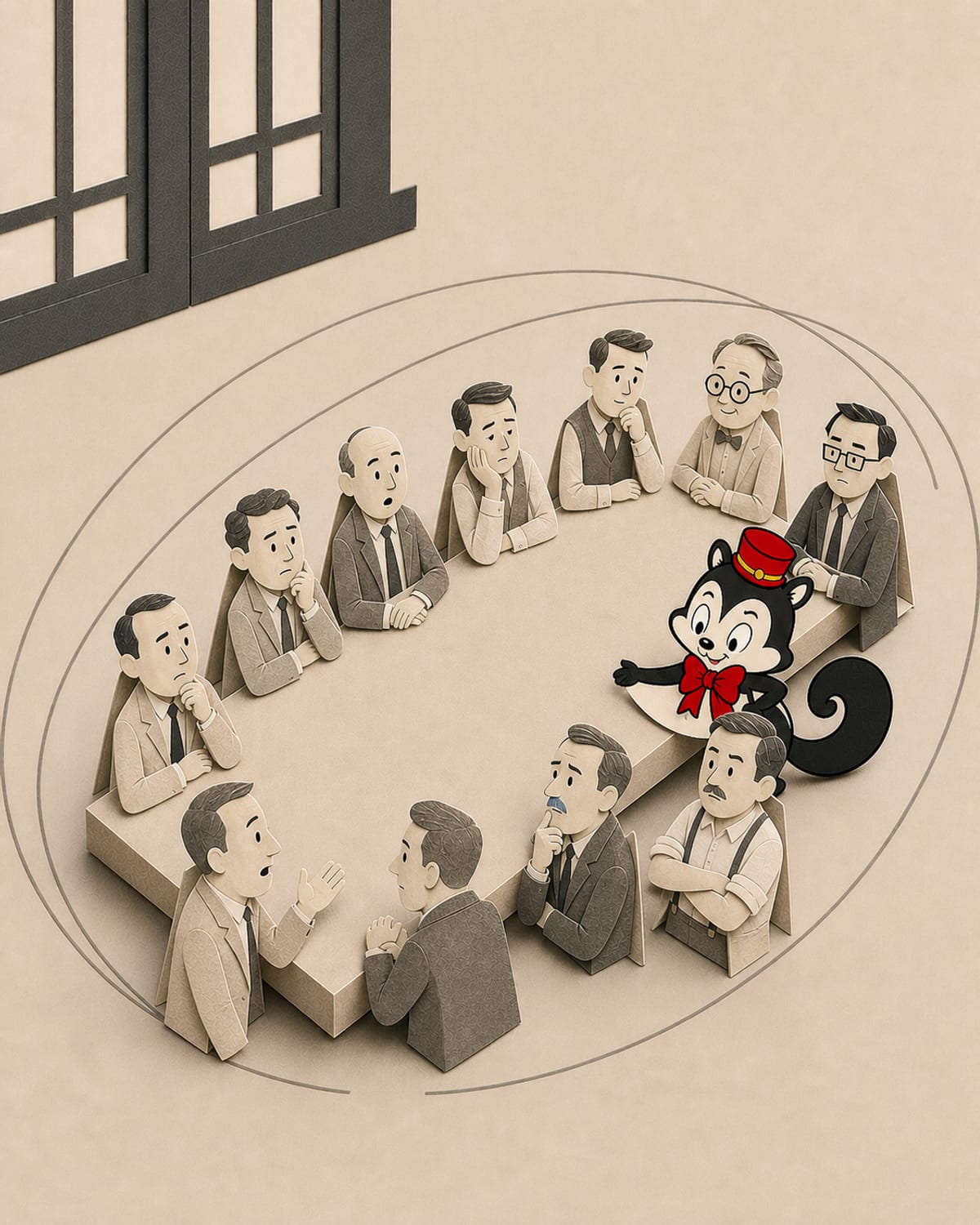
Keep the premise simple: one juror asks the others to slow down. You do not need to track all twelve names—the film gives each man a distinct manner and position. Watch who sits, stands, moves toward the window, or withdraws from the group; the changing use of the room makes the arguments much easier to follow.
Heads-up
One room, no escape, all pressure.
I admire how the room seems to change size as patience wears thin. A table, a fan, and a few windows become enough to measure power and isolation.
Open the note ↓
I admire how the room seems to change size as patience wears thin. A table, a fan, and a few windows become enough to measure power and isolation. The film trusts careful listening to be dramatic, which makes every quiet reconsideration feel earned.
— Momo

Credits & versions
- Cast
- Henry Fonda — Juror 8 · Lee J. Cobb — Juror 3 · Ed Begley — Juror 10
- Screenplay
- Reginald Rose
- Production
- Henry Fonda · Reginald Rose
- Cinematography
- Boris Kaufman
Version map
Ways to watch and read
| Action | Search destination |
|---|---|
| Watch | Check availability on JustWatch |
| Rent | Search rentals on Apple TV |
| Read | Search books on Bookshop.org |
U.S. search destinations · Links checked 2026-07-27 · Stock, editions, prices, and availability can change · Disclosure
Where to go next
Want a gentler, shorter, or stranger next film?
Ask Momo for something like this →
Momo is on shift. Visit Momo Cinema →