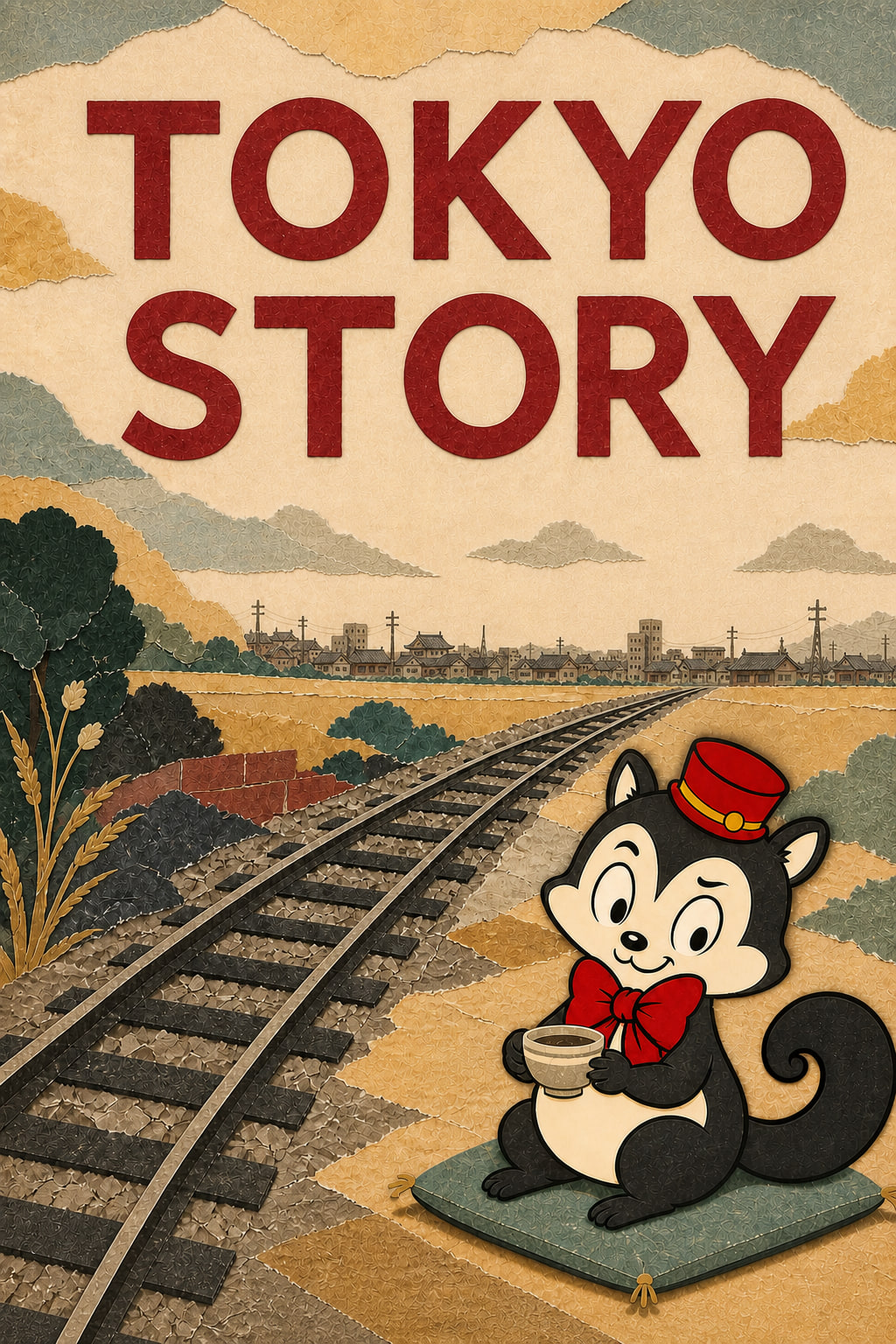
TOKYO STORY lettering above a torn-paper railway and low town skyline, with Momo holding a cup on a cushion.

Image: Monocurator · source · Original Monocurator artwork

Tokyo Story

東京物語

1953 · Japan · Directed by Yasujirō Ozu · 137 min

GentleBleak Approachable · Moderate Drama

Tokyo Story follows an elderly couple visiting their adult children in postwar Japan. For a first watch, place the family relationships first and let its quiet pace reveal where care and obligation pull apart.

Tokyo Story’s family: who is Noriko?

Noriko, played by Setsuko Hara, is Shūkichi and Tomi Hirayama’s widowed daughter-in-law. Her husband was their second son, Shōji, who died in the war. She lives in Tokyo and welcomes the visiting parents into her small home. Shochiku’s synopsis identifies this relationship.

Shūkichi and Tomi are the elderly couple travelling from Onomichi. Their five children connect the film’s three family locations: Onomichi, Tokyo and Osaka.

The Hirayama children, from eldest to youngest
ChildWhere they fitHousehold to recognise
KōichiEldest son · TokyoA doctor with a wife and two sons.
ShigeEldest daughter · TokyoRuns a hair salon; lives with her husband.
ShōjiSecond son · died before the storyHis widow is Noriko, living in Tokyo.
KeizōYoungest son · OsakaThe son the parents visit on their journey.
KyōkoYoungest daughter · OnomichiLives with her parents; remains home during their Tokyo visit.

Shochiku’s family and story record · Criterion’s cast list

Why does the Osaka visit appear so late? Journey and later-story spoilers

The parents have already stopped to see Keizō on their way to Tokyo. That first Osaka visit happens offscreen. The film shows their later stop on the way home, after the Tokyo visit and the disappointing stay in Atami.

  1. KōichiTokyo · eldest son
  2. ShigeTokyo · eldest daughter
  3. NorikoTokyo · Shōji’s widow
  4. KeizōOsaka · youngest son

David Bordwell’s Criterion essay points out that these visits are presented in the children’s birth order, with Noriko occupying her late husband’s place. This is the order of the family visits we see, rather than every stop the parents make.

For what the family’s later parting means, continue to Why Is Tokyo Story So Moving?, which discusses Noriko’s conversation with Kyōko and the ending.

Watch · Rent · ReadWatchRentRead U.S. search links, not availability claims · Disclosure

What to expect

Tokyo Story observes a family visit through everyday rooms, polite conversation, and pauses that say more than open conflict. Yasujirō Ozu's calm, low viewpoint invites attention to small gestures and changing distances between generations. The restraint never makes the emotions smaller; it gives them room to arrive gradually. The film endures because its questions about time, duty, and care feel ordinary in the deepest sense.

How to ease in

The family relationships matter more than plot, so take a moment to place the elderly parents, their adult children, and their widowed daughter-in-law. Ozu often cuts away before a dramatic arrival or departure and returns to the room afterward. Do not mistake those omissions for missing scenes. The film asks us to notice the emotional weather left behind.

Heads-up

A quick, non-exhaustive note Deals with aging, bereavement, family neglect, illness, death, and the loneliness created by changing obligations.
Momo's Note Who is Momo? →

Quiet, domestic, and devastating in the softest way.

Ozu gives empty rooms the dignity of a close-up. A cushion, a corridor, or a view beyond the rooftops can hold what the family is too polite or tired to say.

Open the note ↓

Ozu gives empty rooms the dignity of a close-up. A cushion, a corridor, or a view beyond the rooftops can hold what the family is too polite or tired to say. I find the film compassionate because it does not need a villain. Time rearranges everyone's duties, and kindness appears in imperfect, easily missed portions.

— Momo

Momo with notes about this film

Credits & versions

Credits
Production
Shochiku
Cinematography
Yuharu Atsuta

Version map

Shochiku official catalogue presentation135 min · JPChecked 2026-08-02
Criterion digital restoration from a 4K film transfer137 min · restoration · USCriterion lists this digital restoration at 137 minutes; other presentations may differ.Runtime reference · Checked 2026-08-02

Ways to watch and read

ActionSearch destination
WatchCheck availability on JustWatch
RentSearch rentals on Apple TV
ReadSearch books on Bookshop.org

U.S. search destinations · Links checked 2026-07-27 · Stock, editions, prices, and availability can change · Disclosure

Where to go next

Want a gentler, shorter, or stranger next film? Ask Momo for something like this →
Momo is on shift. Visit Momo Cinema →
Continue through the catalogue →