See Films Differently Momo Notices
Does a Big Film Need a Big Question?
A jury room can hold a large argument; a constructed city can make small encounters count. 12 Angry Men and PlayTime test what we mean by a big film.
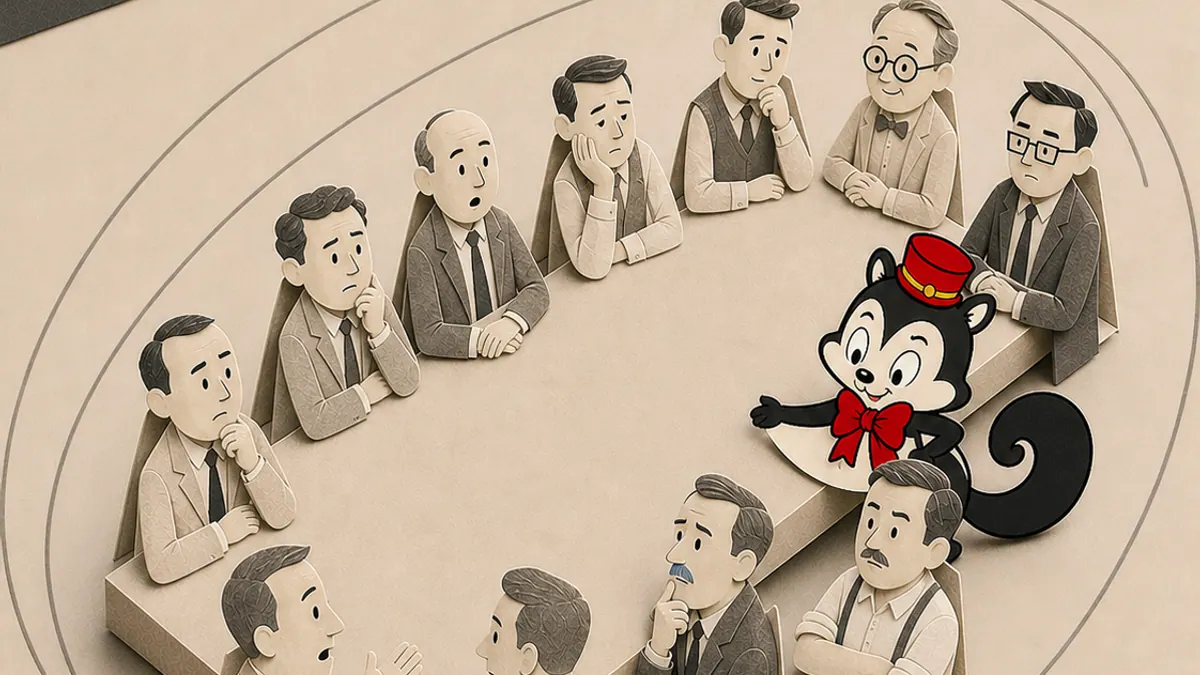
A jury room can hold an argument larger than its walls. A film can build a city to make small encounters worth looking at.
The size of a film seems easy to recognise. There are crowds, landscapes, rooms, journeys. Some films keep introducing places; others return us to the same table. Then we start using the same word for a different judgement: the film’s ideas are “big” or “small”.
It is a short step from one claim to the other. A magnificent setting appears to promise a magnificent subject. A confined drama can arrive with the modesty of something that has had to make do.
Yet physical space, the reach of a story and the difficulty of its questions can expand in different directions. 12 Angry Men and PlayTime make a particularly useful pair because they ask for such different kinds of attention.
The room has work to do
Sidney Lumet’s 12 Angry Men (1957) takes place almost entirely in a jury room. The men’s decision concerns a young defendant facing a possible death sentence. Leigh Singer’s BFI analysis follows how the framing becomes more cramped and the camera’s position changes as the discussion develops. [1]
The limited space gives those changes something stable to work against. We do not need another location to see the relationship among the men alter. Their closeness can itself become part of the pressure.

Cinematographer Boris Kaufman described the production’s decision to turn confinement into a visual advantage. The camera had to communicate the men’s different personalities and reasons for acting, as well as sustain a story in one room. [2]
This makes the room an active choice. Expanding the film into a tour of the city would not automatically give its argument greater reach. It could also give us relief from the people whose reasoning we are being asked to follow.
There is only one defendant in this case. That number does not make the question of judging him easy. Nor does enlarging the number of people affected automatically make a fictional decision more carefully examined. The reach of a consequence and the depth of our attention to it are separate matters.
A city can make room for a small confusion
Jacques Tati’s colour film PlayTime (1967) offers a different arrangement. Its modern Paris was largely built for the production. [3][5] In his Criterion essay, David Cairns connects that construction with the freedom to develop and coordinate visual comedy across the sets. [3]
One of the examples Cairns describes is Monsieur Hulot trying to find a business associate among office cubicles. A receptionist who keeps turning round upsets his bearings. [3] The immediate problem is ordinary: locating the person he has come to meet. The surrounding architecture gives that problem room to become elaborate.
It would be strange to demand that the encounter acquire a grander objective simply to justify the space around it. The discrepancy is part of the pleasure. So much visible order can coexist with such difficulty in finding somebody.
Jonathan Rosenbaum’s account of PlayTime emphasises the many small details available to the viewer and the choices involved in following them. [4] The scale can enlarge the field of attention, letting a modest action compete with other things worth noticing.
Here, a bigger image does not have to funnel us towards a single bigger statement. It can give several small events enough room to remain separate.
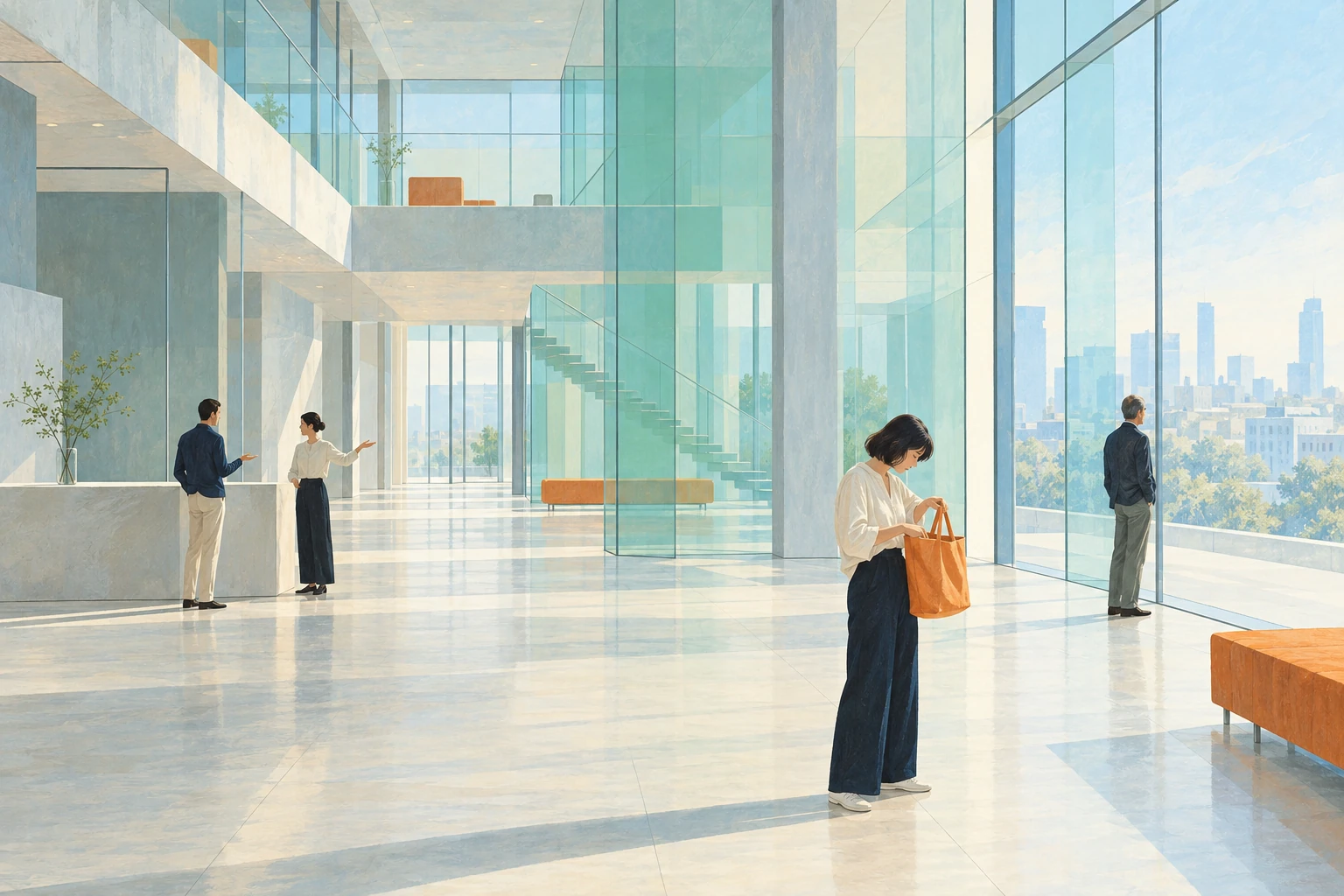
“Small” can describe a subject without dismissing it
A modest comic objective does not mean there is little work in constructing the comedy.
We can still ask whether a film has used its scale well. A vast construction may feel empty if the images give us little to do with it. A confined setting may feel repetitive if it produces no changing relationships. Neither result follows from the dimensions alone.
A spectacular image can be worth seeing for its movement, colour or physical ingenuity. It does not owe us an abstract thesis of matching size.
In 12 Angry Men, confinement concentrates attention on people who must keep confronting one another’s reasons. In PlayTime, an extensive constructed world can distribute attention among encounters that might otherwise pass unnoticed. These are two different uses of space, each capable of sustaining more than a plot summary suggests.
References & Further Reading
- Leigh Singer, ‘How 12 Angry Men works – in 25 frames’, BFI, 28 January 2020. The source discusses the ending; this article uses its account of the premise and changing framing.
- Boris Kaufman, ‘Filming 12 Angry Men On A Single Set’, American Cinematographer, originally December 1956; online republication 19 March 2024.
- David Cairns, ‘Playtime: Things Fall Apart, Beautifully’, The Criterion Collection, 2 December 2010.
- Jonathan Rosenbaum, ‘The Dance of PlayTime’, The Criterion Collection, 18 August 2009; originally written for its 2006 edition.
- The Criterion Collection, PlayTime. Film information and synopsis; page undated.
The comparison of physical scale, narrative reach and the attention given to a question is Monocurator’s critical argument.
For the next unexpected question, follow the Journal in your RSS reader.
On screen
Films discussed
- 12 Angry Men (1957) · Sidney Lumet
- PlayTime (1967) · Jacques Tati
Further reading
Read next in the Journal
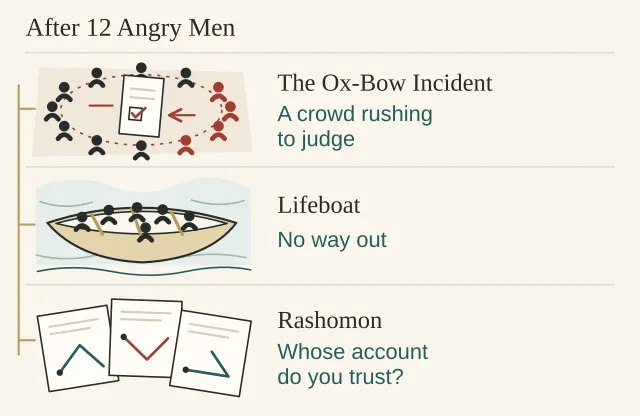

Want a recommendation shaped around your evening? Ask Momo what to watch next →