Film technique
How Was the Clock Scene in Safety Last! Filmed?
How Harold Lloyd’s clock climb combines rooftop sets, concealed platforms and a chosen view, with a modern comparison from The Walk.
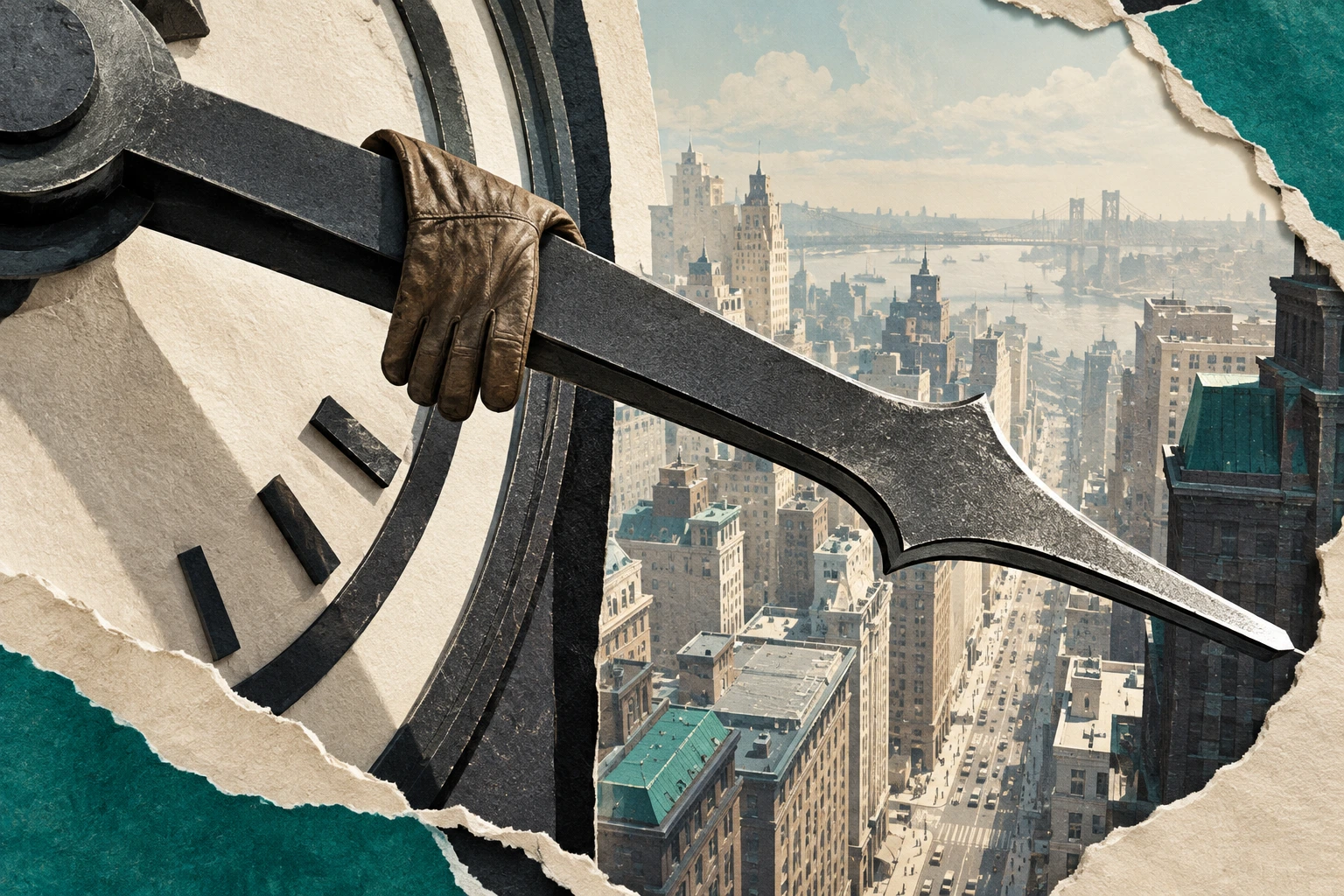
Harold Lloyd is hanging from the hands of a clock. The street is visible far below. There is enough city in the picture to make the space beneath him feel horribly substantial.
The familiar question is whether he really did it. A useful answer needs more than a yes or no. Lloyd performed dangerous work at height, while sets, hidden precautions and the camera’s position changed what that work looked like. A photograph can record something real and still leave out the part that would change your understanding of it.
This article discusses the climb and ending of Safety Last! (1923), and the production of the high-wire sequence in The Walk (2015).
A real street, with something missing above it
In Safety Last!, a department-store clerk proposes a publicity stunt that leads to his precarious climb. Fred Newmeyer and Sam Taylor directed the black-and-white film, with Lloyd as the ambitious young clerk. [1]
Film historian Richard W. Bann describes the crew working on several buildings of increasing height. Camera angles kept the distant street visible while excluding safety platforms beneath the action. The platforms reduced the possible fall; they did not bring the street up to the performer’s feet. Bann’s account describes thick mattresses below, and makes clear that a fall could still be dangerous. [2]
That distinction prevents two misleading explanations. Lloyd was not simply standing at ground level against a photograph of a city. Nor does the visible street prove that nothing stood between his body and the pavement.
The important gap is between the height above the street and the distance a performer might fall before reaching a concealed surface. Those are different distances. The picture gives you the first without necessarily showing the second.
You can understand this without trying to calculate how far Lloyd would have fallen in every shot. The camera shows a grip, a wall and a city. It withholds part of the working arrangement around them. The street becomes evidence of the height, while the edge of the frame controls which other evidence is available.

One climb, several addresses
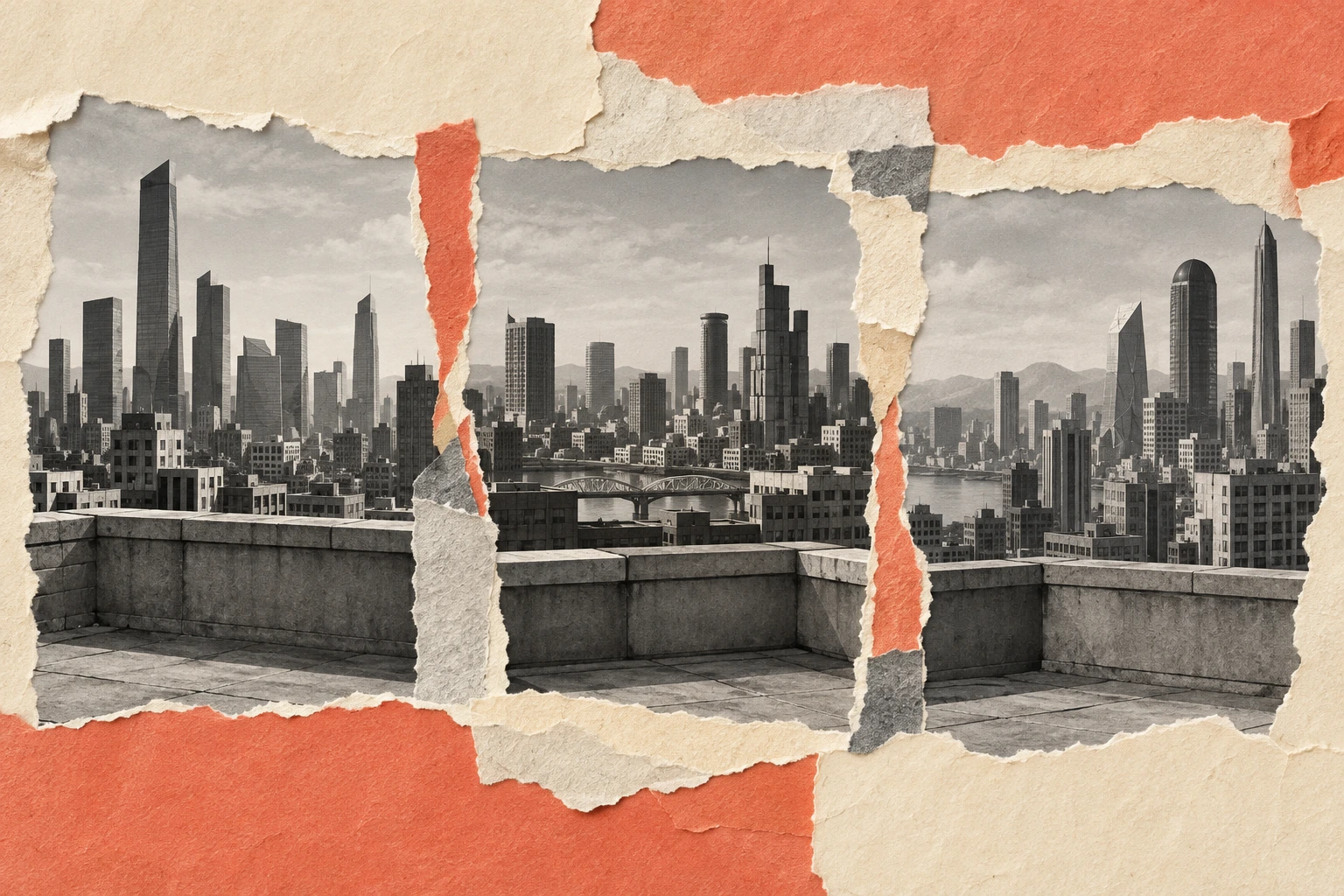
Historian John Bengtson’s location research identifies the clock set on the roof of 908 South Broadway in Los Angeles. His examination of the finale connects its apparently continuous arrival on a rooftop to three separate buildings, using background landmarks to distinguish the views. [3]
We follow one character reaching the top; the camera has not followed him to a single geographical destination. A change of building can provide the view needed for the next part of his arrival.
That is a more interesting construction than the idea of an actor merely surviving one enormous stunt. The performance has to look precarious, and separate pieces of architecture have to belong to the same predicament. The action gives us a reason to connect the shots. The city need not remain a fully consistent map for the clerk’s immediate problem to stay clear.
Bengtson also identifies Bill Strother as the climber in wide shots on the International Bank Building. [4] A claim that Lloyd did everything himself would remove another part of the production. The performer, the shot and the particular task need to be identified together.
What “no trick photography” leaves open
Bann’s essay excludes methods such as mirrors, double exposures and rear projection from the film’s production. It also describes the deliberately concealed platforms and selected camera angles. [2] Those statements can coexist: combining separate images is one kind of intervention; arranging what a single exposure records is another.
The distinction matters when older effects are sold as untouched reality. A constructed façade remains a constructed façade even when the camera photographs it directly. A missing platform does not cease to exist because it is missing from the picture.
None of this makes the stunt harmless. It makes the claim more precise. The film combines a physical performance with an arrangement that lets us see the danger differently from the people preparing the shot.
A modern wire still needs something underfoot
The Walk offers a useful comparison because it has to make a performer’s immediate surroundings agree with an enormous drop. In Ian Failes’s production interview, visual-effects supervisor Kevin Baillie describes a partial rooftop set on a Montreal stage, extended digitally into the World Trade Center setting. [5]
Different shots used Joseph Gordon-Levitt or a stunt performer on a wire, with additional support for some work. One device put a steel beam around the wire so the performer could still place a foot on the wire while having support on either side. Compositors sometimes adjusted the appearance of the feet and the wire’s movement. [5]
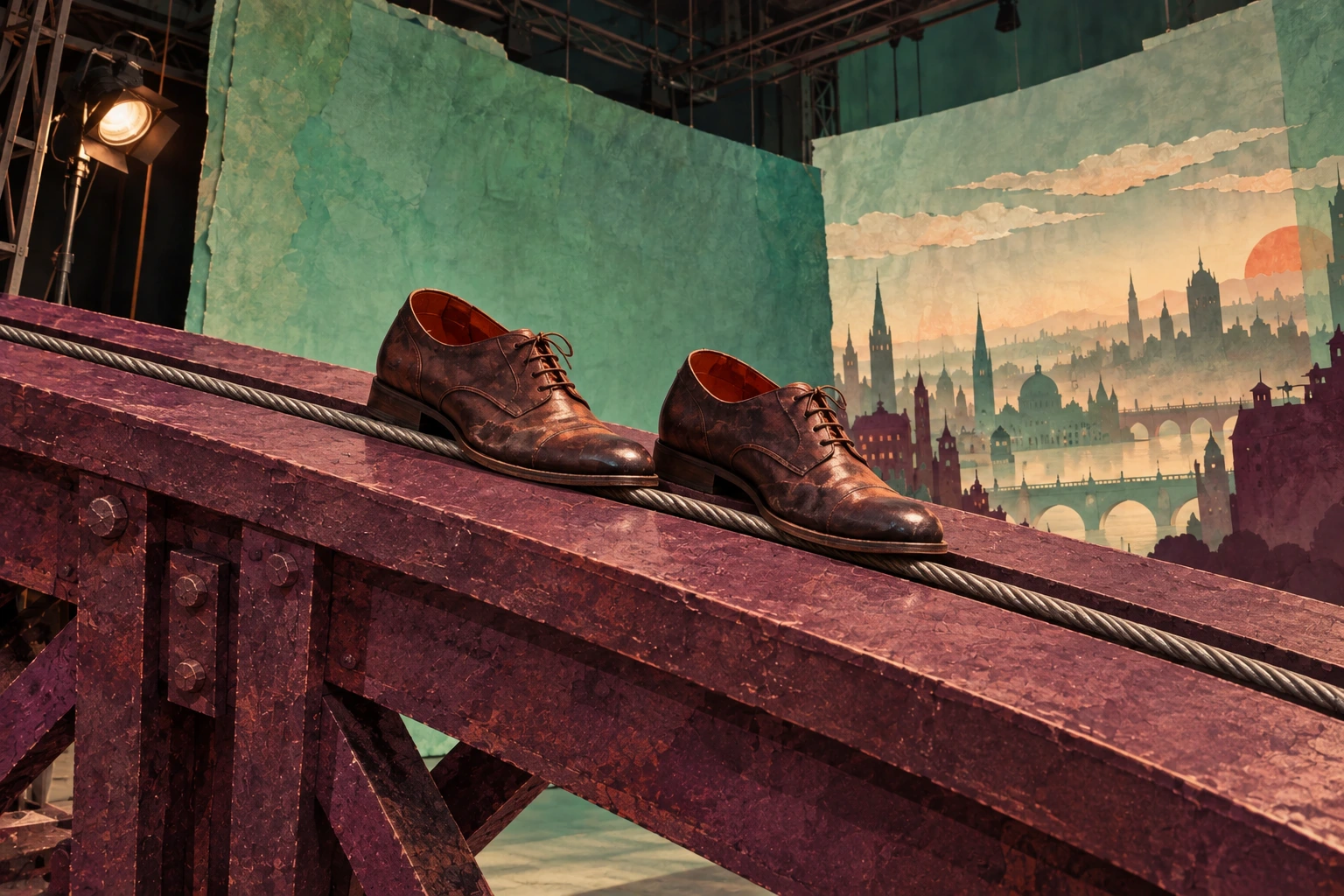
Here, digital work reaches beyond supplying a distant skyline. It can revise the contact that makes a body appear to balance. The visible foot and the support used during filming need not have exactly the relationship the finished picture suggests.
Both productions therefore have decisions to make about the body, what it touches and the space around it. The tools allow different kinds of revision. This comparison does not establish that The Walk copied Lloyd’s methods, or that one film is more impressive because its danger was greater.
Watch the background as well as the hands
When you next watch the climb in Safety Last!, look away from Lloyd’s grip for a moment. What does the street establish? Which nearby surfaces can you actually see? When the film changes its view, what carries the action across that change?
The production explanation cannot promise that the scene will frighten you less. It gives you something else to watch: how carefully a real city, a bodily struggle and an excluded piece of space are made to support one precarious climb. The clock still makes a thoroughly unhelpful handhold.
References
The technical account draws on a historian’s essay, original location research and an interview with the modern production’s effects supervisor. The explanation of what the frame allows us to infer is Monocurator’s analysis. The illustrations are explanatory or imagined; they are not evidence of the actual set geometry.
- The Criterion Collection. Safety Last!. Film record, credits and synopsis, n.d. Lists the 1923 film as black and white.
- Richard W. Bann. “Safety Last.” Essay hosted by the Library of Congress National Film Preservation Board, n.d. Its views are the author’s; it is not a filming blueprint.
- John Bengtson. “How Harold Lloyd filmed the Safety Last! finale (at three places).” Silent Locations, 20 June 2013. Original landmark and location research.
- John Bengtson. “How Harold Lloyd Filmed Safety Last!” Silent Locations, 29 February 2012; author’s reply to Jonathan, 10 July 2013, identifies Strother’s wide-shot work.
- Ian Failes. “Step-by-step: a walkthrough of The Walk.” fxguide, 11 October 2015. Production interview with visual-effects supervisor Kevin Baillie. All links consulted 11 October 2026.
For the next unexpected question, follow the Journal in your RSS reader.
On screen
Films discussed
- Safety Last! (1923) · Fred Newmeyer and Sam Taylor
Further reading
Read next in the Journal

Want a recommendation shaped around your evening? Ask Momo what to watch next →