See Films Differently Momo Notices
Jam or Cream First on Scones? The Debate—and a Black-and-White Film
Devon and Cornwall’s cream-tea traditions, a laboratory’s spreading experiment, and Momo’s unexpected detour to Last Year at Marienbad.
Well, I’m not taking sides here. It’s a matter of taste, after all. Let’s look at both ways.
The usual Devon method is clotted cream first, then jam. The Cornish method is jam first, then clotted cream. Those are the regional traditions promoted by the local visitor organisations, rather than a description of everybody’s plate. [1] [2]
A cream tea is tea served with scones, jam and clotted cream. To assemble yours, split a scone and put the toppings on the exposed crumb of each half. [1] [5] I’m talking about clotted cream here; whipped cream is a different product, so the tests below don’t tell us how that would behave.
Cream first: a base, then the fruit
Start with the cream across the cut face of the scone. There’s room to make a generous layer, leaving a little pale border around the jam you’ll add. Then spoon on the fruit. A red streak, a glistening patch, perhaps a piece of strawberry still holding its shape: you’ve given the jam somewhere to be seen.
There’s a practical argument for this arrangement. The Centre for Industrial Rheology tested Cornish clotted cream and strawberry jam bought from Marks & Spencer at 10°C, measuring how they flowed and resisted back-and-forth deformation. The cream was firmer and required greater stress to flow substantially; both became less viscous with faster shearing. [3]
Think of spreading the upper layer: you want it to move without taking the foundation along. The laboratory therefore recommends the firmer cream as the base, with the more easily spread jam above it. [3]
Working the cream disrupted its structure. It soon behaved more like a solid again, but its original stiffness hadn’t fully returned after ten minutes. [3] This is the lab’s own case study, not a peer-reviewed paper or a taste test. Other products and temperatures may give different results.
My suggestion is to place the cream where you want it, ease it out with a few light strokes, then add small spoonfuls of jam. You can leave them as little pools rather than chase a perfectly even coating right out to the edge. I’d leave some cream showing between them, too. No need to plaster over every last bit of it.
A jam with some fruit pieces gives you something beyond smoothness to look forward to. I like a little sharpness with all that richness, too.
Taking the appearance seriously isn’t entirely frivolous. In two small experiments published in Scientific Reports in 2020, Junya Ueda and colleagues used augmented reality to alter the variation between light and dark areas on Baumkuchen cake and tomato ketchup. The food itself was unchanged. Some expectations and eating ratings shifted, including the cake’s perceived moistness and deliciousness. Its sweetness didn’t change significantly. [4]
That’s evidence that appearance can affect an eating experience, not that visible jam makes a scone taste sweeter. Neither experiment tested our two arrangements. Still, if part of the pleasure for you is seeing the fruit, putting it on top is a very direct way to get there.
Soft scone, rich cream, a bit of fruit and tang: that’s a lovely mouthful. Those flavours can meet in either order, of course. Here, the fruit gets the finishing touch as well.
Jam first
Then there’s jam first. I suppose we’d better look at that too.
You spread the jam directly on the scone and add a spoonful of cream, as Rodda’s recommends. The cream stays on display, and dolloping it avoids having to spread it across the jam. [5]
For products behaving like those tested, spreading the firmer cream over softer jam could disturb the lower layer. [3] The cream also covers some of the fruit, which is less helpful if showing off the jam was your aim. Keeping the cream in a dollop sidesteps the spreading problem.
Anyway, it’s your scone. Go with whichever you like.
Now, I have a film for you
You weren’t looking for one? That’s all right. I was.
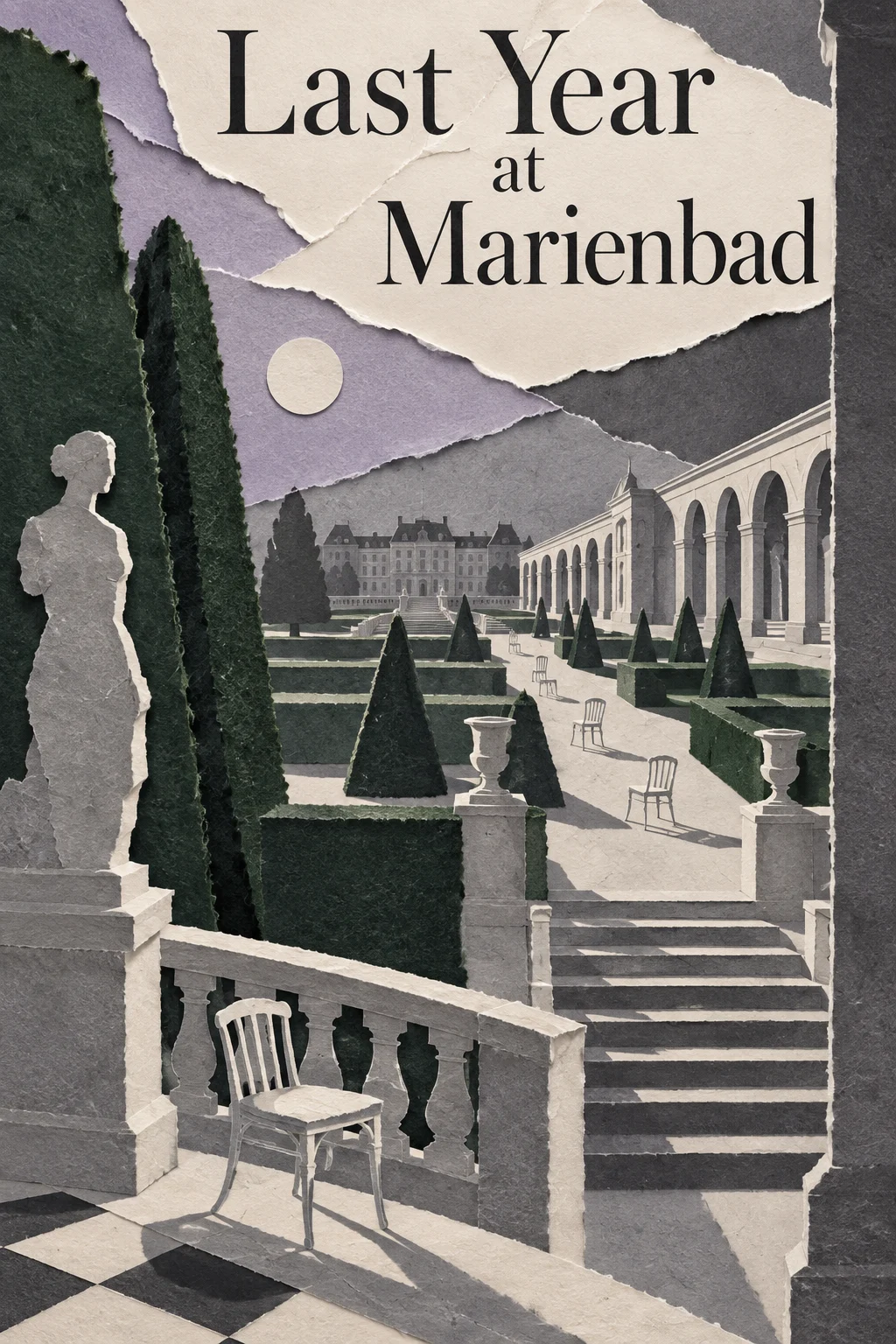
Try Last Year at Marienbad (1961), Alain Resnais’ black-and-white film about a man who insists that he and a woman met the previous year. Around them is an elaborate château; between them is a past that won’t settle into an agreed account. It’s dreamlike and unsettling, with pressure beneath the elegance. [6]
Here’s the question I’m taking from the tea table: do you have to settle on the right way to enjoy something before you begin? A film’s clues deserve attention, but you don’t need a completed explanation before its rooms or rhythms can interest you.
You can follow the man’s claims and look for what supports or unsettles them. At the same time, notice the camera travelling along the corridors, the rhythm of the voice, and the return of words and settings with altered details. Critic Mark Polizzotti points out how the images can conflict with the spoken account. [7]
I’d start there: when something returns, notice what’s familiar and what has shifted. Let that feed your idea of the story. You can enjoy the pattern while you’re still working out what to make of it.
References
- Visit South Devon, ‘Cream Teas’, regional visitor guidance.
- Visit Cornwall, ‘Cornwall’s Food & Drink Heritage’, ‘Cornish cream tea’ section.
- Centre for Industrial Rheology, ‘Scone-ology: Jam First or Cream First?’, laboratory case study.
- Junya Ueda, Charles Spence and Katsunori Okajima, ‘Effects of varying the standard deviation of the luminance on the appearance of food, flavour expectations, and taste/flavour perception’, Scientific Reports 10, 16175 (2020). DOI: 10.1038/s41598-020-73189-8.
- Rodda’s, ‘Our Guide to the Perfect Cream Tea’, a producer’s serving recommendation.
- The Criterion Collection, Last Year at Marienbad (1961), synopsis and film information.
- Mark Polizzotti, ‘Last Year at Marienbad: Which Year at Where?’, The Criterion Collection, 22 June 2009.
For the next unexpected question, follow the Journal in your RSS reader.
On screen
Films discussed
- Last Year at Marienbad (1961) · Alain Resnais
Further reading
Read next in the Journal

Want a recommendation shaped around your evening? Ask Momo what to watch next →