See Films Differently Film language
What Is an Intertitle?
Intertitles are text cards inserted between film images. See how they differ from subtitles, convey dialogue or narration, and change the rhythm of silent films.
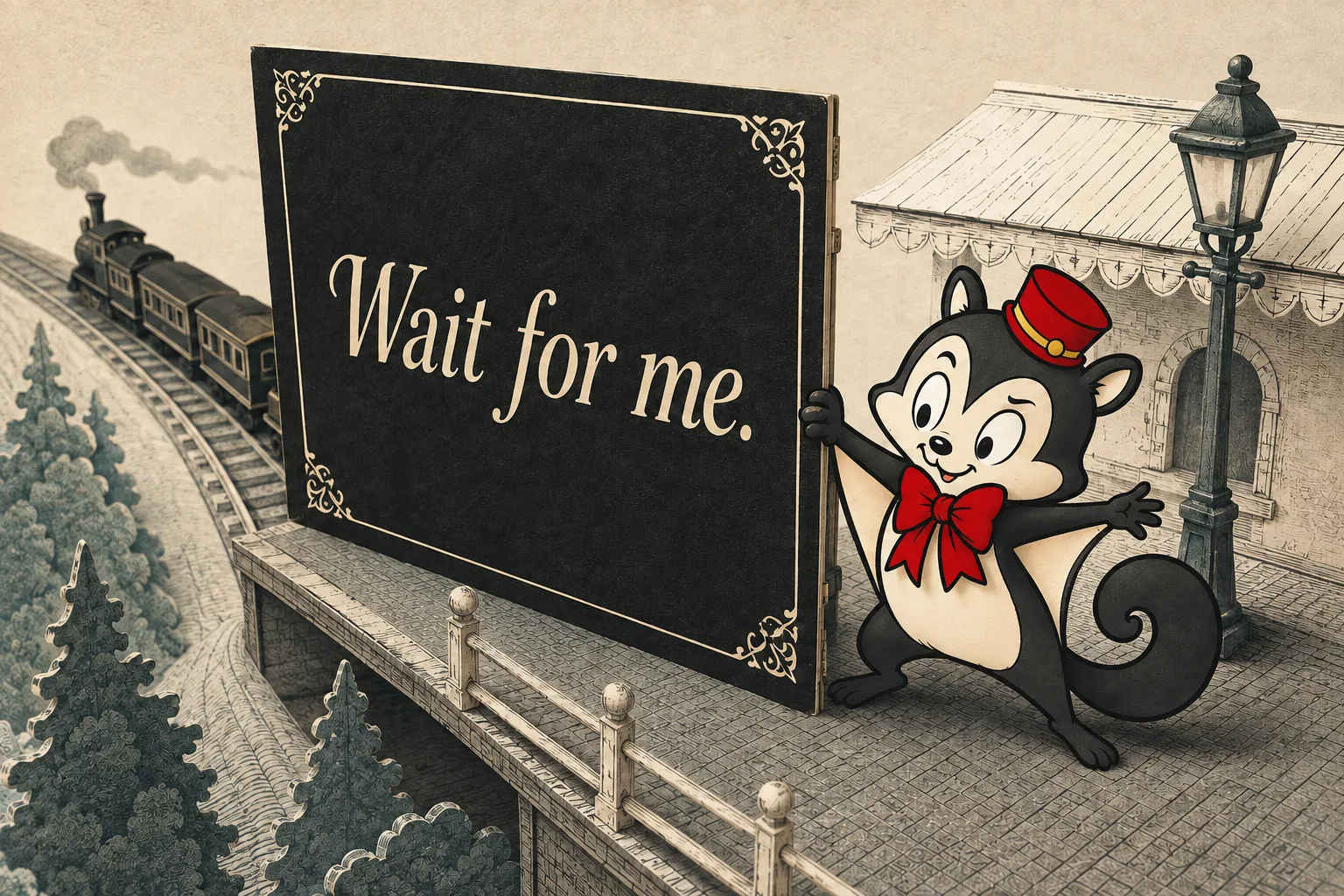
An intertitle is a text card inserted between a film’s images, often to give dialogue or narration in a silent film. The scene gives way to words, then returns to the action. Subtitles are usually placed over the picture, so you can read while still watching the scene. [1] [3]
Those cards you read in silent movies are part of the film’s storytelling. They can tell you what someone says, move the story forwards or offer a voice that belongs to nobody on screen. Their wording matters, but so does the moment at which you are asked to read them.
Intertitles vs subtitles: how to tell the difference
Imagine a character calling after someone who has just left a room. There are two ways to show the same words:
- Intertitle: the film cuts to a separate card reading “Wait for me”, then returns to the scene.
- Subtitle: “Wait for me” appears over the image while the scene remains visible.
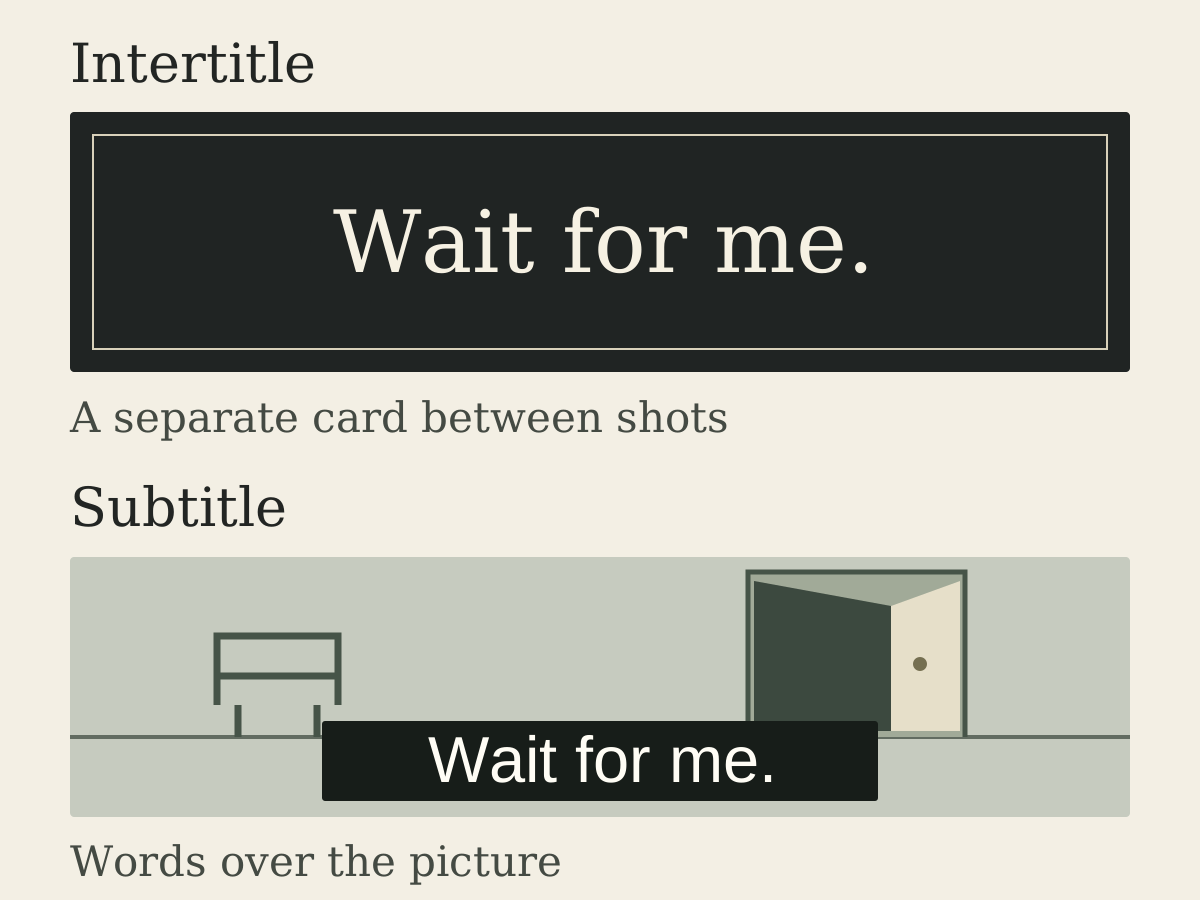
The most useful clue is whether the words take their own place in the sequence or sit over another image. MoMA’s account of film subtitling describes the development of superimposed titles for foreign-language sound films. The British Council’s filmmaking guide also identifies translation and access for deaf and hard-of-hearing audiences as uses for subtitles. [2] [3]
Translation does not turn an intertitle into a subtitle automatically. An English card replacing a German card is still an intertitle. If the German card remains visible and an English translation appears beneath its words, you are seeing an intertitle with subtitles. The language and the way the words are presented are separate questions.
“Title card” is a useful everyday name for these separate screens of text. Opening titles and end credits have other jobs: naming the film and the people who made it. A close-up of a letter being read by a character, meanwhile, shows an object within the story. It need not be treated as the film’s narrator addressing us. [2]
What do intertitles do in a silent film?
Dialogue intertitles give a character words. A card might carry a request, a refusal or the line on which a joke depends. Read it alongside the performance: who has just spoken, who is listening, and what happens when the film returns to their faces? You do not need to decipher every unprinted sentence from an actor’s lips.
Narrative intertitles speak from outside the exchange. A card reading “The following morning” advances the story without belonging to a character. Another might introduce a place or explain something the audience needs to know. Dialogue and narration are both included in MoMA’s definition of an intertitle. [1]
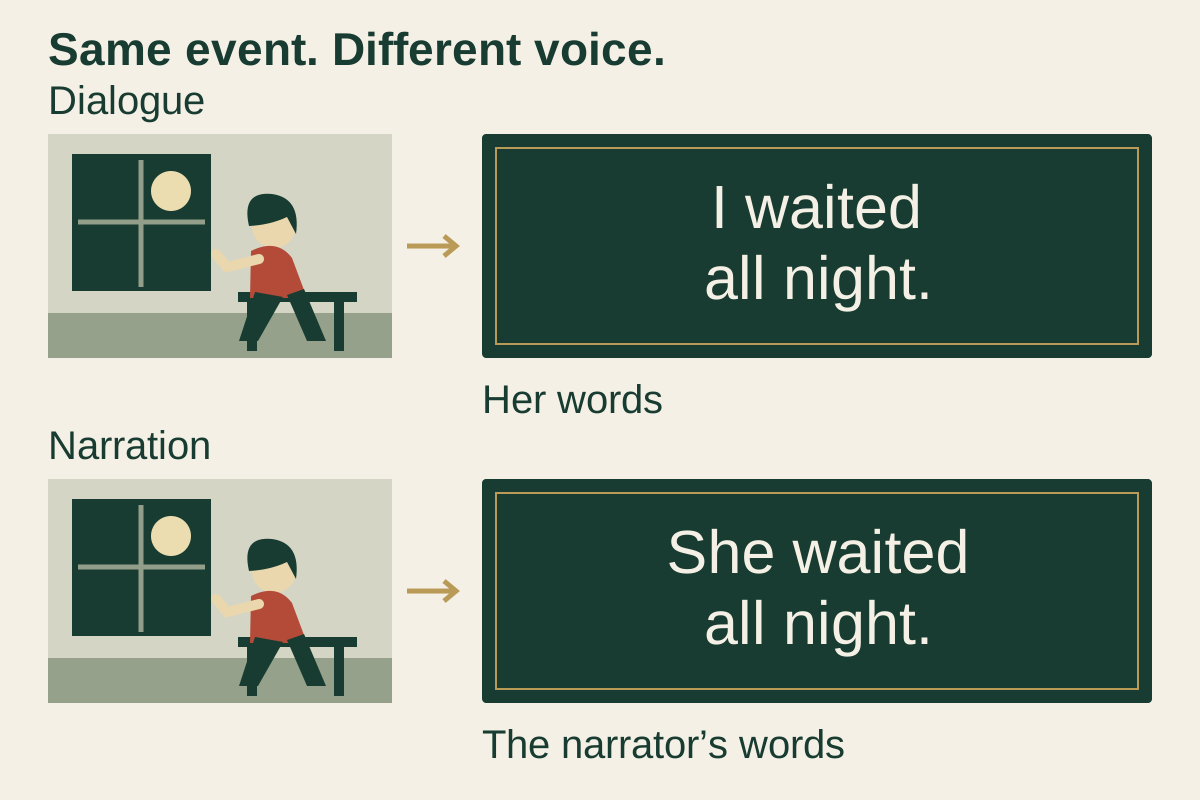
Here is a small distinction worth watching for. “I waited all night” gives someone a claim to make; “She waited all night” supplies an account of what happened. The words may describe the same event, but they put the information in different hands. These are invented examples, and a film can make either one sincere, comic or doubtful through the images around it.
Three film examples
The Farmer’s Wife: the cards belong to the conversation
In Hitchcock’s The Farmer’s Wife (1928), the BFI identifies the intertitles as dialogue, with the images establishing time, setting and character without explanatory cards. [4]
Watch what you can understand before a card arrives: the relationship, an approach, the response. The words join a situation the images have already established.
Manhatta: the cards can be poetry
Paul Strand and Charles Sheeler’s Manhatta (1921) pairs views of New York with intertitles drawn from Walt Whitman’s verse. MoMA describes their relationship to the surrounding city images as impressionistic, rather than the delivery of dialogue or plot explanations. [5]
Here the reading offers a way of looking. A poem beside a harbour, a crowd or a building can ask you to see more than the activity being recorded. If you expect every card to explain who did what, Manhatta is a lovely interruption of that habit.
The Gold Rush: a different version can give the words a voice
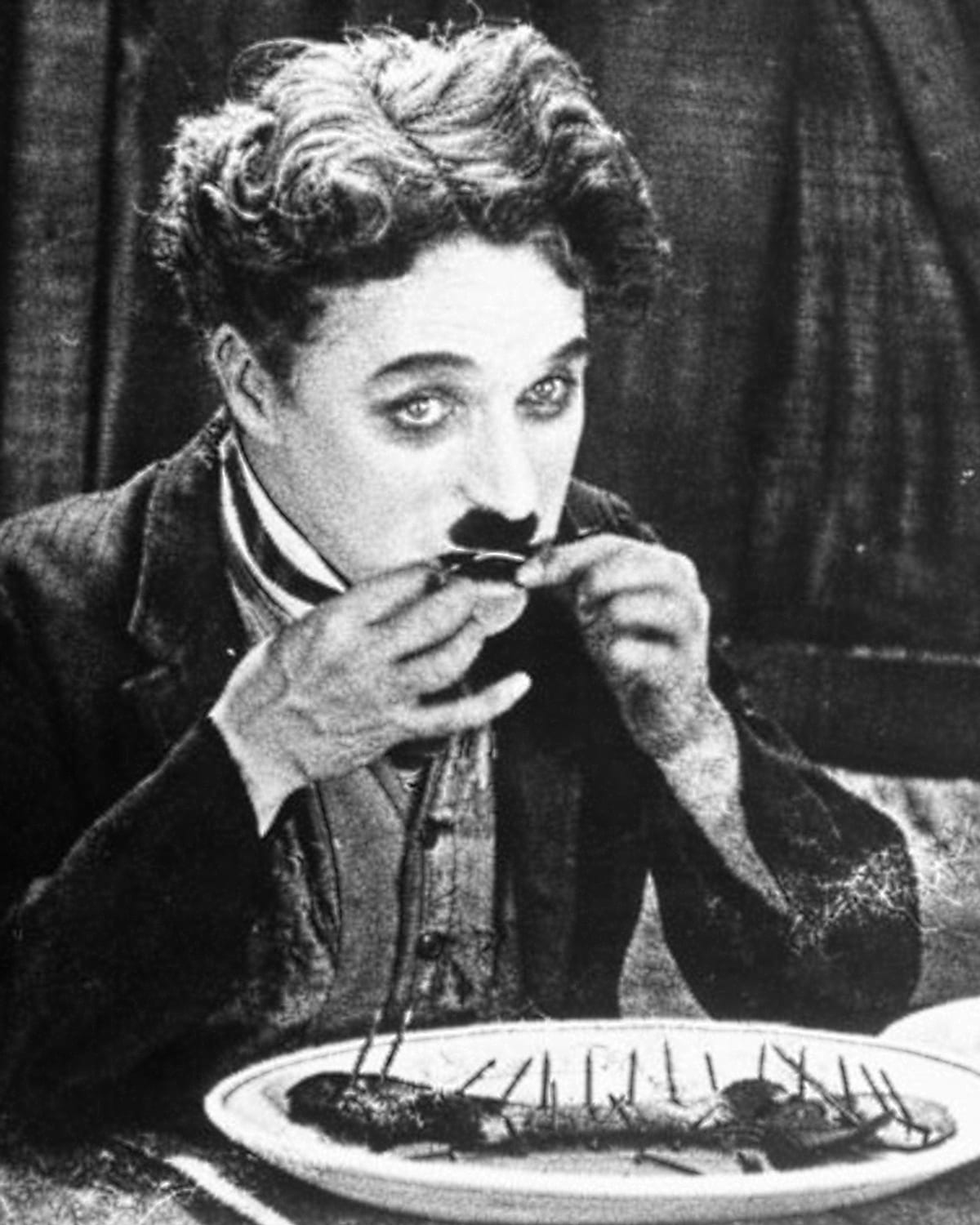
The Charlie Chaplin Archive preserves the narration for the 1942 reissue of The Gold Rush. Its catalogue identifies Chaplin’s spoken commentary as the replacement for the original titles. [6]
The change gives you a practical reason to notice intertitles when choosing a copy. A narrated presentation and one that asks you to read cards distribute the storytelling differently. Our Gold Rush version guide explains the silent reconstruction and Chaplin’s later reissue; they are different presentations of the film.
Why the length of a title card matters
An intertitle occupies screen time, creating an interval between one image and the next. Keeping its words but moving them over the action changes that arrangement.
In The Farmer’s Wife, some surviving titles consist of only a few frames. Release printing repeated frames to allow reading time. The BFI’s restoration therefore addressed duration as well as lettering and texture; cleaned titles were recorded back onto film to retain movement in the grain. [4]
If a card feels hurried or holds for a long time, notice how that pause connects the shots either side.
Are intertitles only used in silent films?
No. The British Council’s guide also describes using separate text in a film with sound to supply information the characters would not convey themselves. A card can introduce a section or add context even when speech is available. [2]
And a silent film with intertitles can have music: live accompaniment and recorded scores are a separate part of its presentation. The presence of words on cards tells you how some information reaches the viewer; it does not tell you that the screening must be silent.
On your next viewing, pick one card and follow what surrounds it. Who gets to speak? What has the image already told you? What changes when the words disappear and you return to a face?
Sources
Sources checked on 6 September 2026.
- MoMA: Intertitle, art-term definition.
- British Council: Mini Filmmaking Guides, p. 43, “Titles” and “Intertitles and subtitles”, and p. 44, “Credits”.
- MoMA: The Art of Subtitles, programme for Bruce Goldstein's presentation, 29 April 2023.
- Kieron Webb: Restoring Hitchcock #2: reconstructing intertitles, BFI, 20 August 2012.
- MoMA: Paul Strand and Charles Sheeler, Manhatta (1921), collection record and film description.
- Charlie Chaplin Archive: Narration Used in Revival of The Gold Rush, catalogue record ECCI00313449.
On screen
Films discussed
- The Farmer's Wife (1928) · Alfred Hitchcock
- Manhatta (1921) · Paul Strand and Charles Sheeler
- The Gold Rush (1925) · Charlie Chaplin
Continue exploring on Monocurator
Want a recommendation shaped around your evening? Ask Momo what to watch next →