See Films Differently Film history
What Is Nitrate Film?
Nitrate is the flammable plastic base of much early cinema. Learn how it differs from safety film, why films disappear, and what restoration can preserve.
Nitrate film is photographic film with a cellulose nitrate plastic base. It carried much early cinema and is highly flammable. The name describes the material supporting the photographic image, rather than a genre, a colour process or a particular camera. [1]
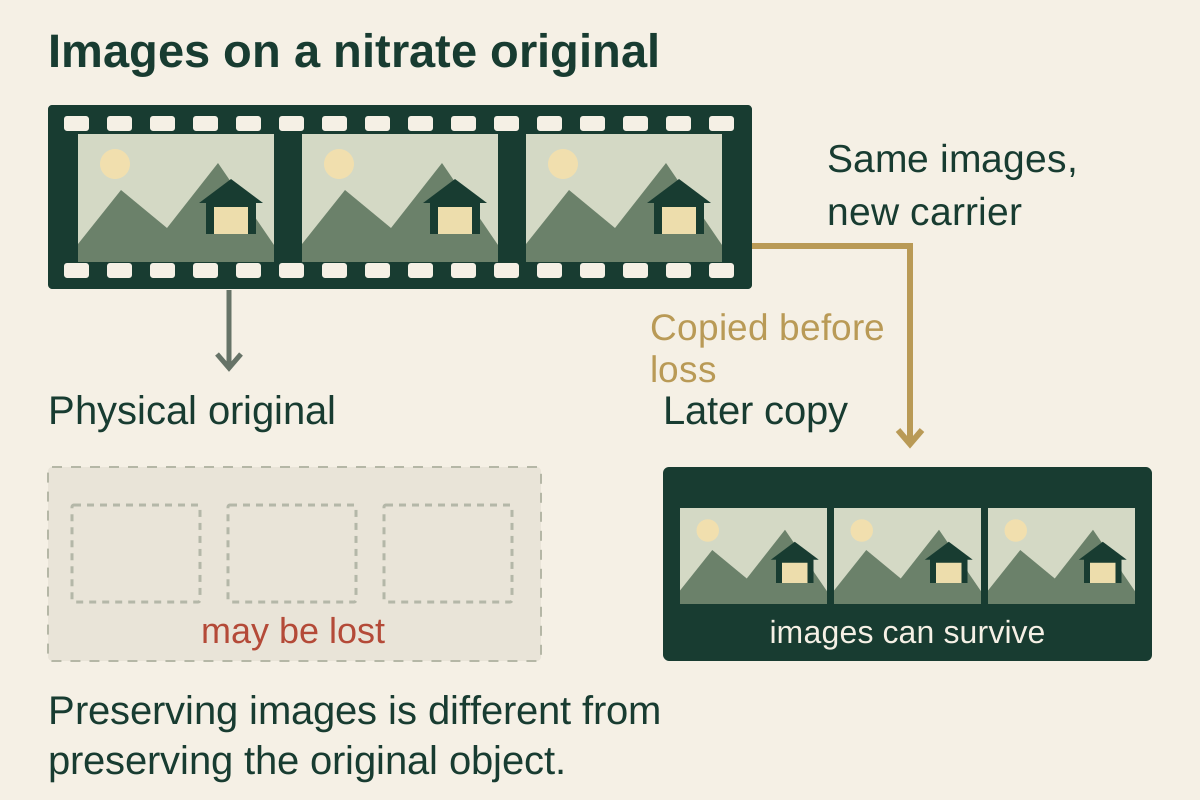
That distinction helps explain an apparent contradiction in restoration notes: a film can survive even when its original nitrate no longer does. Another copy may carry the images on a different material. What survives, and how it was copied, matters as much as the date on the film’s title page.
What is nitrate film made of?
A strip has two main parts to keep in mind. The base is its physical support. The emulsion carries the photographic image. In a simplified account of black-and-white film, the emulsion contains the light-sensitive material that produces an image after exposure and processing. Nitrate, acetate and polyester are different bases. [1]
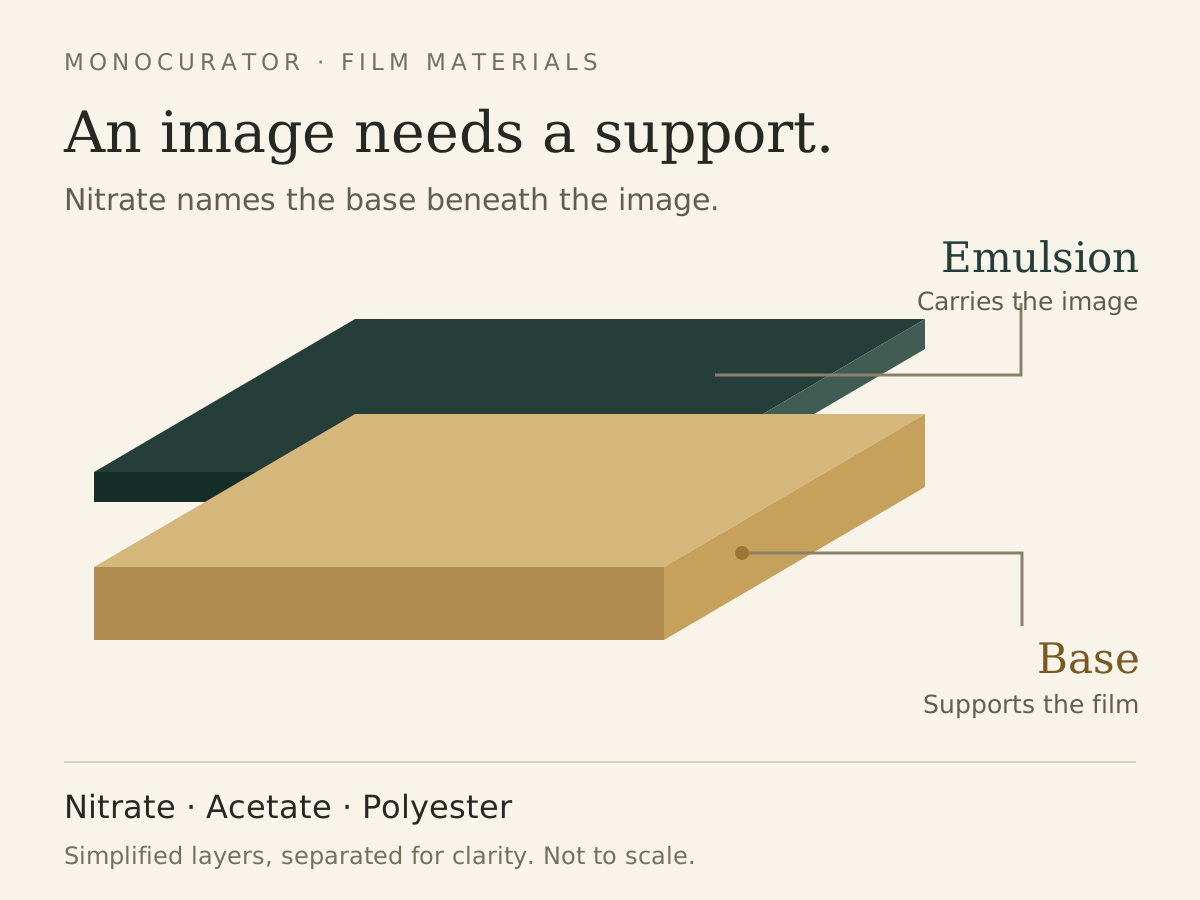
The film you watch is therefore both a sequence of images and a physical object with a history. A scratch, a missing section and a chemical change are different kinds of damage. None can be diagnosed simply by calling a transfer “old”.
Why did cinemas use something so flammable?
Nitrate combined transparency and mechanical strength at a time when early alternatives had drawbacks. The BFI notes that early safety stocks could be less clear, more expensive and more liable to break. The choice had practical reasons as well as serious consequences. [2]
The National Archives dates its phase-out from theatrical production to 1951. That is a manufacturing transition, not a promise that every reel made or screened after a single date used the same material. [1]
Why does nitrate film burn so fiercely?
Once ignited, nitrate can burn rapidly, generate noxious fumes and be extremely difficult to extinguish. The National Archives also explains that deterioration can lower the temperature at which ignition becomes possible. A reel’s condition and storage environment matter. [3]
Its account of nitrate preservation includes the archive’s own loss of millions of feet of film in a vault fire. The danger shaped the design of film stores and the separation of nitrate from other collections. Preserving cinema required more than putting a can on a shelf. [3]
This material history even appears inside films. In Hitchcock’s Sabotage (1936), a boy carrying film cans nearly gets put off a bus because flammable film is prohibited. The BFI points to the scene as one example of cinema drawing on the danger of its own medium. [2]
For a viewer, that small objection suddenly has a physical basis. The can is a container whose ordinary contents already give someone a reason to worry.
Nitrate vs acetate vs polyester
| Base | What the name tells you | What it does not guarantee |
|---|---|---|
| Cellulose nitrate | An early plastic support with a serious fire hazard | That the images are lost or every surviving reel is in the same condition |
| Cellulose acetate | A safety-film base that avoids nitrate’s particular burning behaviour | Freedom from chemical deterioration |
| Polyester | A durable support with greater resistance to base decomposition | An undamaged photographic image |
The National Archives cautions that manufacturing periods overlap and that stock remained in use after production. Even edge lettering may have been copied from an earlier source. A date or a reproduced “SAFETY” marking is not enough to identify an unfamiliar object. [4]
Acetate has its own well-known problem: vinegar syndrome, the breakdown of its base. The National Archives describes the associated shrinkage, warping and embrittlement, and the need to preserve the remaining visual information. “Safety” distinguishes a fire risk; it does not mean permanent. [5]
Is nitrate the reason so many silent films are lost?
It is part of the explanation. A 2013 Library of Congress survey found that 70% of American silent features released from 1912 to 1929 were completely lost. The Library identified fire and deterioration alongside the industry’s neglect or deliberate destruction of prints and negatives. The figure concerns that defined group of American features, not every silent film made worldwide. [6]
Survival was also uneven. The same report found 14% in their original-release 35mm format, 11% complete in foreign versions or smaller formats, and 5% incomplete. “Survives” can mean a full print, an abridgement or a fragment. Those differences explain why a restoration credit may list several sources. [6]
There is another obstacle before restoration can begin: recognising what has been found. The Library’s Mostly Lost workshops bring specialists and enthusiasts together to identify unidentified films. Its 2019 account reported 403 identifications over the workshops’ first seven years. A surviving image and a known title do not always arrive together. [7]
Can a digital restoration replace the nitrate original?
It can preserve access to surviving images, but it is another representation of the object. The BFI describes scanning and restoring nitrate sources for its Hitchcock 9 project, then making digital releases and modern safety-film copies. It also retains nitrate masters after duplication. [2]
When choosing a restored film, look for an account of the source: what survives, which copy supplied it, and where material is missing. Our version guides make those distinctions for individual films. The history of silent-film colour shows another reason an early print can contain evidence that a later copy has lost.
If you have found a physical reel that might be nitrate, seek a film archive’s advice before handling or projecting it; the BFI explicitly directs finders to trained specialists. [2]
Sources
Sources checked on 6 September 2026.
- National Archives: Important Characteristics of Motion Picture Film Formats.
- BFI National Archive: All about nitrate film, 26 August 2022.
- National Archives: Is Nitrate Film Really Dangerous?, 10 December 2018.
- National Archives: Film-Based Negatives and Positives.
- National Archives: Why does this film smell like vinegar?, 19 June 2020.
- Library of Congress: Library Reports on America's Endangered Silent-Film Heritage, 4 December 2013, reporting David Pierce's survey.
- Library of Congress: Recovering Silent Films — The Mostly Lost Workshop, 2019.
On screen
Films discussed
- Sabotage (1936) · Alfred Hitchcock
Want a recommendation shaped around your evening? Ask Momo what to watch next →