See Films Differently Adaptation
Who Gets to Tell Frankenstein’s Story?
Mary Shelley lets the unnamed Creature tell his own story. The 1931, 1935 and 2025 films redistribute his speech and agency — changing who appears monstrous.
Frankenstein is the scientist’s name. ‘Monster’ is not the Creature’s name. It is a verdict delivered by someone else.
This distinction is easy to recite and strangely difficult to keep in mind. Two centuries of adaptations have made the name travel from maker to made. The transfer feels natural because popular culture has often given Victor Frankenstein the power to describe and the Creature the burden of being described.
Mary Shelley’s 1818 novel is more structurally unsettling. The Creature leaves Victor’s table, learns language, asks to be heard and tells a long history of his own formation. His story sits inside Victor’s, which sits inside the Arctic explorer Walton’s letters. Every account passes through another listener before reaching us.
Adapting Frankenstein means deciding who receives time, grammar and authority as well as how the Creature looks. James Whale’s Frankenstein (1931), The Bride of Frankenstein (1935) and Guillermo del Toro’s Frankenstein (2025) make sharply different decisions. Put them beside Shelley and a familiar monster story becomes a history of narrative permission.
Novel vs Films: Who Speaks, Who Is Named, Who Acts?
| Version | The Creature’s voice | What changes |
|---|---|---|
| Mary Shelley’s 1818 novel | He tells his formation at length; Victor repeats it to Walton, whose letters contain both accounts. | The unnamed Creature can argue, interpret and accuse, although other narrators still contain his testimony. |
| Frankenstein (1931) | He has no extended speech; Karloff works through gesture, hesitation and fear. | Other characters supply most explanations, leaving his agency visible but rarely self-described. |
| The Bride of Frankenstein (1935) | He gains a small vocabulary for friendship, loneliness and death. | He can state desire and force other characters to answer him. |
| Del Toro’s Frankenstein (2025) | He claims ‘The Creature’s Tale’ after ‘Victor’s Tale’. | He remains unnamed but becomes an interpreter of events rather than only their object. |
None of these versions gives him a proper name. Frankenstein remains the maker’s name; ‘Monster’ remains a judgement. What changes is how much power the Creature has to interpret his own life instead of being interpreted by others. Speech increases narrative agency, but it does not guarantee truth or innocence.
The Nameless Speaker in the Novel
The first edition of Frankenstein; or, The Modern Prometheus appeared anonymously in three volumes in 1818. The surviving draft and fair-copy manuscripts can now be examined through the Shelley-Godwin Archive. [1] The University of Oxford’s guide describes the Creature as nameless and emphasises the reproach already contained in the novel’s epigraph: a created being asking why he was made. [2]
The nameless character is also one of the novel’s principal speakers.
When the Creature stops Victor in the Alps, he demands an audience before judgement. The narrative then changes possession. We follow his first sensations, his secret observation of the De Lacey family, his acquisition of language and reading, his desire for fellowship, his repeated rejection and the violence that follows. Victor remains the outer narrator, but for many chapters he must repeat the Creature’s case.
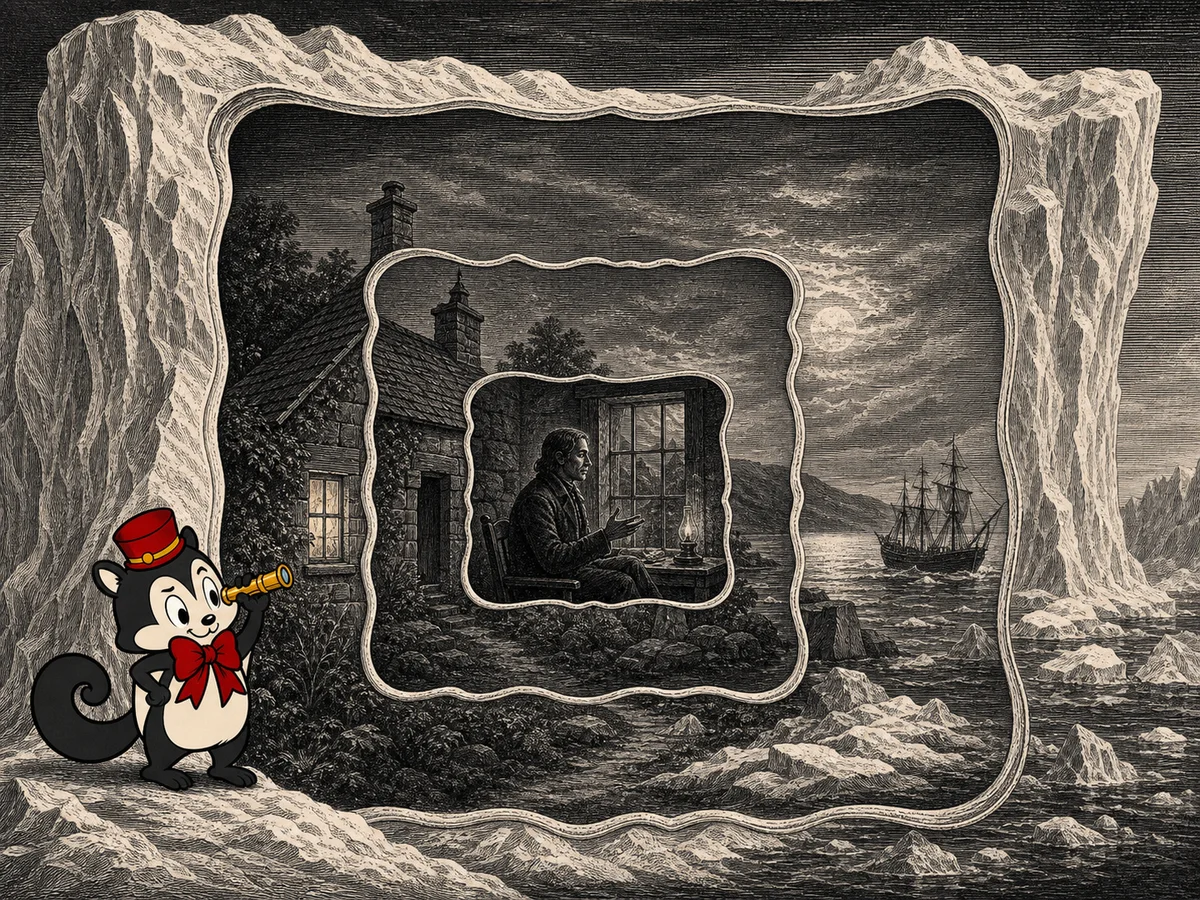
Criscillia Benford argues that the novel’s multiple narrative levels make meaning through the difficult relation between tellers and audiences. [3] The structure refuses an uncomplicated innocent. The Creature commits murder; Victor withholds, abandons and destroys. Shelley makes judgement pass through testimony: before deciding what the Creature is, we hear how he understands what happened to him.
The word ‘monster’ then behaves differently. It no longer names a visible category. It records a relationship between appearance, action and the observer’s fear. The Creature can be monstrous in one person’s account, eloquent in his own and both by the time the stories overlap.
1931: A Body Others Explain
In Frankenstein (1931), Boris Karloff’s Creature has presence without extended language. Whale and make-up artist Jack Pierce created an image so durable that it can seem older than the novel: heavy brow, flat crown, constrained movement, a body assembled into instant recognisability.
Karloff fills that silence with hands, hesitation, terror and brief delight. The encounter with the little girl matters because play briefly exists before social judgement closes over it. Gesture carries the vulnerable intelligence that dialogue leaves unarticulated.
Silence also changes the distribution of authority. Scientists, villagers and officials discuss what the Creature is while the camera watches him respond. Without Shelley’s long autobiography, causes become harder to separate from effects. Fear and violence remain visible; the argument about abandonment, education and reciprocal duty disappears.
Jude Wright’s study of adaptations identifies vocality as central to sympathetic visions of the Creature. Even silent versions, Wright argues, remain ‘ghosted’ by the speaking being Shelley created. [4] That is a useful way to watch Karloff. The missing speech is not simply absent. For readers of the novel, it presses against every gesture like a suppressed track.
The 1931 film’s influence is therefore double. It gave the Creature an unforgettable cinematic body while helping detach that body from the voice that once explained it. Popular memory kept the outline and lost much of the testimony.
1935: Speech Returns in Fragments
The Bride of Frankenstein (1935) complicates the simplification created by its predecessor. The Creature learns words, seeks companionship and forms a tender connection with a blind hermit who receives him without the visual shock governing other encounters. His speech remains limited, far from Shelley’s philosophical narration, but it changes his position in the film.
He can now state desire. He can identify friend, loneliness and death. The sounds are elementary; the ethical claim is not.
The Library of Congress essay on the two Whale films notes how the sequel expands sympathy and draws more openly from Shelley, even as it becomes its own strange, comic and tragic creation. [5] The difference between 1931 and 1935 reaches beyond vocabulary. Once the Creature can address another character, monstrosity becomes conversational. Other people must answer him.
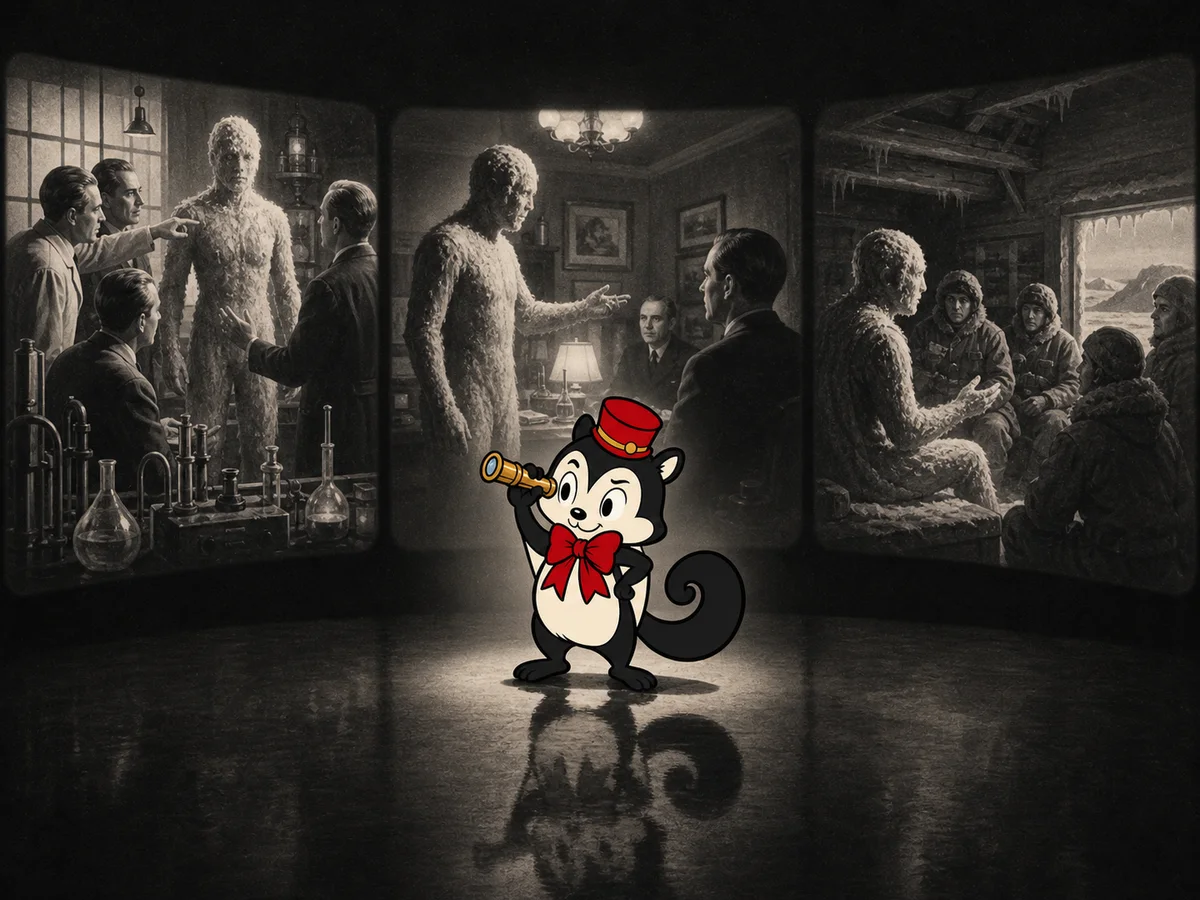
This small restoration of voice also reveals an adaptation problem. Film time makes Shelley’s lengthy education difficult to reproduce. A director can preserve the Creature’s eloquence and risk stopping the plot for an embedded autobiography, or preserve momentum and reduce the very speech that makes the novel morally unstable. Every version tells us what it thinks can be sacrificed.
2025: The Creature Claims a Chapter
Del Toro’s 2025 film announces its answer in its architecture. Netflix’s official production account divides it into an icebound ‘Prelude’, ‘Victor’s Tale’ and ‘The Creature’s Tale’, a structure explicitly inspired by Shelley’s movement from captain to creator to creation. [6]
The crucial moment is almost procedural. Victor finishes his account. The Creature stands outside the cabin and says, ‘My maker told his tale. And I will tell you mine.’ [7]
The line identifies storytelling as contested ground. Victor’s tale has already shown the Creature’s birth and behaviour, yet seeing an event does not grant possession of its meaning. The second chapter replays the created life from inside its solitude: learning, care, injury, return. The former object of Victor’s story becomes a rival author of the film we are watching.
Del Toro describes the division in familial terms: the first part is told by the parent, the second lets the child explain what the parent did wrong. [7] That interpretation is more direct than Shelley’s shifting network of responsibility, and the film makes substantial changes to plot and character. Restoring the Creature’s voice becomes its central emotional act.
The 2025 Creature is still unnamed. This matters. Giving him an ordinary proper name might appear humane, but it would also close the question Shelley leaves open. The absence exposes every substitute. ‘Creature’ describes a relation to creation. ‘Monster’ records judgement. ‘Frankenstein’ transfers the maker’s identity onto the made. Each term tells us something about the speaker.
A History Written by Listeners
Across the three films, the Creature’s body remains visible while his narrative status changes.
In 1931, he is primarily watched, feared and interpreted. In 1935, he acquires a small vocabulary that makes companionship explicit. In 2025, he takes over a chapter and reorganises events through memory. The progression is no simple march towards fidelity. Karloff’s silent performance can produce sympathy that dialogue cannot guarantee; a speaking character can lie, manipulate or misunderstand. Voice grants participation rather than innocence. A being who can tell a story enters the moral scene differently from a body whose motives are supplied entirely by others.
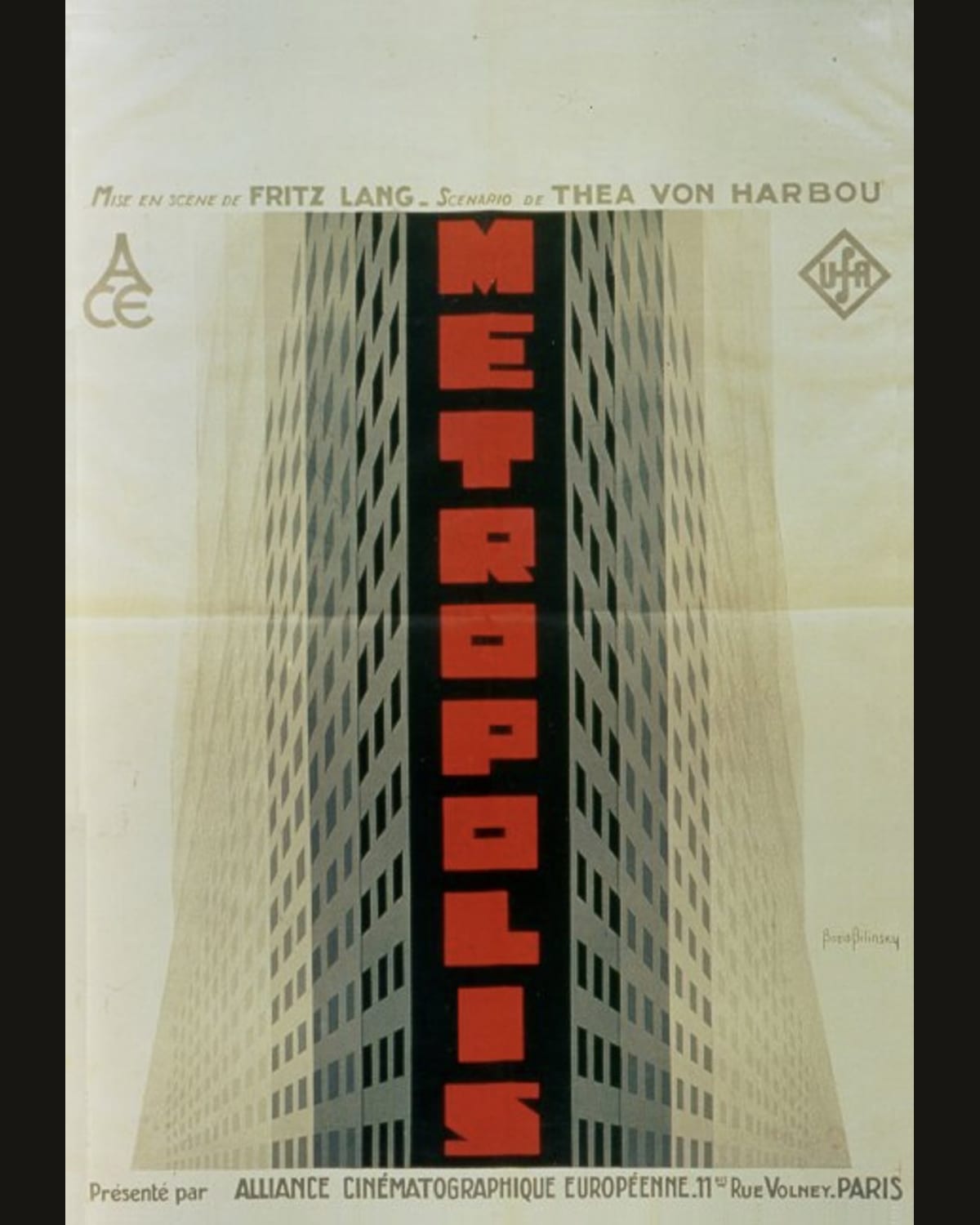
This is visible elsewhere in black-and-white cinema. Metropolis asks who gets to define a manufactured human through resemblance and function. The Cabinet of Dr. Caligari turns a controlled body into the instrument of another person’s narrative. These films do not present the same creature, but they share an anxiety: a body can become ‘monstrous’ when someone else controls the terms by which it is seen.
That is the most useful correction to the familiar naming error. Calling the Creature ‘Frankenstein’ unknowingly repeats the story’s struggle over authorship. The maker’s name occupies the space where the created being has none.
To watch Frankenstein carefully is to ask not only ‘Who is the monster?’ but ‘Who has been allowed to answer?’ Scientific creation begins the plot. Narrative permission determines what the creation can become in our eyes.
References
- Shelley-Godwin Archive, ‘Frankenstein’, digital edition of Mary Shelley’s draft and fair-copy manuscripts (accessed 16 August 2026).
- University of Oxford, Faculty of English, ‘Frankenstein by Mary Shelley’, Ten-Minute Book Club (accessed 16 August 2026).
- Criscillia Benford, ‘“Listen to My Tale”: Multilevel Structure, Narrative Sense Making, and the Inassimilable in Mary Shelley’s Frankenstein’, Narrative, 18.3 (2010), 324–46.
- Jude Wright, ‘Listening to the Monster: Eliding and Restoring the Creature’s Voice in Adaptations of Frankenstein’, Journal of Adaptation in Film & Performance, 8.3 (2015), 249–66.
- Richard T. Jameson, ‘Frankenstein and The Bride of Frankenstein’, National Film Registry essay, Library of Congress; first published in The A List (2002).
- John DiLillo, ‘It’s Alive! Frankenstein Is Now Streaming on Netflix’, Netflix Tudum, updated 22 January 2026.
- John DiLillo, ‘Dissect the Emotional Ending of Frankenstein’, Netflix Tudum, 7 November 2025.
On screen
Films discussed
- Frankenstein (1931) · James Whale
- The Bride of Frankenstein (1935) · James Whale
- Frankenstein (2025) · Guillermo del Toro
Continue exploring on Monocurator
Want a recommendation shaped around your evening? Ask Momo what to watch next →