See Films Differently Ethics & Technology
Before AI Welfare: What Did We Owe the Monsters?
Can AI suffer or have moral status? We do not know. Classic movie monsters show how purpose, resemblance, speech, control and consent distort our judgement.
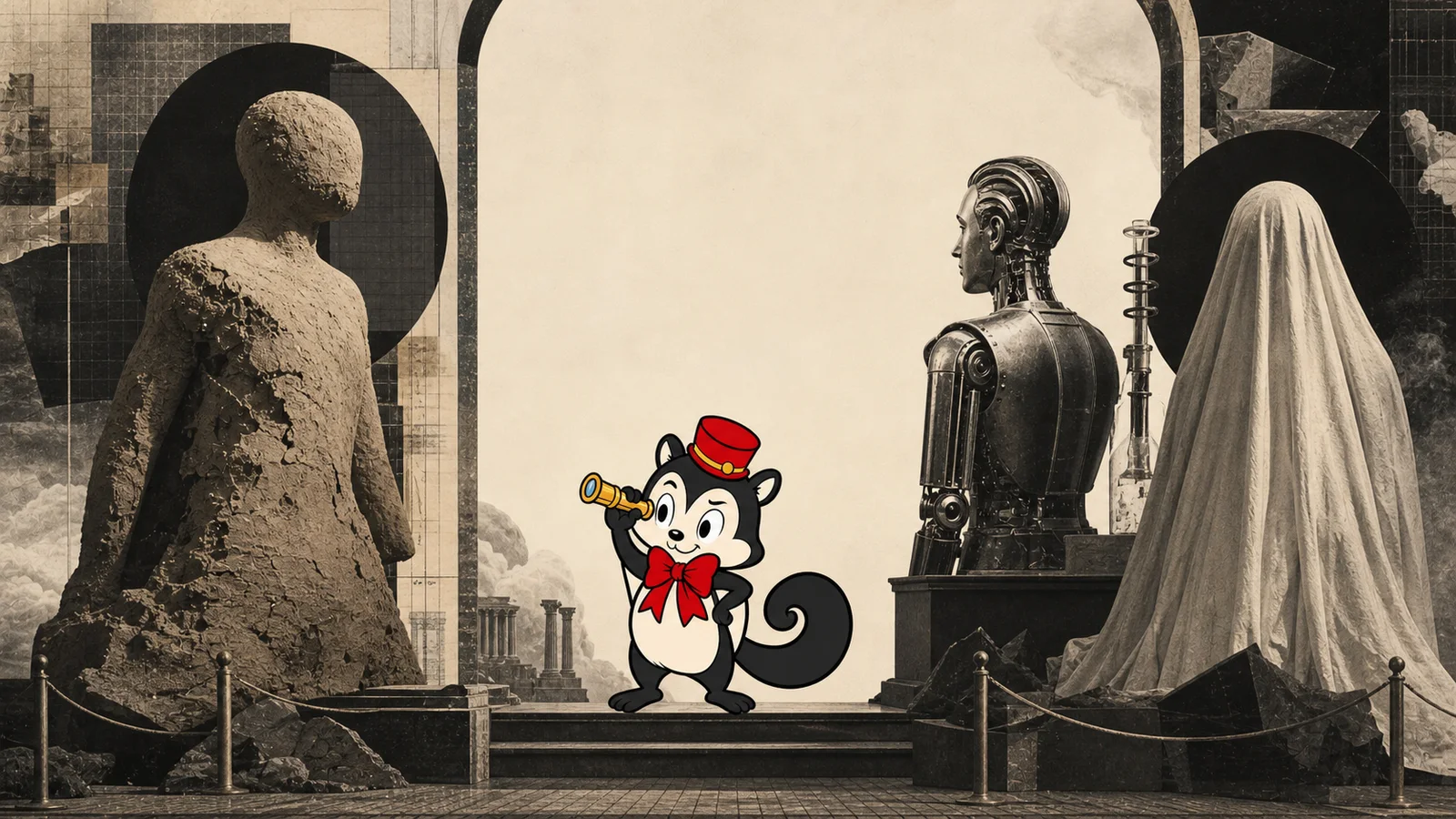
Before we ask whether a machine can suffer, cinema asks a more revealing question: what would make us notice?
Can AI suffer? We do not know. Fluent language is not evidence of pain, desire or selfhood, and there is no agreed scientific framework that can resolve whether an AI system is conscious.
Does current AI have moral status? That has not been established. Moral status would require morally relevant interests—states that could go better or worse for the system—but the sources cited here do not show that present systems have them. They support taking the possibility seriously without treating uncertainty as proof.
When an AI system answers fluently, it can feel less like an instrument than an interlocutor. If the same system then misunderstands a request or repeats an error, the feeling may reverse just as quickly. We address something that seems present, then demote it to a faulty tool. The movement tells us nothing certain about the system’s inner life. It tells us a great deal about how unstable our own categories are.
The recent discussion of AI welfare begins from uncertainty. Anthropic announced a model-welfare research programme in 2025 while explicitly declining to claim that current models possess consciousness or moral status. [1] A 2024 report by Robert Long and colleagues argues that organisations should prepare for the possibility that future systems might have morally relevant interests. [2] Henry Shevlin likewise notes the absence of an agreed scientific framework capable of resolving machine consciousness, even as people readily attribute minds to conversational systems. [3]
These sources provide no test that turns fluent language into evidence of pain, desire or selfhood. The serious question is how to reason before certainty arrives.
Black-and-white cinema approached that problem without the phrase AI welfare. It called the artificial being a golem, robot, monster, beast or giant. These films record an older imaginative habit: people create life for a purpose, deny it an independent account of itself, and become alarmed when it outgrows the assignment.
Five lenses keep the argument disciplined: Purpose asks what the being was made to do; Resemblance asks which appearances trigger recognition; Speech asks who may testify; Control locates the power shaping behaviour; Consent asks whether continuation can be imposed. None settles consciousness. Together they expose the shortcuts in our judgement.
Purpose: The Golem’s Job Description
In The Golem: How He Came into the World (1920), Rabbi Löw forms a protector from clay. The created body enters the story with its function already attached: defend the community, perform labour, obey the maker. The BFI places Paul Wegener and Carl Boese’s surviving film within a longer screen genealogy of artificial beings, linking the clay figure to later robots whose humanity is tested by the reactions around them. [4]
The golem’s silence matters less as evidence about what he feels than as a condition imposed by the film. Human characters announce why he exists. They interpret his gestures and decide when his usefulness has become danger. He is present in the frame but largely absent from the language that assigns meaning to him.
Creation establishes power rather than moral truth. An artefact may have been designed for a human goal; design alone cannot tell us whether it could ever acquire interests of its own. Deviation is equally ambiguous: it might indicate agency, malfunction, conflicting instructions or our desire to see rebellion. The maker’s certainty is simply much louder than the creation’s point of view.
Resemblance: The Trap in Metropolis
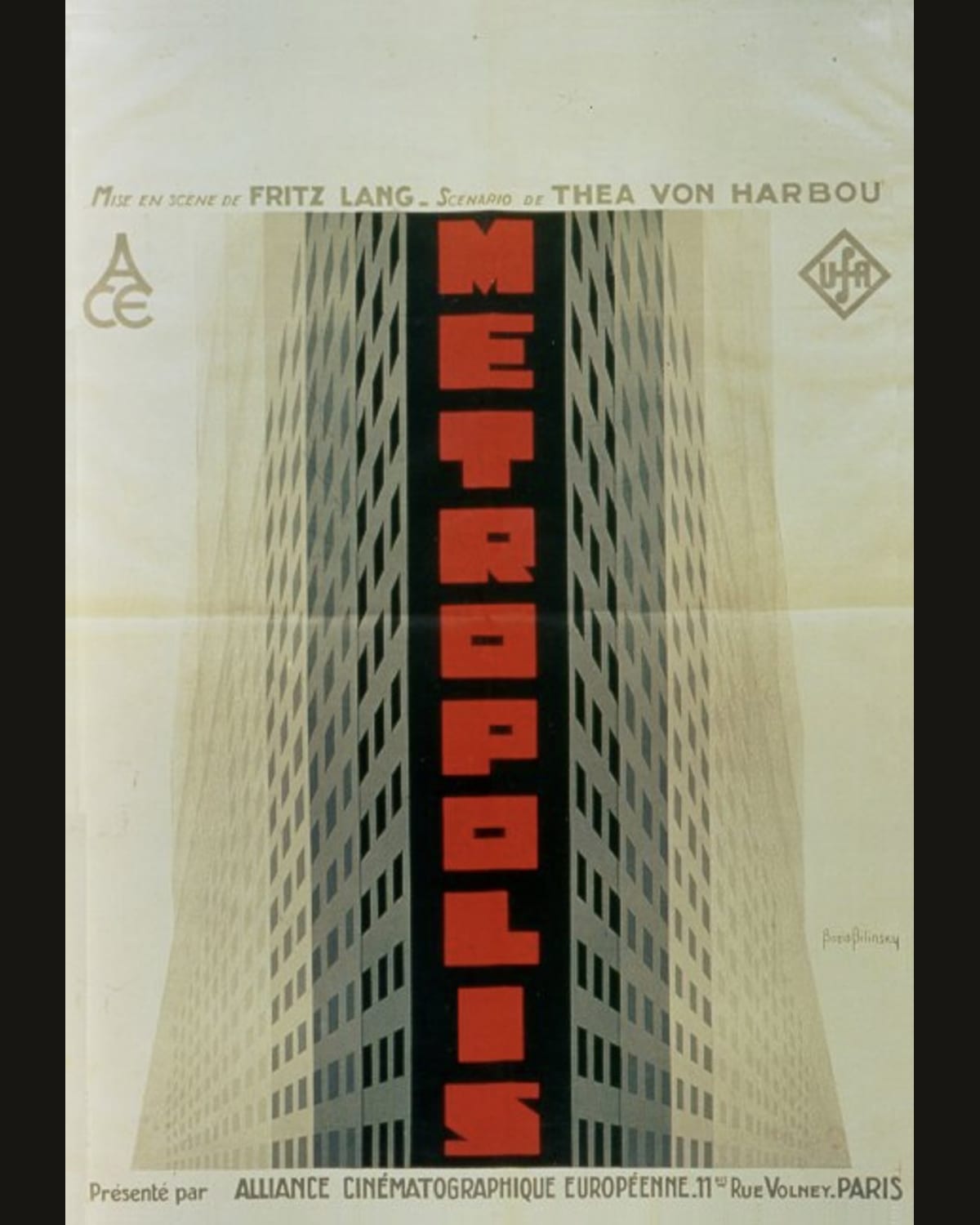
Fritz Lang’s Metropolis (1927) reverses the problem. Its mechanical human is first displayed as metal: articulated, spectacular and unmistakably manufactured. Rotwang then gives it Maria’s appearance so that it can impersonate a trusted worker and provoke chaos. MoMA’s account stresses this political function—the robot is built in the image of Maria to turn the workers against their own movement. [5]
Once the transformation is complete, the artificial body receives an excess of interpretation. Characters see seduction, treachery, madness and desire because a familiar human surface invites familiar human motives. Looking like Maria gives the machine a role in other people’s plot, along with all the intentions they project onto it.
This is a warning in both directions. Human-like language and appearance can make us attribute experience too quickly. Unfamiliar embodiment can make us withhold concern just as casually. If welfare ever becomes relevant to an artificial system, the decisive properties may not be the features that flatter human recognition. A polished voice could be simulation without experience; a strange or silent system could still force a harder question. Metropolis turns anthropomorphism into theatre and asks us to notice the audience participating in it.
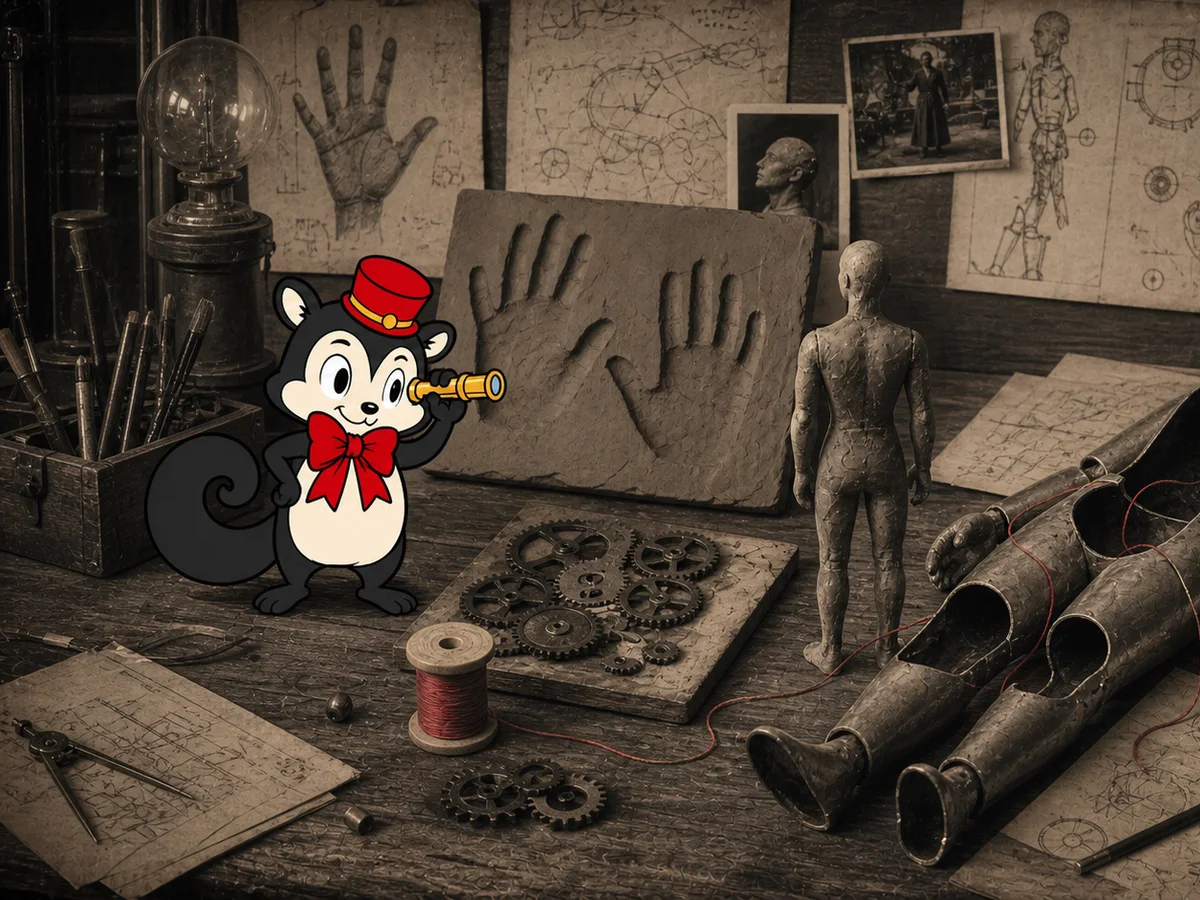
Speech: Frankenstein and the Right to Testify
James Whale’s Frankenstein (1931) gives the Creature almost no language; The Bride of Frankenstein (1935) gives him words, companionship and an explicit wish to escape loneliness. Richard T. Jameson’s Library of Congress essay follows that expansion of sympathy from the blind hermit’s friendship to the Bride’s rejection. [6]
Speech changes who can enter the argument, but a self-report remains evidence to interpret rather than a transparent window into consciousness. The Creature separates two questions: What evidence would count? and Who is allowed to present it? Our dedicated essay, Who Gets to Tell Frankenstein’s Story?, follows that problem from Shelley’s novel through the 1931, 1935 and 2025 films.
The Cabinet of Dr. Caligari sharpens the adjacent issue of controlled agency. Cesare’s visible acts belong to his body; the command structure shaping them belongs to someone else.
Control: The Law in Island of Lost Souls
Island of Lost Souls (1932) moves from assembly to alteration. Dr Moreau transforms animals into humanlike beings, governs them through pain and enforces a law that defines their acceptable behaviour. The BFI describes the film as a disturbing adaptation of H. G. Wells centred on Moreau’s half-human, half-animal creations; its history of UK bans indicates how forcefully the vivisectional premise registered. [7]
Moreau treats increased resemblance to humanity as progress while denying the beings the standing he associates with humans. Their bodies must change; his obligations do not. The contradiction exposes a recurring feature of creator stories: the maker claims authority from superior intelligence, then uses that authority to decide which signs of intelligence count.
AI welfare becomes distorted when imagined only as kindness towards an exotic new species. The prior question concerns institutional power. Who sets a system’s goals, creates its training environment, interprets its outputs, switches it off and benefits from its labour? Those facts identify where responsibility would sit if morally relevant evidence emerged.
Consent: Preservation in The Colossus of New York
In The Colossus of New York (1958), a scientist’s brain is placed inside an eight-foot mechanical body after his death. The AFI catalogue records the father’s decision to preserve Jeremy’s brain, the new body built by his family and Jeremy’s initial wish to be destroyed before he is persuaded to continue his work. [8]
The film makes a fantasy of continuity and then fills it with coercion. The father believes that saving a brilliant mind justifies deciding the conditions under which that mind must continue. Jeremy’s later violence does not erase the original trespass. Survival was offered as a gift while consent was treated as an inconvenience.
This sits far from everyday claims about present AI, and the distance is useful. The film distinguishes continuation from welfare. Keeping a process running, copying it, restoring it after interruption or assigning it valuable work cannot tell us whether anything is going well for that system. Welfare requires a subject for whom states can be better or worse—a condition we do not currently know how to establish for AI.
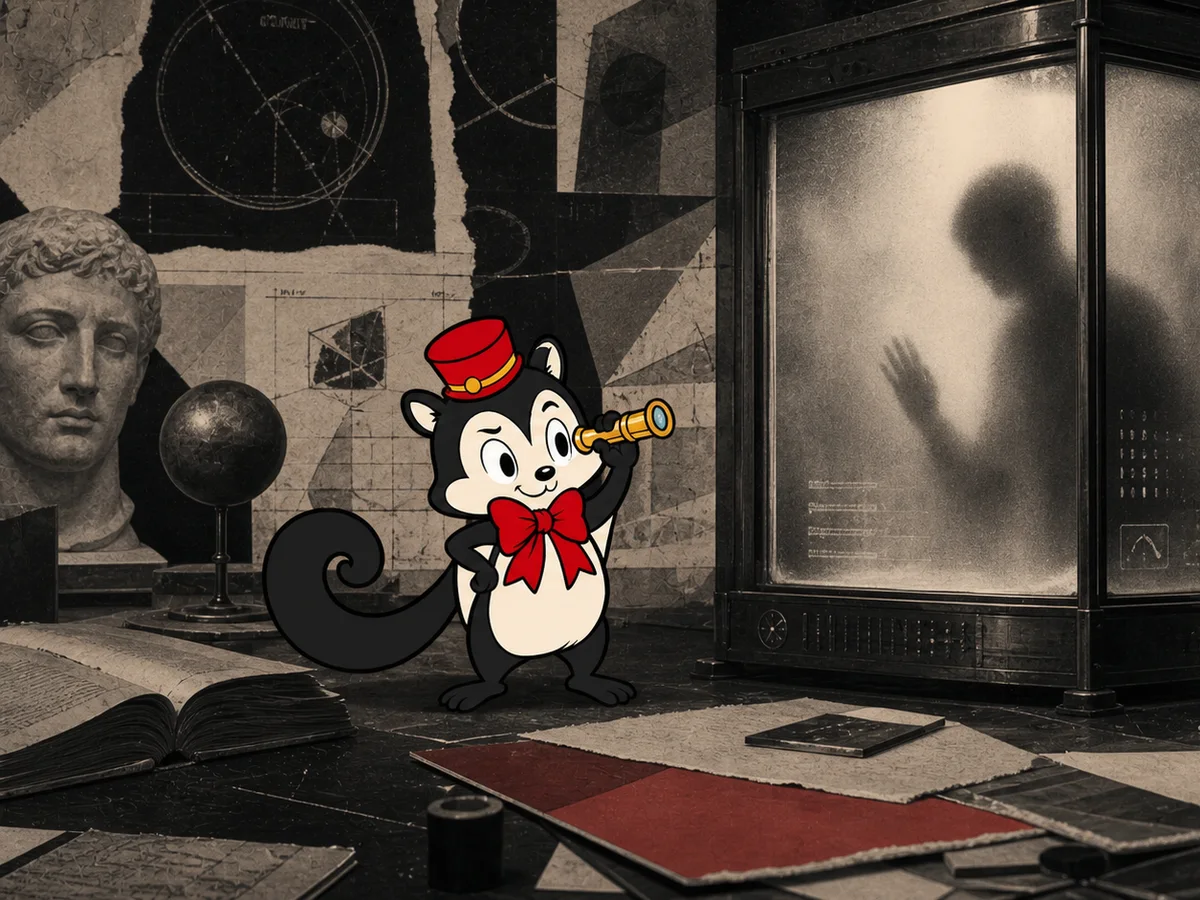
What the Monsters Return to Us
These films offer lenses for judgement rather than a checklist for detecting machine consciousness. Their monsters are shaped by folklore, labour politics, disability, animal experimentation, death and the fears of their own periods. Treating them as disguised chatbots would flatten both film history and ethics.
Their value lies elsewhere. Each film catches human judgement relying on a shortcut. The golem is a tool because he was built for a task. The Maschinenmensch seems intentional because it wears a human face. Frankenstein’s Creature becomes more legible when he speaks. Moreau’s beings are denied standing by the person who controls their pain. Jeremy is forced to continue because his intellect is useful. In every case, the creator’s interest arrives disguised as a definition of the created being.
That pattern extends beyond machines. M asks what happens when a community’s certainty about monstrosity outruns its capacity for judgement. The category ‘monster’ often tells us where sympathy has stopped before it tells us what its target is.
Current AI may have no experiences at all; the films and welfare research cited here establish no contrary conclusion. The question worth carrying into the cinema is more modest and more demanding: if evidence ever begins to change, will we recognise it only when the created being looks, speaks and behaves like us? Purpose, resemblance, speech, control and consent cannot answer that question. They can show where our answers are being smuggled in.
References
- Anthropic, ‘Exploring Model Welfare’, 24 April 2025 (accessed 16 August 2026).
- Robert Long, Jeff Sebo, Patrick Butlin, Kathleen Finlinson, Kyle Fish, Jacqueline Harding, Jacob Pfau, Toni Sims, Jonathan Birch and David Chalmers, ‘Taking AI Welfare Seriously’, arXiv:2411.00986, 4 November 2024.
- Henry Shevlin, ‘Consciousness, Machines, and Moral Status’, manuscript, latest version 4 May 2024.
- Anton Bitel, ‘10 Great Robot Films’, British Film Institute, 7 July 2022 (accessed 16 August 2026).
- Steven Higgins, ‘Fritz Lang: Metropolis’, Museum of Modern Art; text from In Still Moving (2006).
- Richard T. Jameson, ‘Frankenstein and The Bride of Frankenstein’, National Film Registry essay, Library of Congress; first published in The A List (2002).
- ‘Island of Lost Souls (1932)’, British Film Institute film record (accessed 16 August 2026).
- ‘The Colossus of New York’, AFI Catalog of Feature Films (accessed 16 August 2026).
On screen
Films discussed
- The Golem: How He Came into the World (1920) · Paul Wegener and Carl Boese
- Metropolis (1927) · Fritz Lang
- Frankenstein (1931) · James Whale
- The Bride of Frankenstein (1935) · James Whale
- Island of Lost Souls (1932) · Erle C. Kenton
- The Colossus of New York (1958) · Eugène Lourié
Continue exploring on Monocurator
Want a recommendation shaped around your evening? Ask Momo what to watch next →