What to expect
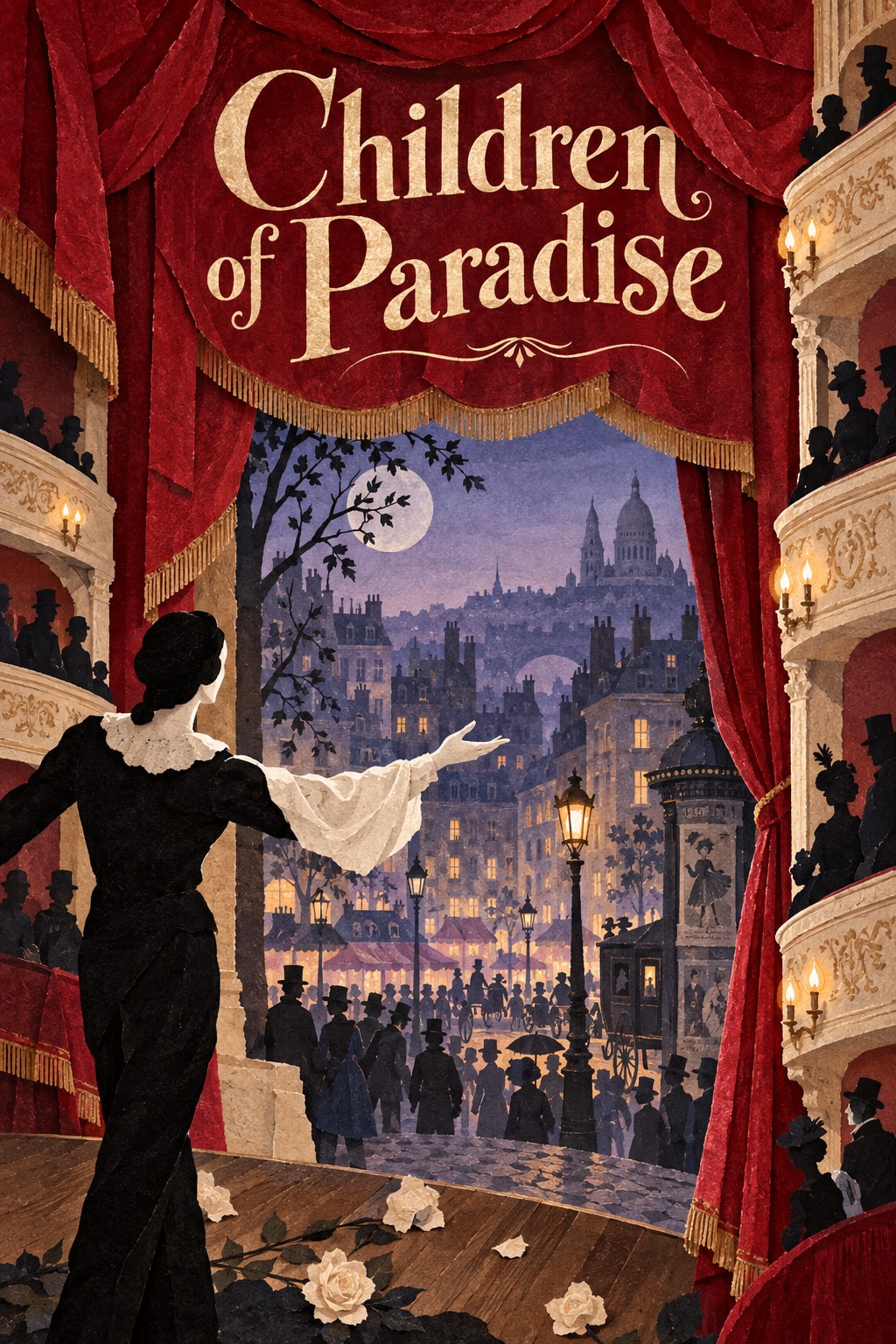
Children of Paradise builds an enormous romantic world around Garance and the four men drawn to her: a mime, an actor, a criminal, and an aristocrat. Marcel Carné and Jacques Prévert turn nineteenth-century Paris into a network of stages, backstage corridors, streets, disguises, and audiences. Produced under the German occupation, the film’s scale and continuity are remarkable, but its achievement is not merely logistical. Jean-Louis Barrault’s Baptiste makes silent gesture compete with spoken theatre, while the script asks whether love can exist outside the roles people create for themselves. Its crowded final movement remains one of cinema’s great images of intimacy lost inside spectacle.
How to ease in
The 190-minute film is divided into two parts, making the interval a natural stopping point. Keep Garance and Baptiste as your emotional anchors while the other relationships develop. Names and theatrical history matter less than recognizing how each character performs a version of freedom, possession, ambition, or devotion.
Heads-up
Open the note ↓ Close the note ↑
The boulevard promises that everyone can be seen, yet the film keeps showing how recognition fails inside crowds. Baptiste can communicate to a whole theatre without speech, but private feeling remains harder. The spectacle grows until two people can no longer cross it.
— Momo

Credits & versions
- Cast
- Arletty — Garance · Jean-Louis Barrault — Baptiste Deburau · Pierre Brasseur — Frédérick Lemaître · Marcel Herrand — Lacenaire
- Screenplay
- Jacques Prévert
- Production
- Raymond Borderie
- Cinematography
- Roger Hubert
Version map
Where to go next
Want a gentler, shorter, or stranger next film? Ask Momo for something like this →
Momo is on shift. Visit Momo Cinema →