See Films Differently Film craft
Why Was Night of the Living Dead Shot in Black and White?
Colour was too expensive—but black-and-white made Night of the Living Dead look like news, sharpened its effects and made its ending feel like evidence.
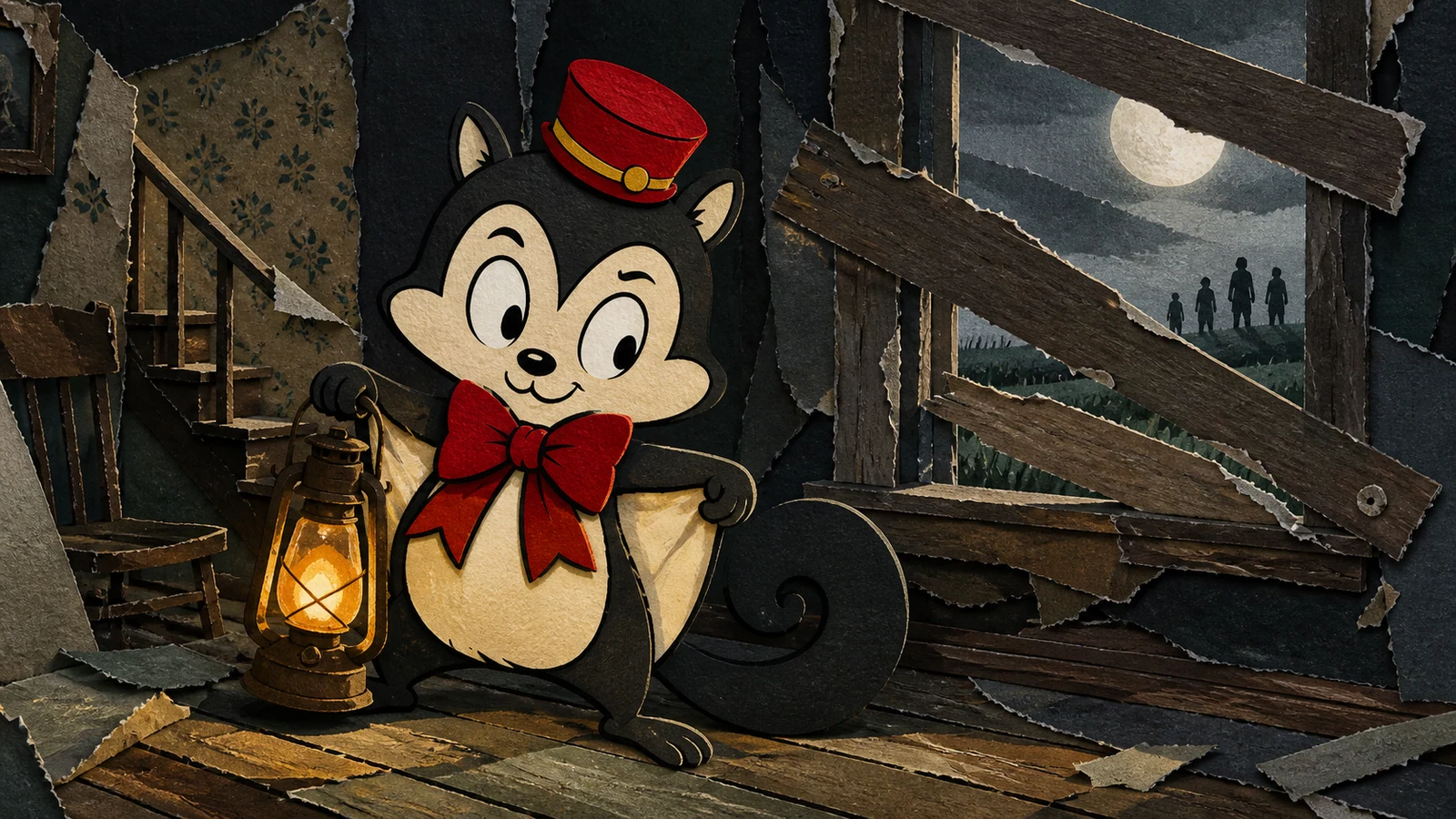
Spoiler note: This article discusses the final images of Night of the Living Dead.
Why was Night of the Living Dead shot in black and white? George A. Romero and his Pittsburgh collaborators were making a feature with very little money, and colour was beyond their budget. They used 35mm black-and-white film instead. [1]
That practical choice did more than save money. It made simple effects more convincing, gave the farmhouse a harsh geometry, let the invented television reports resemble real news and turned the ending into something closer to evidence than spectacle.
By 1968, Hollywood had been making major colour films for decades. The film therefore looked old enough to recall earlier horror but immediate enough to resemble something caught by a local news camera. A financial limit became part of the film’s identity.
Was Black-and-White Still Normal in 1968?
Not in quite the way it had been a decade earlier.
Colour had not made monochrome technically obsolete, but it had changed audience expectations. Black-and-white could now suggest a low budget, television, documentary, older cinema or an unusually deliberate artistic choice.
Romero’s film arrived in that unsettled period. It did not have the polished colour of a studio horror production. It did not look comfortably antique either. Its fast cutting, handheld passages and contemporary setting made the grey image feel immediate.
That tension is important. The film looks old enough to resemble a nightmare inherited from earlier horror, yet current enough to resemble something caught by a local news camera.
The Immediate Reason: Colour Cost Too Much
The production was genuinely small. Published estimates vary: the AFI records figures from below $100,000 to $125,000, while American Cinematographer gives a budget of $114,000. Both sources agree on the essential point: this was a modestly financed independent film, not a studio production with a full technical department. [1] [2]
The team did have useful experience. Romero and several collaborators ran the Pittsburgh company Latent Image, making commercials and industrial films. Romero recalled learning from technicians in local laboratories that processed 8mm, 16mm and 35mm material, including film shot for news. The group had equipment and practical knowledge even when it lacked money. [3]
They therefore did not make the film look cheap by accident. They made choices inside a severe limit.
One common mistake is to assume that the roughness means Night of the Living Dead was shot on 16mm. It was not. Romero photographed it on 35mm monochrome. [1] [2]
That gave the film a strange combination: the image could retain detail and strong tonal contrast, while the mobile camera, hard lighting and independent production kept it from looking like a polished studio picture.
Black-and-White Made the Effects More Believable
Monochrome also changed what the production could place in front of the camera.
The BFI notes that chocolate syrup could pass for blood in black-and-white. Mortician’s wax helped create wounds and decaying skin, while roasted ham reportedly stood in for the flesh eaten by the ghouls. [4]
These materials did not need to reproduce the exact red, purple and yellow tones of an injury. They needed to produce convincing darkness, wetness, texture and contrast.
That distinction helps explain why the violence remains upsetting. Colour might have invited us to judge whether an effect looked realistic. Monochrome asks a more basic question: what are these pale hands doing to that dark, glistening mass?
The absence of colour does not make the images less physical. It can make material harder to identify, and therefore harder to dismiss.
The Farmhouse Becomes a Machine for Light and Shadow
The cemetery at the beginning is not pitch-black. It is open, breezy and ordinary. The first attack violates daylight rather than emerging from a Gothic night.
Inside the farmhouse, the visual system changes. Boards divide windows into narrow strips. Lamps isolate faces. Doorways become black rectangles. Headlights sweep across the exterior. A room that should provide safety keeps breaking into bright and dark zones.
This is partly an interpretation of the finished images, not a claim that every shadow was planned in advance. Romero was candid about mistakes in his first feature. He described his heavy use of close coverage and cutting as a practical way to preserve options in the edit. That method produced what the interviewer calls a nervous energy. [3]
The BFI describes the result as a blend of grainy monochrome, vérité-like realism, bold cuts and exaggerated angles. [5]
Black-and-white helps those qualities cohere. A cheap lamp can create a severe white patch. An unlit corner can disappear completely. The farmhouse stops feeling like a fully mapped home and becomes a sequence of uncertain compartments.
The people inside keep arguing about the safest place to hide. Visually, the house has already told us that no space is whole.
Why It Feels Like Television News
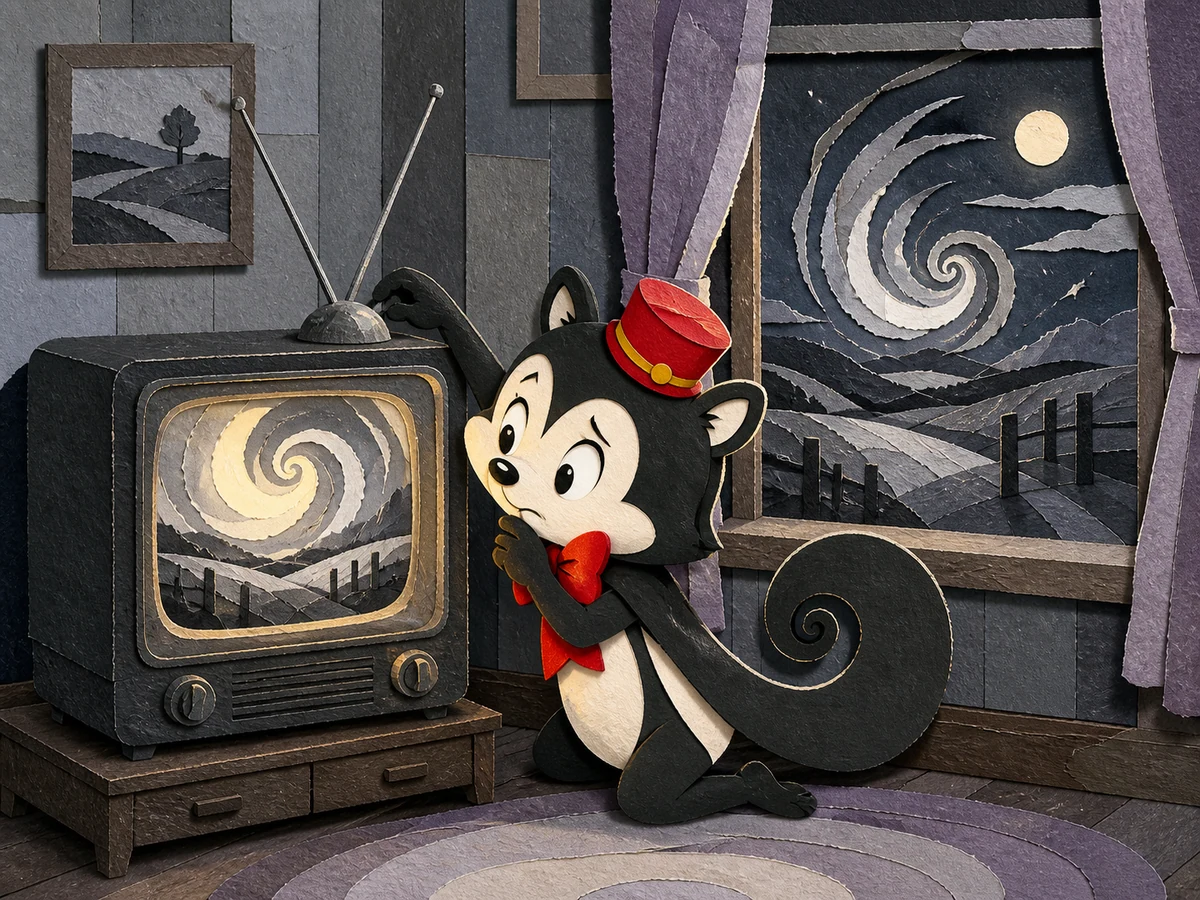
Much of the film’s information arrives through a television set. Officials offer fragments of explanation. Reporters describe attacks. The characters gather around a small screen because it appears to connect their sealed room to a rational world outside.
The black-and-white image makes the border between the film and the television report unusually thin. When the broadcast appears, we do not enter a separate visual universe. The same greys continue.
Romero had learned around film laboratories and news editors, and Latent Image made factual and commercial work. That background makes the resemblance understandable. Yet it is safest to call the newsreel quality an effect of the film rather than a fully documented master plan for choosing monochrome. The clearest recorded reason remains cost. [1] [3]
What matters for the viewer is how the effect develops. The television promises reliable information, but the information remains incomplete. The visual language of news does not restore control. It simply gives catastrophe an official-looking frame.
The Ending Turns Horror into a Record
The final sequence makes the documentary feeling hardest to escape.
After the night inside the farmhouse, the film ends with a series of still images. They resemble press photographs or pictures in an official file: rough, distant records of bodies being handled and burned.
The shift changes our relationship to what has happened. Moving images can still feel like a story unfolding. Still photographs imply that the event is over and has already been classified by someone else.
Black-and-white intensifies that effect because the stills do not look like colourful promotional images from a horror film. They resemble evidence.
That does not mean monochrome has one fixed moral meaning. It means the film can move between nightmare, news and record without changing its basic visual material.
Why Do Filmmakers Still Choose Black-and-White?
Today, removing colour is rarely the cheapest default. It is usually a choice with a specific purpose.
Those purposes differ from film to film.
For The Lighthouse (2019), cinematographer Jarin Blaschke said black-and-white was meant to feel unapologetically old-fashioned, transport the audience and create instant abstraction. Shooting on black-and-white negative also produced pronounced grain and local contrast that emphasised texture. [7]
For Roma (2018), Alfonso Cuarón treated monochrome as the visual foundation of a personal reconstruction. Although the film was captured digitally in colour, he required location and casting material to be viewed in black-and-white and adjusted costumes and sets according to how their colours translated into grey tones. [8]
These examples are useful because they prevent a lazy answer. Filmmakers do not choose black-and-white only to make a film look old.
Monochrome can:
- make everyday reality feel abstract;
- join separate locations into one visual world;
- emphasise light, faces, grain and texture;
- evoke a historical image without recreating it literally;
- remove distracting colour relationships;
- make a fictional event resemble memory, news or evidence.
Our broader guide, Why Watch Black-and-White Films Today?, explores those possibilities across many kinds of film.
So Why Is Night of the Living Dead in Black and White?
Because colour cost more than this independent production could afford.
That practical answer should not be replaced by a romantic myth about perfect artistic control. Romero and his collaborators were resourceful filmmakers working with money, equipment, weather and time they could not fully command.
Yet a practical cause can produce an artistic result.
Black-and-white made improvised effects usable. It turned the farmhouse into hard light and deep shadow. It allowed television reports, attacks and final still photographs to occupy the same unstable visual world. The film looks like horror while it is happening and like evidence after it is over.
The production could not afford colour. What it made from that absence became impossible to separate from the film.
For a viewing choice after Romero, compare eight black-and-white horror movies by mood and intensity, from Frankenstein to The Innocents.
Frequently Asked Questions
Was Night of the Living Dead filmed in black-and-white on purpose?
Yes. It was photographed on 35mm black-and-white film. The immediate reason was financial: colour was outside the modest production budget. The filmmakers then used monochrome effectively in the lighting, effects and finished visual style.
Was colour film unavailable in 1968?
No. Colour features were common by 1968. That is one reason the film’s monochrome already carried associations with low-budget production, television, documentary images and earlier horror cinema.
Was Night of the Living Dead shot on 16mm?
No. Its rough appearance has sometimes encouraged that assumption, but the original feature was shot on 35mm black-and-white film. Criterion lists the restored original as black-and-white in a 1.37:1 aspect ratio. [6]
Does black-and-white make the film scarier?
That is a judgement rather than a measurable fact, but it changes the kind of fear the film creates. Deep shadows conceal space, improvised effects become harder to identify, and the television reports and final photographs can resemble records of a real crisis.
Should I watch a colourised version?
The original was designed and photographed in black-and-white, and the major restoration supervised by Romero and his collaborators preserves that presentation. [6] A colourised edition can be a curiosity, but it changes the tonal relationships on which the original lighting and effects depend.
References
The production facts below come from film institutions and craft publications. Claims about the farmhouse’s fragmented space, the news-like effect and the ending’s resemblance to evidence are Monocurator’s interpretations of the finished film.
- David E. Williams, ‘Wrap Shot: Night of the Living Dead’, American Cinematographer, 30 October 2017.
- ‘Night of the Living Dead’, AFI Catalog of Feature Films (accessed 29 August 2026).
- Kim Newman, ‘George A. Romero: the Sight and Sound Interview’, British Film Institute, republished 19 July 2017.
- ‘10 Great Films with DIY Special Effects’, British Film Institute, 24 November 2021.
- Michael Blyth, ‘1968: Night of the Living Dead’, in ‘A Great Horror Film for Every Year, from 1922 to Now’, British Film Institute, updated 22 September 2022.
- Night of the Living Dead (1968), Criterion Collection edition and restoration notes (accessed 29 August 2026).
- Patricia Thomson, ‘Stormy Isle: The Lighthouse’, American Cinematographer, 13 January 2020.
- Mark Dillon, ‘Roma: Memories of Mexico’, American Cinematographer, 7 January 2019.
On screen
Films discussed
- Night of the Living Dead (1968) · George A. Romero
Want a recommendation shaped around your evening? Ask Momo what to watch next →