What to watch next
8 Black-and-White Horror Movies: Where to Start
Choose a black-and-white horror film for tonight: classic monsters, ghost stories or a zombie siege. Compare eight films by mood, runtime and intensity.
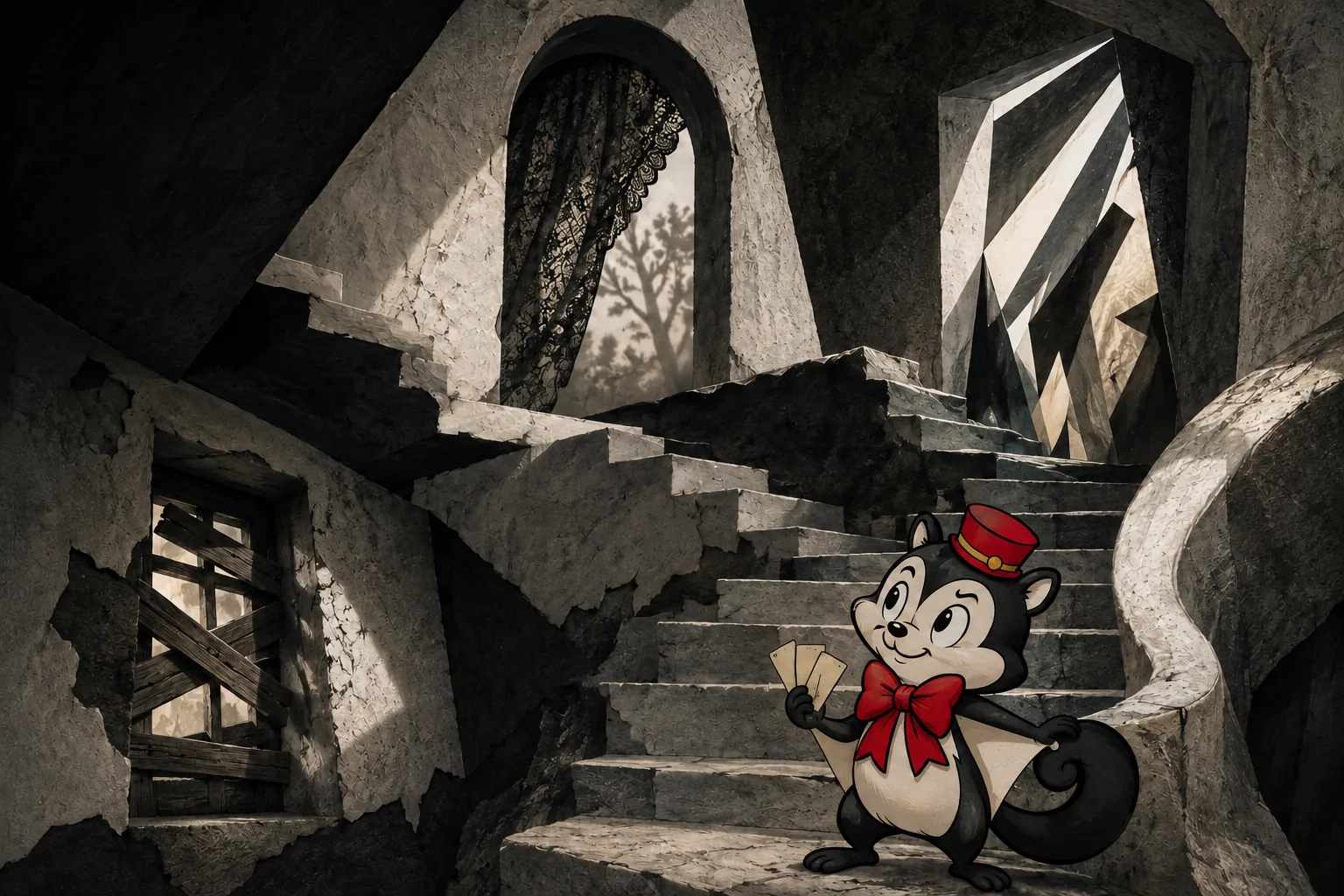
Start with Frankenstein (1931) for a short classic monster film, Cat People for shadows and suggestion, or Night of the Living Dead for a harsher evening. These eight black-and-white horror movies offer different kinds of fear, from a painted nightmare to a farmhouse under siege.
For Halloween, the useful question is what sort of night you want. A ghost story asks you to watch empty space. A monster film gives fear a body. A siege makes you measure the distance between a door and the people trying to hold it shut. Choose that experience first; the dates can come second.
Choose tonight’s film
| If you want… | Start here | Runtime reference | The experience |
|---|---|---|---|
| A classic monster and a short evening | Frankenstein (1931) | 70 min [1] | Tragic, direct, full of memorable faces |
| Fear created through suggestion | Cat People (1942) | 73 min [2] | Shadows, footsteps and uneasy intimacy |
| A silent nightmare that looks hand-built | The Cabinet of Dr. Caligari (1920) | 77 min [4] | Distorted scenery and theatrical gestures |
| A vampire who makes the world feel infected | Nosferatu (1922) | 95 min [4] | Patient, strange and atmospheric |
| A ghost story with room for doubt | The Innocents (1961) | 100 min [5] | Watchful, tense and emotionally troubling |
| Suspense built around ordinary places | Psycho (1960) | 108–109 min [6] | Precise, shocking and darkly playful |
| Beauty interrupted by bodily horror | Eyes Without a Face (1960) | 90 min [7] | Quiet surfaces and explicit surgery |
| A zombie siege with a bleak outlook | Night of the Living Dead (1968) | 96 min [8] | Confrontational, gory and increasingly desperate |
The times follow the catalogue records or editions cited. The silent-film figures are rounded from the Murnau Foundation’s restored DCPs: 77:09 for Caligari and 95:04 for Nosferatu.
1. Frankenstein — the easiest route into classic monsters
James Whale’s Frankenstein makes its central situation immediately legible: a man creates life, then struggles to accept what he has made. Boris Karloff’s creature gives the story a vulnerable physical presence beneath the familiar make-up. [1]
Choose it when you want to encounter one of horror’s defining figures without committing to a long film. Its laboratory equipment and jagged spaces announce a heightened world, but the creature’s confusion makes that world emotionally accessible.
The useful thing to watch is the difference between how a person sees the creature and how the creature responds. Fear does not belong to only one side of the encounter. That tension gives the monster more to do than threaten people.
2. Cat People — for a threat you strain to see
In Jacques Tourneur’s Cat People, Irena fears that intimacy could unleash a destructive transformation. The Val Lewton production builds unease through lighting and sound, letting familiar spaces become uncertain before anything extraordinary is clearly visible. [2]
This is the choice for an evening of suggestion. Listen to what continues when the frame becomes difficult to read. A sound can give a patch of darkness an apparent size, direction or intention.
Its restraint also makes a useful contrast with Frankenstein. There you can study the creature’s face; here the act of trying to locate the danger becomes part of the experience. Neither approach needs colour to organise your attention.
3. The Cabinet of Dr. Caligari — for a world shaped like a nightmare
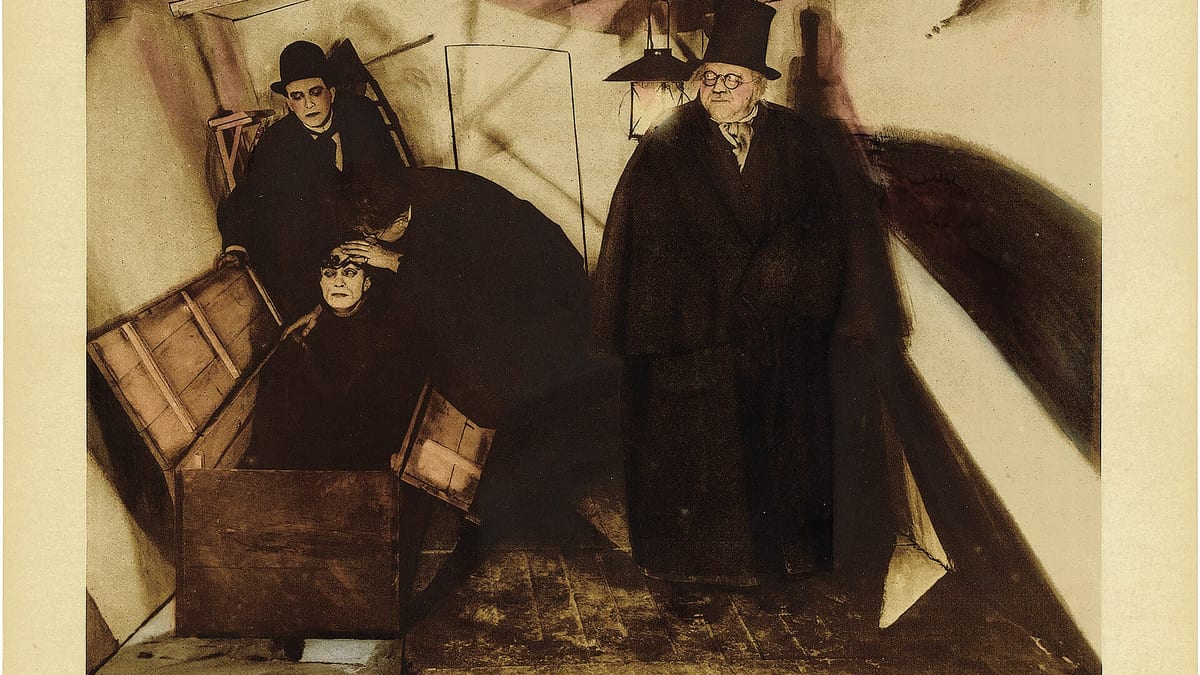
Robert Wiene’s The Cabinet of Dr. Caligari brings together a sinister showman, a sleepwalker and streets that seem incapable of offering a straight path. Its painted shadows and distorted sets make the scenery as expressive as the performers. [3]
Choose it for the look of the film as much as its mystery. The exaggeration is easier to enter if you let the buildings behave like parts of a nightmare. A door can seem hostile before anyone passes through it.
It is also the shorter silent option here. A restored copy lets you see the design with far more clarity than the murky images sometimes used to illustrate early horror.
4. Nosferatu — for dread that spreads beyond the castle
F. W. Murnau’s Nosferatu takes its vampire into a world of journeys, houses and approaching death. Count Orlok’s silhouette is famous, but the spaces awaiting him matter too. Choose this over Caligari when you want the unease to extend into landscapes and ordinary buildings. [3]
Give the opening time to establish its world. The film works through anticipation as well as encounters: an empty space can feel occupied by what is coming towards it.
Use our Nosferatu restoration guide to choose a copy. A restored presentation may be tinted. Those blue or amber passages belong to the history of silent-film colour, rather than automatically indicating modern colourisation.
5. The Innocents — for ghosts and uncertain perception
Jack Clayton’s The Innocents follows a governess who becomes convinced that something is wrong with the children in her care. Deborah Kerr’s performance, the sound design and Freddie Francis’s wide compositions hold the story between intense conviction and unanswered questions. [5]
Watch the edges and depths of the image, not just the person speaking. The film gives you space in which to search, then makes that searching uncomfortable.
This is a good choice for viewers who want to discuss a film afterwards. What did you see, what did someone tell you, and when did you start accepting an explanation? Let those questions develop during the viewing; reading an account of the ending first would take away much of the pleasure.
6. Psycho — for familiar places made unsafe
Alfred Hitchcock’s Psycho begins with recognisable desires and small practical decisions before making its motel and house feel impossible to forget. Its control of information, framing and sound turns the viewer’s curiosity into a source of pressure. [6]
Choose it when you want a longer sound film with strong narrative momentum. Even if you know the famous scenes, there is plenty to watch in the preparations: the conversations, the pauses and the details that make you look towards the wrong thing.
Afterwards, our five films to watch after Psycho follow specific parts of that unease—sound, predatory watching, strange architecture and unreliable narration.
7. Eyes Without a Face — for beauty with an unforgiving edge
Georges Franju’s Eyes Without a Face concerns a surgeon’s attempts to restore his injured daughter’s face. The film’s calm surfaces and her pale mask create a strange stillness around a story that includes explicit surgical horror. [7]
Choose it if the contrast between delicacy and violence interests you. Its quietness should not be mistaken for mildness: the operation is an important part of deciding whether this is your film for tonight.
Where Cat People asks you to imagine much of its threat, Franju can make looking directly the difficult thing. It is a different use of restraint, and a sharper bodily experience.
8. Night of the Living Dead — for the hardest night here
George A. Romero’s Night of the Living Dead traps strangers in a farmhouse as flesh-eating dead gather outside. Disagreement inside the house becomes another threat to survival. Its violence and bleak social pressure make it a strong choice when you want horror with abrasive force. [8]
The simple geography helps: doors, windows, upstairs, cellar. Pay attention to who claims authority over those spaces and what their decisions cost everyone else.
Our article on why Night of the Living Dead was filmed in black and white follows the production choice behind that image. Here, choose it for the siege itself. It leaves little room for the reassuring distance sometimes associated with “an old horror movie”.
If you only want one—or a double bill
For a first encounter, choose Frankenstein. If you already like ghost stories and ambiguity, go straight to The Innocents. If your main requirement is a severe, unsettling finish, choose Night of the Living Dead.
For a double bill, pair Cat People with The Innocents: two films that make you search the frame, in different ways. Or pair Caligari with Nosferatu, moving from painted distortion to a vampire’s passage through a more recognisable world. In either pairing, the second film changes what you notice in the first.
Sources
Sources checked on 6 September 2026. Selection, viewing order and descriptions of intensity are Monocurator’s editorial choices.
- AFI Catalog: Frankenstein, 1931 release record, synopsis and credits; 70 minutes.
- The Criterion Collection: Cat People, film description and 73-minute presentation.
- BFI: 10 great silent horror films, Caligari and Nosferatu entries.
- Friedrich-Wilhelm-Murnau-Stiftung: Silent-film DCP catalogue, February 2025; Caligari 77:09 and Nosferatu 95:04.
- The Criterion Collection: The Innocents, film description and 100-minute presentation.
- AFI Catalog: Psycho, synopsis, credits and 108–109-minute record.
- The Criterion Collection: Eyes Without a Face, film description and 90-minute presentation.
- The Criterion Collection: Night of the Living Dead, film description and 96-minute presentation.
On screen
Films discussed
- Frankenstein (1931) · James Whale
- Cat People (1942) · Jacques Tourneur
- The Cabinet of Dr. Caligari (1920) · Robert Wiene
- Nosferatu (1922) · F. W. Murnau
- The Innocents (1961) · Jack Clayton
- Psycho (1960) · Alfred Hitchcock
- Eyes Without a Face (1960) · Georges Franju
- Night of the Living Dead (1968) · George A. Romero
Continue exploring on Monocurator

Want a recommendation shaped around your evening? Ask Momo what to watch next →