What to expect
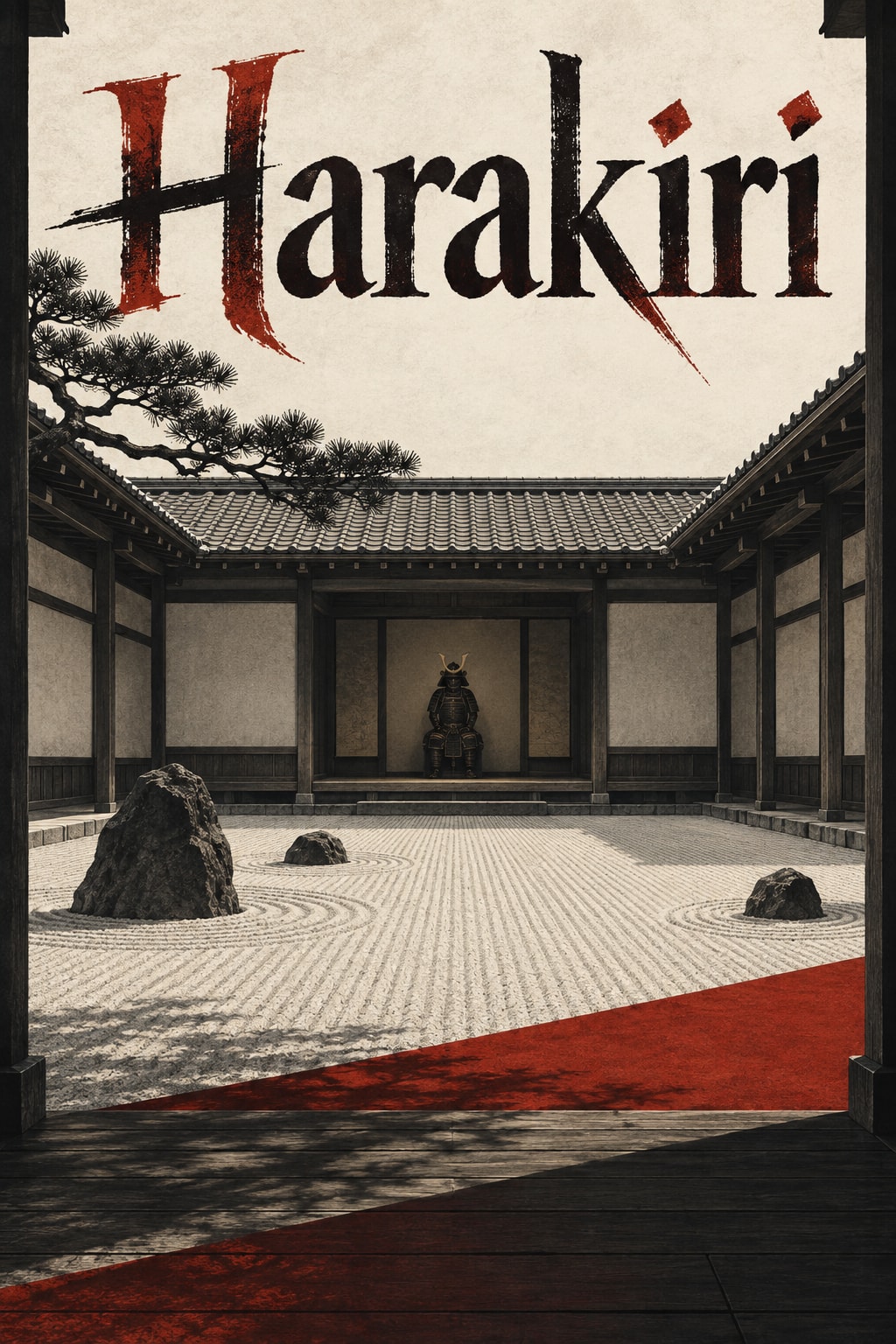
Harakiri dismantles the honour claimed by samurai institutions through a story of poverty, performance, and revenge. Hanshirō Tsugumo arrives at the Iyi clan manor requesting permission to die, then uses the ritual setting to expose what happened to another desperate ronin. Masaki Kobayashi’s precise widescreen compositions make armour, courtyards, and formal posture appear stable until testimony reveals the cruelty beneath them. Tatsuya Nakadai’s controlled performance sustains enormous tension, while Tōru Takemitsu’s score sharpens every movement. The film remains one of the genre’s strongest critiques of codes that protect reputation while abandoning people.
How to ease in
The film unfolds through extended testimony and flashback before action arrives. Treat the slow disclosure as an investigation of the clan’s official story. Formal language, seating, and ritual objects matter because Hanshirō is fighting over who controls the meaning of honour, not merely whether he can defeat armed opponents.
Heads-up
Open the note ↓ Close the note ↑
The clan displays armour as proof of continuity, but Hanshirō brings memory into the room. His calm is more disruptive than anger because he accepts the ceremony’s form while replacing its meaning. By the time steel moves, the institution has already been defeated by testimony.
— Momo

Credits & versions
Version map
Sources for the facts
Where to go next
Want a gentler, shorter, or stranger next film? Ask Momo for something like this →
Momo is on shift. Visit Momo Cinema →