What to expect
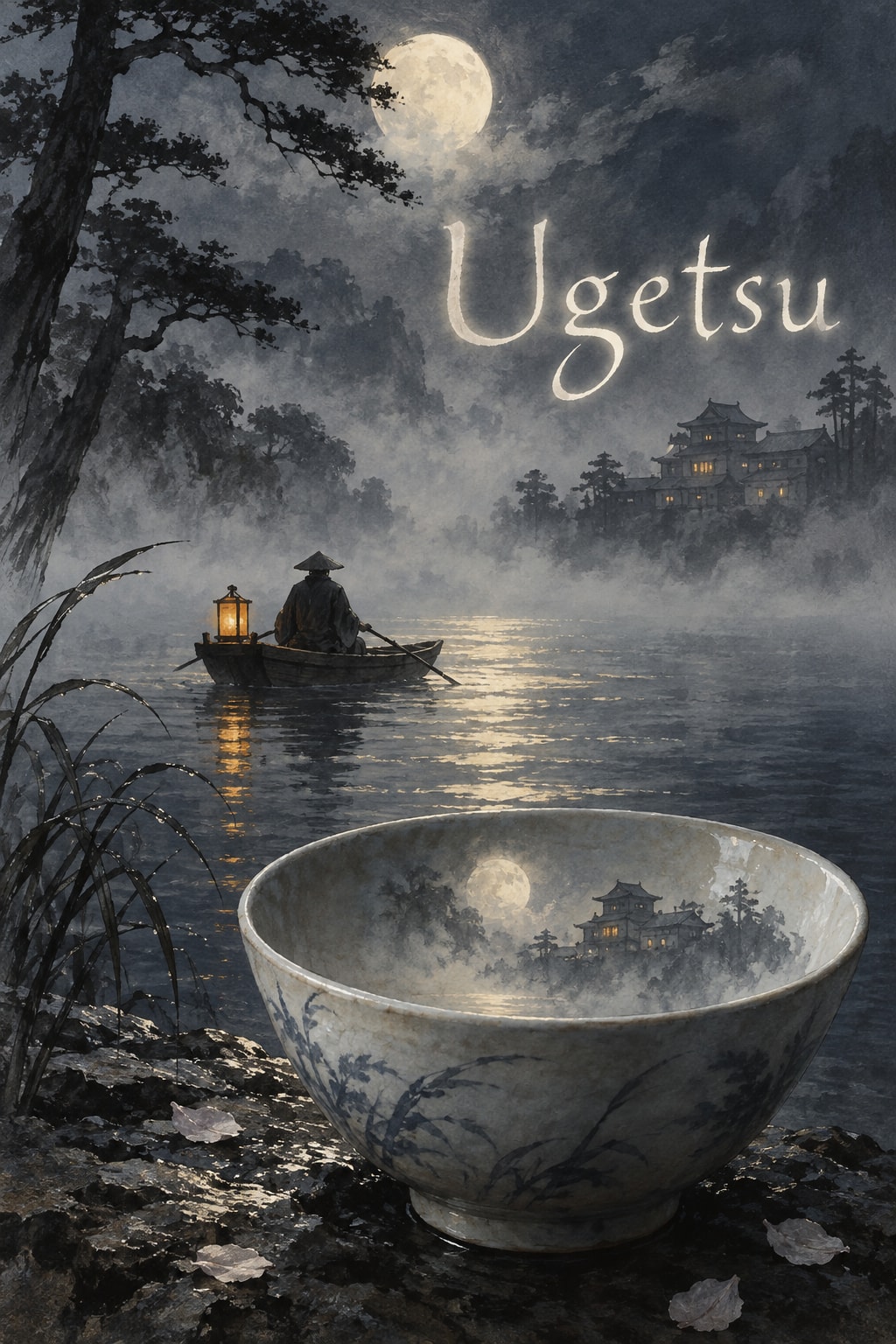
Ugetsu joins a wartime tale of ambition to a ghost story whose beauty never separates from consequence. Two village men pursue wealth and martial status while their wives absorb the danger created by those dreams. Kenji Mizoguchi’s long, mobile takes connect work, travel, violence, seduction, and supernatural revelation without reducing the women to plot lessons. The lake crossing and Lady Wakasa’s world are among cinema’s most haunting passages, yet the film’s moral force returns repeatedly to labor and family. Its Venice recognition helped establish Mizoguchi internationally and influenced generations of filmmakers.
How to ease in
The supernatural enters gradually, so let uncertainty remain rather than trying to identify the exact boundary between reality and ghost story. Track the two men’s ambitions separately and notice how the camera stays attentive to the work and displacement experienced by their wives. A restored print is especially valuable for the mist, water, and long movements.
Heads-up
Open the note ↓ Close the note ↑
The lake crossing feels suspended outside ordinary time, but the film never lets beauty cancel responsibility. Mizoguchi’s camera can glide toward fantasy and still remember the hands that shaped the pottery, tended the home, and paid for another person’s dream.
— Momo

Credits & versions
- Cast
- Machiko Kyo · Masayuki Mori · Kinuyo Tanaka · Eitaro Ozawa
Version map
Sources for the facts
Ways to watch and read
| Action | Search destination |
|---|---|
| Watch | Check availability on JustWatch |
| Rent | Search rentals on Apple TV |
| Read | Search books on Bookshop.org |
U.S. search destinations · Links checked 2026-07-27 · Stock, editions, prices, and availability can change · Disclosure
Where to go next
Want a gentler, shorter, or stranger next film? Ask Momo for something like this →
Momo is on shift. Visit Momo Cinema →