À quoi s’attendre
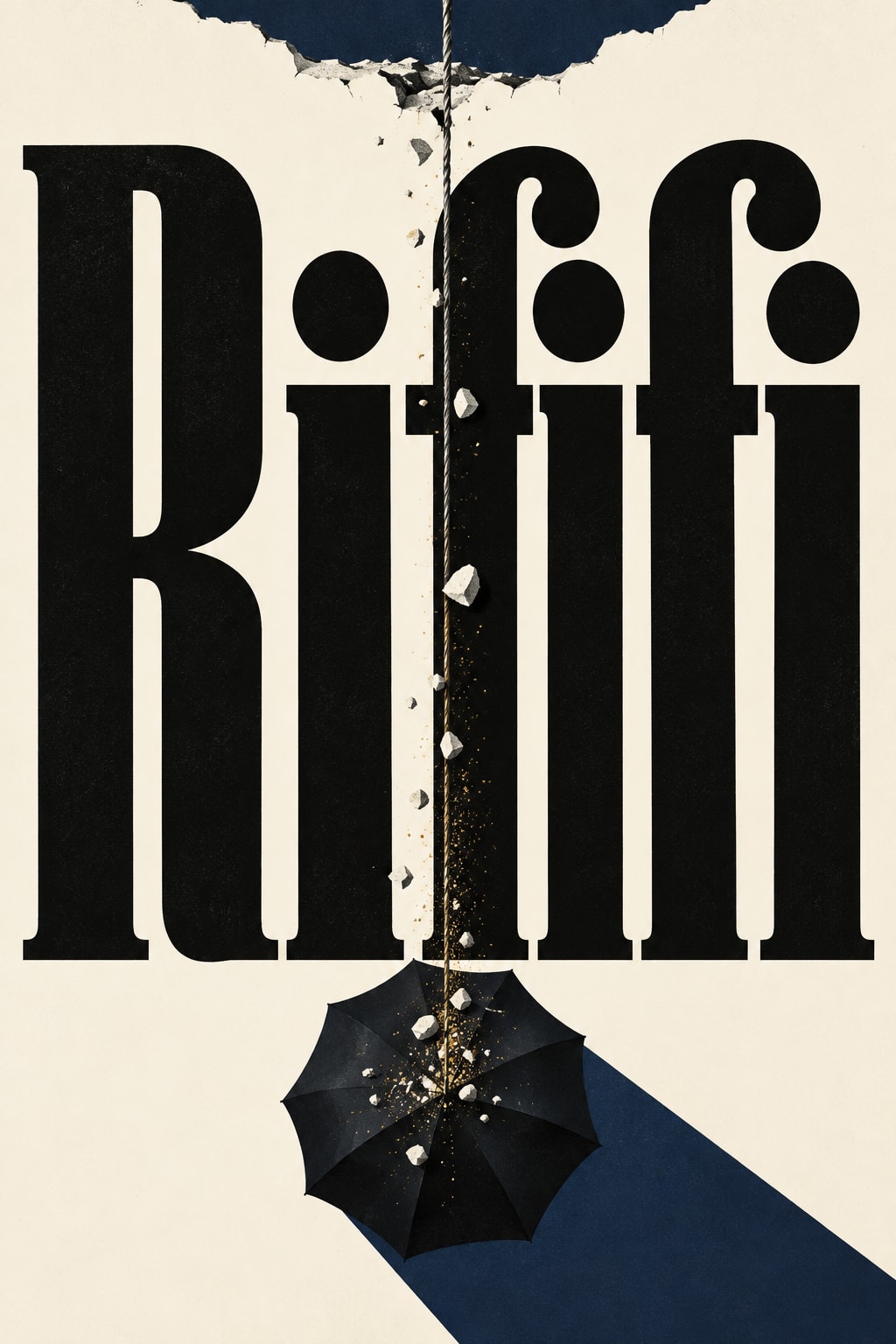
Rififi is celebrated for its long burglary sequence, staged without dialogue or music so that tools, breath, dust, and timing become the soundtrack. Jules Dassin makes the robbery a study in collective skill, but he refuses to romanticise the violent economy surrounding it. The careful plan opens into retaliation, betrayal, and damage that reaches beyond the participants. Shot on Paris streets with hard black-and-white textures, the film helped define the modern heist movie while also exposing the fantasy that professional discipline can isolate crime from consequence.
Comment aborder le film
The first part establishes relationships and the decision to attempt the robbery; the famous silent sequence rewards that preparation. Pay attention to sound before and after it, because the absence of music changes how every small noise registers. The film becomes more violent and morally severe after the heist, by design.
À savoir
Ouvrir la note ↓ Fermer la note ↑
During the heist, the men seem capable of controlling every sound. Afterward, noise and chance return with a vengeance. The sequence is thrilling, but the film’s wisdom lies in knowing that precision inside one room cannot control the human world waiting outside it.
— Momo

Générique et versions
- Distribution
- Jean Servais — Tony le Stéphanois · Carl Möhner — Jo le Suédois · Robert Manuel — Mario Ferrati · Janine Darcey — Louise
- Scénario
- Jules Dassin
- Production
- Henri Bérard · Pierre Cabaud · René Bézard
- Photographie
- Philippe Agostini
Carte des versions
Sources des données
Pour poursuivre la découverte
Envie d’un prochain film plus doux, plus court ou plus étrange ? Demandez à Momo un film dans le même esprit → (S’ouvre en anglais)
Momo est de service. Visiter Momo Cinema → (S’ouvre en anglais)