See Films Differently Film history
What Applause Makes Us Hear
Camera noise, city sounds and overlapping voices offer three ways into Rouben Mamoulian’s Applause—and a question about what an early talkie makes audible.

A microphone does not know which noise belongs in a film. Give it a conversation and a noisy camera in the same room, and you have a problem before the actors deliver their lines.
A surviving production memento makes that problem unusually tangible. In the Library of Congress’s Rouben Mamoulian Papers, the back of a director’s chair carries a drawing from the making of Applause. Archivist Laura Kells identifies the large boxes in it as soundproof booths for cameras and their operators: they kept the machinery’s noise out of the microphones. [1]
That is a useful entrance to an early talkie. Before asking what recorded speech added, ask what recording required filmmakers to keep out.
Mamoulian’s Applause (1929) gives us a specific American production to follow. It is a black-and-white backstage drama starring Helen Morgan. [1] [2] [3] Its interest here is the relationship between what a camera shows and what a soundtrack lets us hear. For an introduction to recorded dialogue, see Monocurator’s talkie guide.
The room contains more than the script
The booth records a practical constraint in this production. A new way of making films brought a new task: keeping the filmmaking itself quiet.
It does change the question, though. A camera records the part of a room in front of its lens. A microphone can pick up something outside that view. Bringing the two together asks filmmakers to decide which parts of the surrounding activity should become part of the scene.
Imagine an ordinary conversation beside a busy street. The words might be perfectly understandable while traffic keeps making its own contribution. Remove that background and the speakers can seem to occupy a different place. Keep it, and the surroundings acquire a presence without requiring another person to explain them.
Take that question into Applause: what can the setting do through sound?
A city can arrive through your ears
In his MoMA screening notes, curator Charles Silver draws attention to the film’s use of the ambient sounds of New York’s streets and subways. He places them among its important innovations. [3]
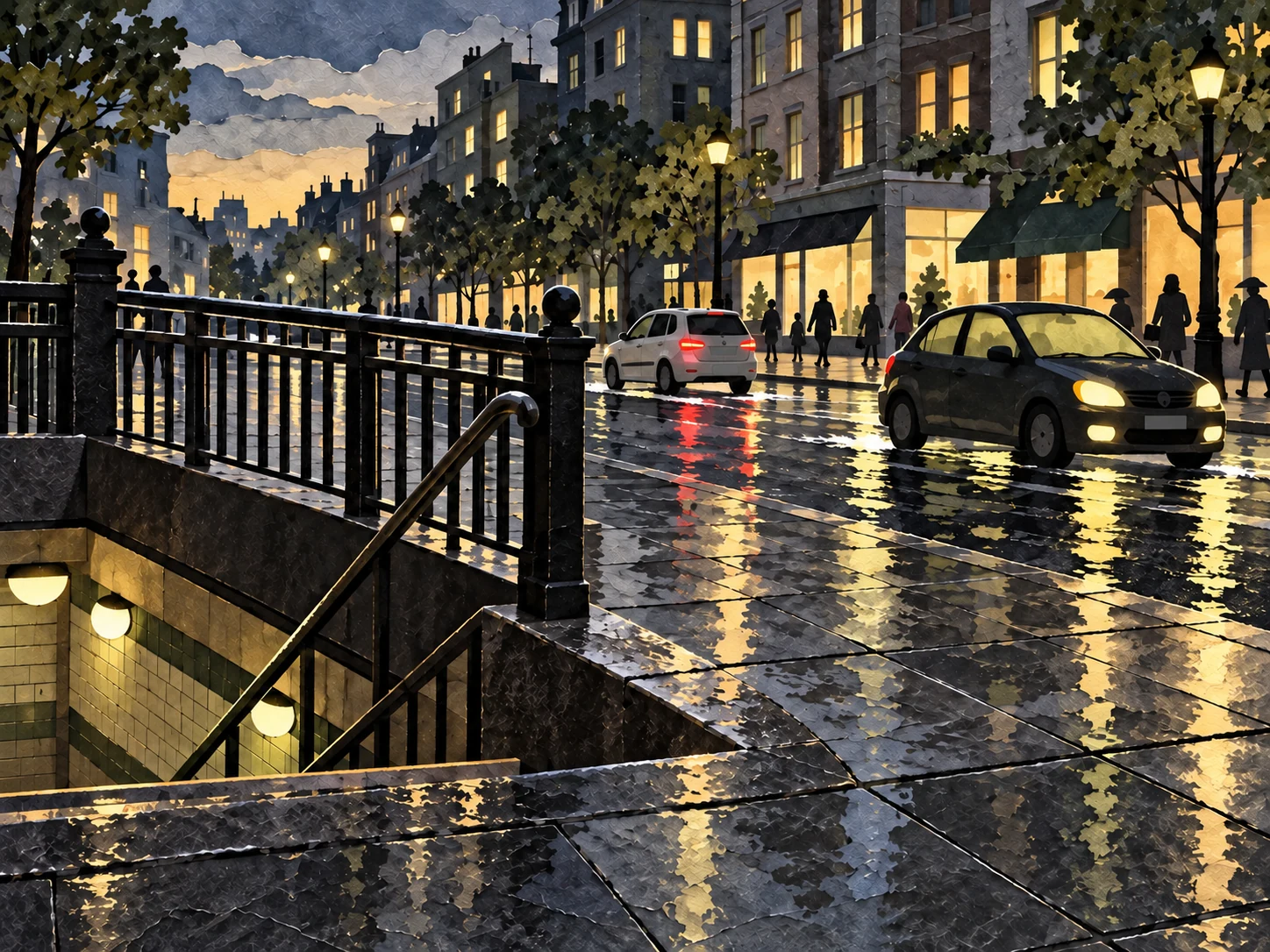
That observation suggests a useful way to listen. Follow the surroundings as well as the person speaking. Does a noise identify a place? Does it compete with someone? Does it continue to matter when your eyes are drawn elsewhere?
Those are viewing questions, not claims that every sound in the film was recorded live at the location. Hearing a city and knowing how its soundtrack was assembled are separate matters. The notes do not provide a recording log for each scene.
An early talkie can therefore ask something more interesting than whether the words stay in step with the lips. Its audible world can have things going on beyond the conversation we are following.
Two voices need not take turns
Ehsan Khoshbakht’s programme essay for Cineteca di Bologna supplies a more intimate example. He describes a mother singing beside her daughter’s bed while the daughter prays, and reads the overlapping voices as a counterpoint between sacred and worldly life. [4]
The combination is worth keeping distinct from a dialogue exchange. One person need not finish before the other begins. Each activity can retain its own purpose while the audience encounters them together.
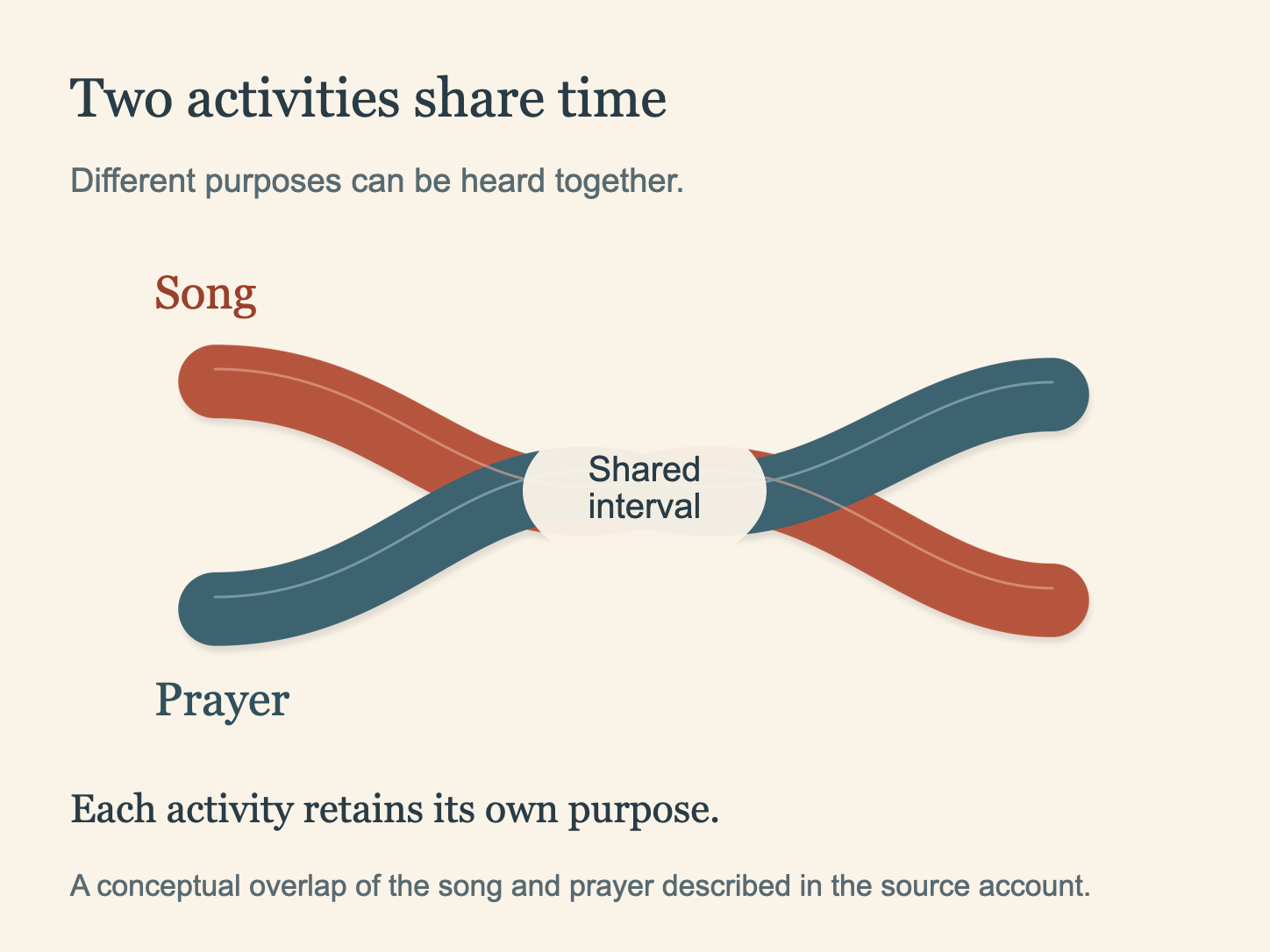
My interest is in that shared interval. A song and a prayer could each be described separately; hearing them coincide gives us another relationship to consider. Ask what the overlap brings together, and what differences it leaves intact.
The interesting detail in Khoshbakht’s account is what the voices are doing. The combination makes their different activities share time. Calling the effect technically inventive leaves that relationship still to be described.
Moving the camera is only the beginning
Technical freedom still leaves an artistic question. Silver recognises the fluidity of Mamoulian’s camerawork, yet doubts the expressive purpose of some of its movement. [3] His criticism is useful precisely because he has already acknowledged the film’s inventiveness.
Getting a camera to move and giving that movement a reason are different achievements. The same distinction applies to sound. Being able to record another layer does not, by itself, explain why we should hear it.
I would keep two questions beside each other: what does the technique allow, and what does this use of it make noticeable? An answer to the first should not do all the work of the second.
Momo is happy to admire an ingenious arrangement. He would also like to know what it has arranged.
The surviving booth drawing, the city sounds Silver discusses and the overlapping voices described by Khoshbakht offer three entrances to Applause. They give us something concrete to look and listen for in one film from the transition to sound.
Start with the microphone’s inconvenient lack of interest in the script. Then listen for the decisions that turn the rest of the room into part of the film.

References & Further Reading
- Laura Kells, ‘Of Note: Lessons from a Director’s Chair’, Unfolding History, Library of Congress, 3 February 2022. Archival-object account, including the production drawing on a chair back in the Rouben Mamoulian Papers, Box VA 5. The equipment identification is attributed to Kells; the original object has not been inspected in person.
- Harvard Film Archive, Applause, screening record, 12 August 2016. Used for director, cast and black-and-white format. This record lists 1930; Library of Congress and MoMA use 1929. Its claims of technical priority are not adopted here.
- Charles Silver, ‘Rouben Mamoulian’s Applause’, Inside/Out, Museum of Modern Art, 6 July 2010. Curator’s screening notes on the city sounds and a critical assessment of camera movement. The scene account and evaluation are Silver’s, not a production log or a consensus verdict.
- Ehsan Khoshbakht, ‘Rouben Mamoulian: A Touch of Desire’, Il Cinema Ritrovato, Cineteca di Bologna, 2023 programme. Used for the described song-and-prayer overlap and the curator’s interpretation. No unlocated interview quotation or technical recording specification is reproduced.
For the next unexpected question, follow the Journal in your RSS reader.
On screen
Films discussed
- Applause (1929) · Rouben Mamoulian
Further reading
Read next in the Journal
Want a recommendation shaped around your evening? Ask Momo what to watch next →