See Films Differently Film history
What Is a Talkie? When Movies Started Talking
A talkie is a film with recorded, synchronised speech. See how The Jazz Singer, Blackmail and Modern Times changed what audiences could hear.
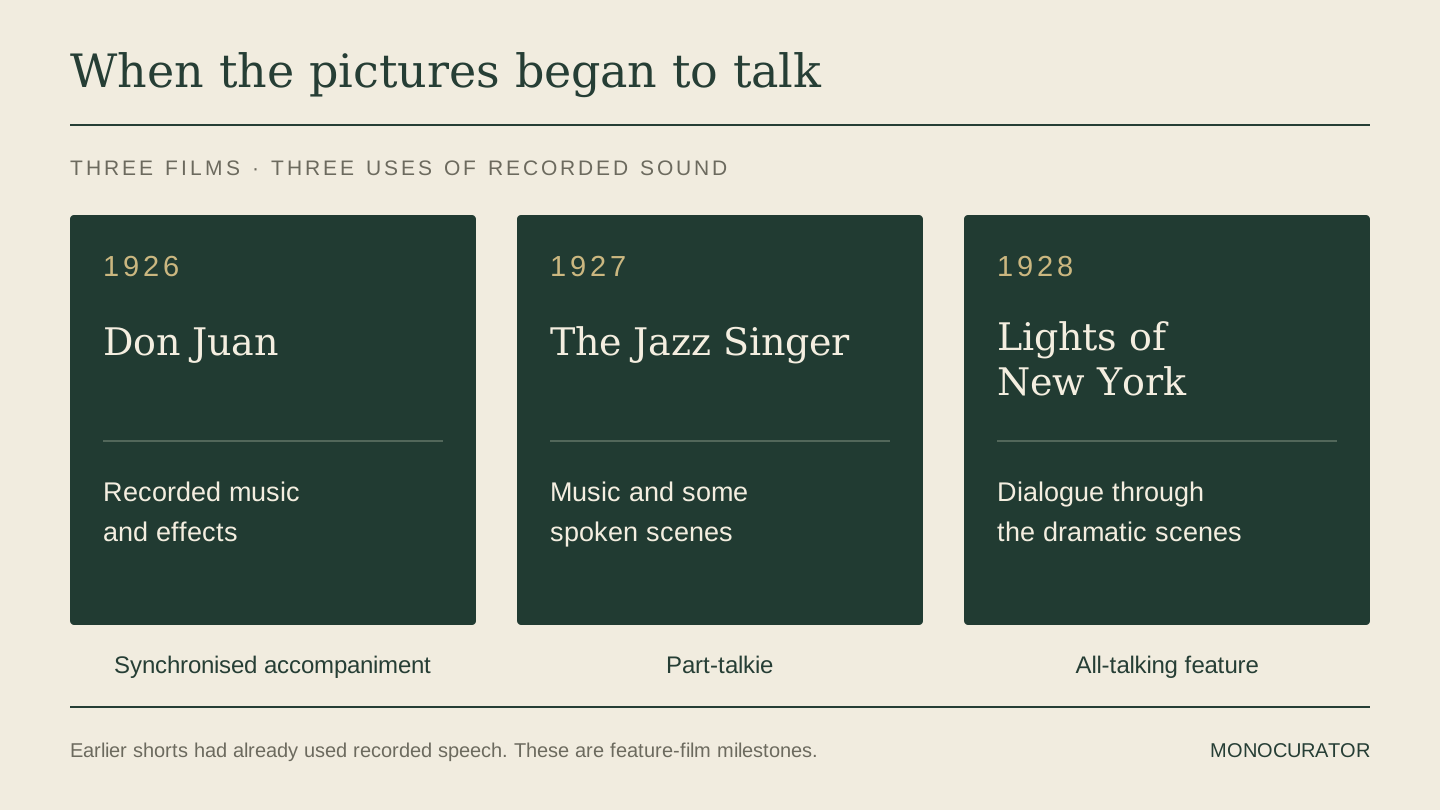
A talkie is a film with recorded speech synchronised to the picture: you hear people speak as their mouths move on screen. The word is short for talking picture and is especially associated with cinema’s transition to sound in the late 1920s. A part-talkie has some spoken passages; an all-talking film carries dialogue through its dramatic scenes. [1] [2]
That sounds like a simple dividing line. Watch a few films from either side, though, and it becomes surprisingly difficult to place. A film can have a recorded orchestra but no spoken conversation. Another can give its star a voice for a handful of scenes. Even after talking pictures became established, Chaplin could make a new film built around pantomime. [1] [6]
Was The Jazz Singer the first talkie?
The Jazz Singer (1927) was the breakthrough feature, rather than the first experiment in talking pictures. Earlier shorts had already brought recorded speech and singing to the screen. Ron Hutchinson, founder of the Vitaphone Project, describes the film as the first successful synchronised feature with talking. Much of it still uses silent-film storytelling, with music under the images; its spoken dialogue occupies only a small part of the running time. [1]
Three consecutive Warner Bros. releases make the distinctions easier to follow:
| Film | What audiences heard | What the distinction means |
|---|---|---|
| Don Juan (1926) | Recorded music and effects | A synchronised soundtrack could accompany a feature without giving its characters recorded dialogue. [1] |
| The Jazz Singer (1927) | Music, singing and some spoken dialogue | A part-talkie: speech appears within a film that largely retains silent storytelling. [1] |
| Lights of New York (1928) | Dialogue throughout the dramatic scenes | The first all-talking feature, according to the AFI Catalog. [2] |
“All-talking” does not mean that somebody speaks in every second. The phrase tells you how the dialogue is presented. A pause, an instrumental passage or even a written title can still belong in an all-talking film. The AFI record for Lights of New York, for example, describes opening cards that establish the story and its setting. [2]
How could the sound stay with the picture?
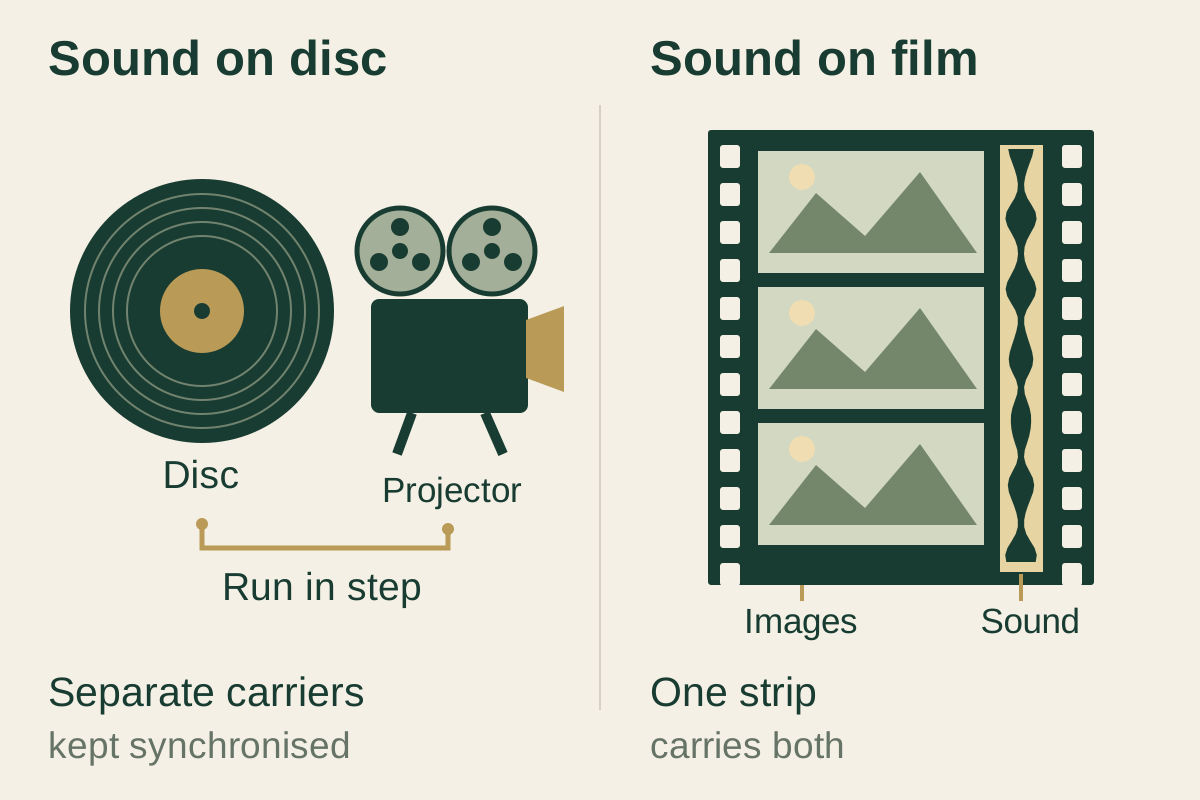
The voice had to arrive at the right moment, every time. One early answer was to keep the recording on a separate disc and run it in step with the film. Vitaphone used large discs, each corresponding to a reel of picture. A film screening therefore depended on the relationship between two moving objects: the film going through the projector and the record turning on its turntable. [3]
The Library of Congress preserves a disc of Roy Smeck’s Pastimes, shown in the programme at Vitaphone’s 1926 premiere. It is a useful object to imagine beside the projector: part of the film’s performance lived somewhere other than the strip of pictures. The same exhibition contrasts this with Phonofilm, which placed sound information on the film itself. [3]
This also explains why a pianist playing under a silent film does not make it a talkie. The cinema has sound, but the dialogue has not become a recorded performance attached to the images. Our guide to how silent films had music follows that older relationship between the screen and the people playing in the room.
Why did some films have both silent and sound versions?
The change happened across productions, cinemas and performers at different moments. A film could even sit on both sides of it. Alfred Hitchcock’s Blackmail (1929) was made in silent and sound versions. The BFI describes a production that began as a silent film before its producers asked for an experiment with a sound finale; Hitchcock went further, reshooting dialogue scenes. [4]
There was a particular difficulty with the voice of its star. Anny Ondra played a London shopkeeper’s daughter, but her accent presented a problem for that role. Joan Barry supplied the lines while Ondra mouthed them. The familiar face and the voice reaching the microphone belonged to different performers. [4]
The film also shows how quickly a voice could do more than supply information. In his own account of Blackmail, Hitchcock discusses a breakfast scene in which one word, knife, presses on the heroine’s attention. Sound gives the audience access to what she cannot stop hearing. His explanation treats it as a way of representing a mental state. [5]
Try holding those two things together: a production finding a practical way to record dialogue, and a director already shaping sound around somebody’s consciousness. The technology and the storytelling developed in the same film.
Why was Chaplin still making “silent” films in the 1930s?
Modern Times (1936) has a recorded soundtrack, including music, effects and occasional voices. Much of its action nevertheless works through the Tramp’s physical performance. Timothy Brock’s account of the score describes how spoken words generally reach us through devices such as loudspeakers and the factory’s screens. [7]
This was a choice Chaplin worked towards. The surviving production material discussed by his biographer David Robinson includes planned dialogue and trial recordings. Chaplin abandoned the attempt to make ordinary conversation part of the Tramp’s performance, while continuing to experiment with effects. [6]
Then the Tramp has to sing. His written prompt flies away, and he performs in an invented mixture of sounds. The audience hears his voice without needing a shared language to follow the routine. Robinson identifies this as the moment when the character’s voice was heard directly on screen. [6]
City Lights (1931) had already paired Chaplin’s pantomime with his own recorded score. Modern Times takes that combination somewhere stranger: machines can deliver intelligible speech, while its central human figure communicates through movement and a song whose words refuse to settle into a language. [7]
For a first encounter with the transition, Modern Times is an inviting place to start. Follow who gets to speak, where each voice comes from and how much the Tramp can say before he opens his mouth.
Sources
Sources checked on 6 September 2026.
- Ron Hutchinson: The Jazz Singer, National Film Registry essay hosted by the Library of Congress, pp. 1–2.
- AFI Catalog: Lights of New York, history notes on the all-talking feature and its opening cards.
- Library of Congress: Motion Pictures — Bob Hope and American Variety, Vitaphone disc and Phonofilm material.
- BFI Player: Blackmail, production and voice-performance notes.
- Alfred Hitchcock: My Own Methods, Sight and Sound, Summer 1937; discussion of the knife scene.
- David Robinson: Filming Modern Times, especially The Challenge of Sound.
- Timothy Brock: The Music of Modern Times, Charlie Chaplin official website.
On screen
Films discussed
- Modern Times (1936) · Charles Chaplin
Continue exploring on Monocurator
Want a recommendation shaped around your evening? Ask Momo what to watch next →