What to expect
City Lights arrived after talking pictures had transformed Hollywood, yet Chaplin retained silent storytelling and used synchronized sound as selective comic punctuation. The result is both formally defiant and emotionally direct. The Tramp’s devotion to a blind flower seller moves through mistaken identity, unstable friendship, street comedy, and a boxing match, but the film never treats feeling as decoration around the gags. Its final encounter is celebrated because recognition passes through gesture, touch, and performance rather than explanation. Few films demonstrate more clearly how visual comedy can become a language of moral attention.
How to ease in
You do not need to know Chaplin’s earlier films. Follow the recurring exchanges of money and mistaken status, which connect the comedy to the romance. The soundtrack is synchronized but there is no conventional dialogue; allow the physical performances and close-ups to carry information that a later film might state aloud.
Heads-up
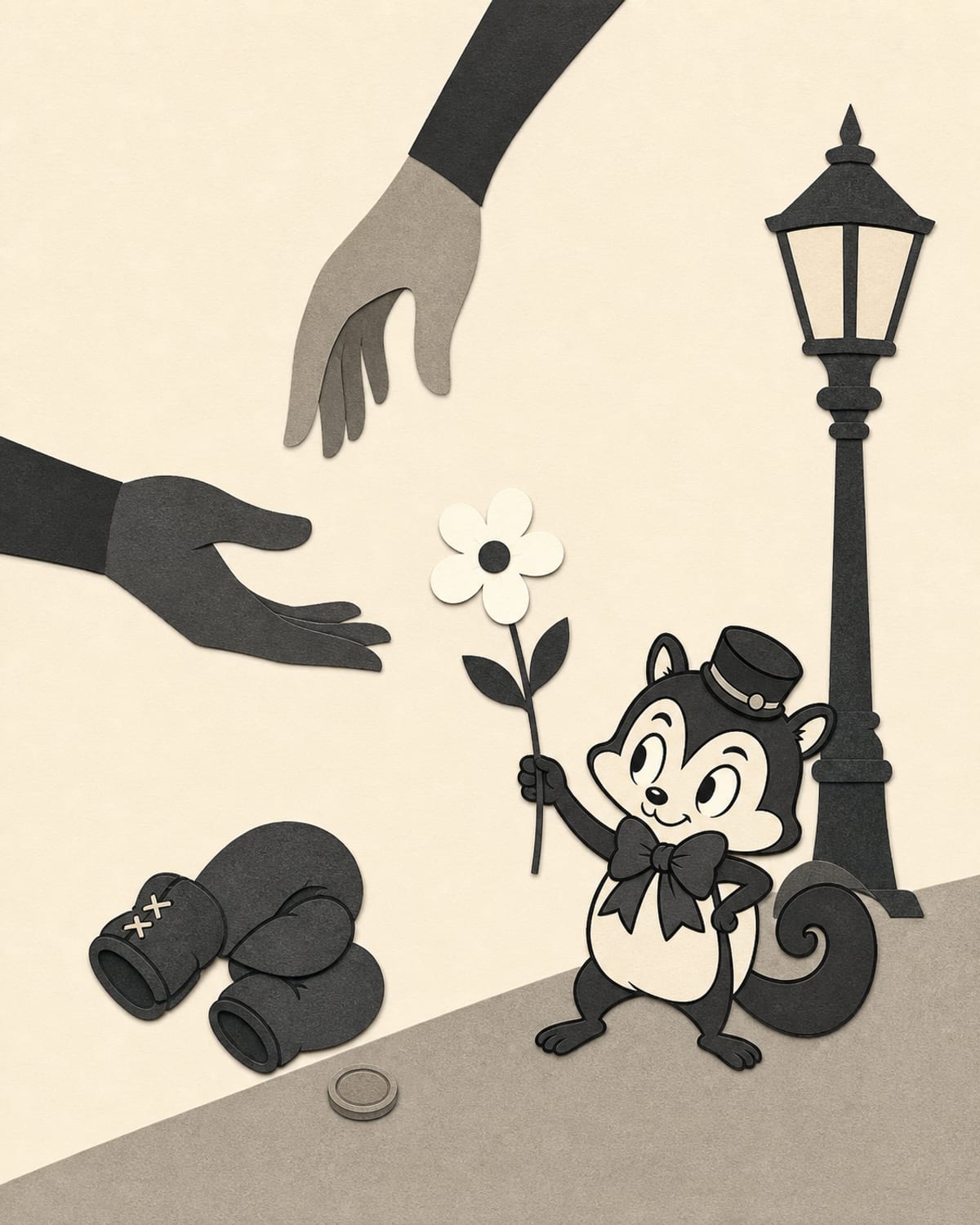
A blind flower seller and a penniless tramp meet beyond the city’s noisy surfaces.
The ending is powerful because it does not ask whether the Tramp can maintain an illusion. It asks whether two people can remain present after the illusion disappears.
Open the note ↓
The ending is powerful because it does not ask whether the Tramp can maintain an illusion. It asks whether two people can remain present after the illusion disappears. Chaplin lets a hand discover what the eyes could not, and the whole film becomes newly visible.
— Momo

Credits & versions
- Cast
- Charlie Chaplin — A Tramp · Virginia Cherrill — A Blind Girl · Florence Lee — Her Grandmother · Harry Myers — An Eccentric Millionaire
- Screenplay
- Charlie Chaplin
- Production
- Charles Chaplin Productions
- Cinematography
- Rollie Totheroh · Gordon Pollock
Version map
Ways to watch and read
| Action | Search destination |
|---|---|
| Watch | Check availability on JustWatch |
| Rent | Search rentals on Apple TV |
| Read | Search books on Bookshop.org |
U.S. search destinations · Links checked 2026-07-27 · Stock, editions, prices, and availability can change · Disclosure
Where to go next
Want a gentler, shorter, or stranger next film?
Ask Momo for something like this →
Momo is on shift. Visit Momo Cinema →