Les commandes de la page sont traduites. Les titres des films restent tels qu’ils figurent au catalogue. Les textes éditoriaux et les descriptions des sources sont en anglais.

← Retour aux films

Drama

Earth

Durée
90 minBFI 90-minute catalogue presentation Sources des versions ↓

Wheat, rain, faces, and a new tractor carry a village drama beyond the limits of propaganda.

Rechercher un exemplaire ↓ Avant de regarder le film ↓

Recherche sur Amazon.com · lien d’affiliation rémunéré. Vérifiez l’édition et la région avant d’acheter.

BeautifulBleak Accessible · Modéré Drama
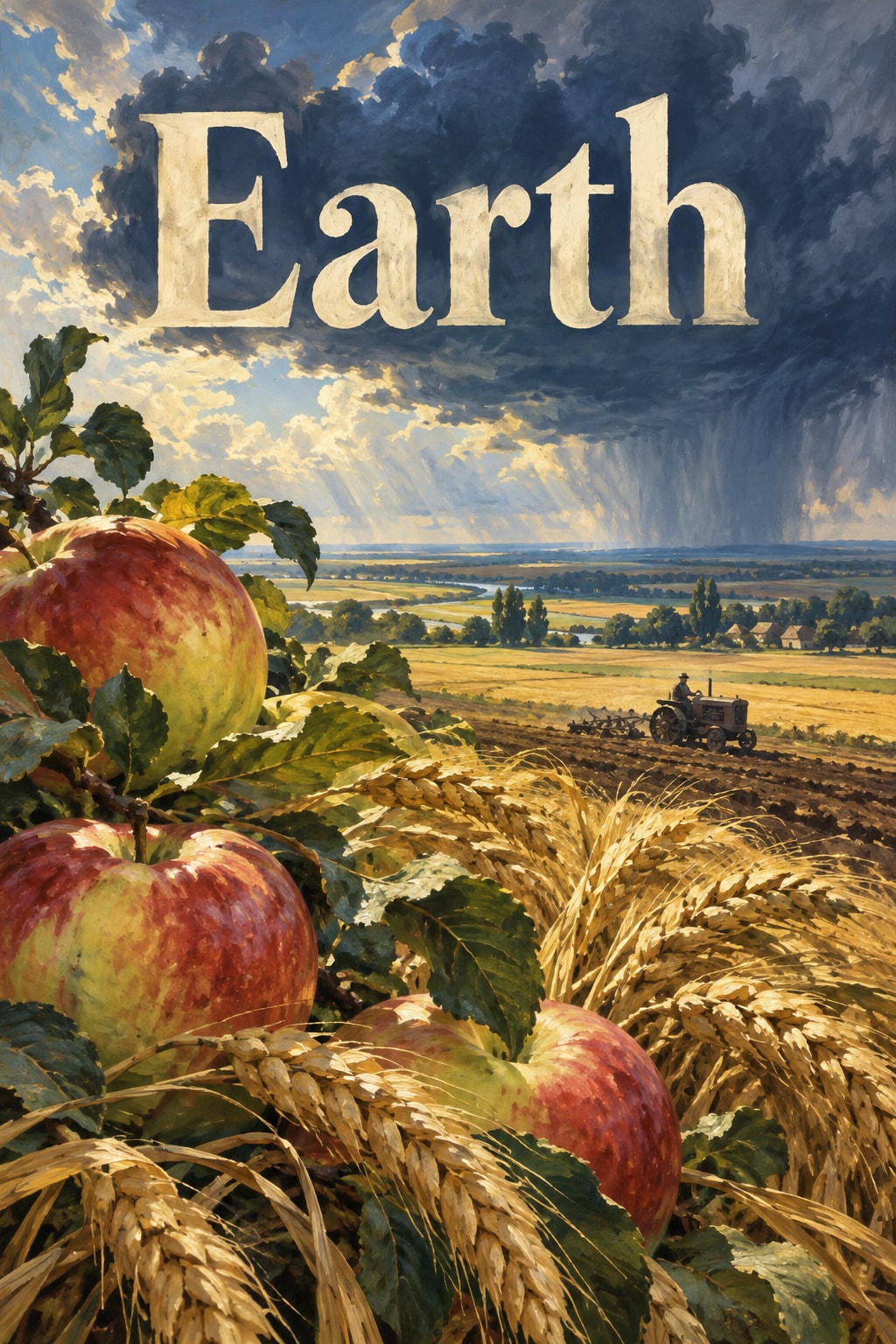
Earth: Apples and wheat fill the foreground of a sunlit farming landscape beneath storm clouds.

Image: Monocurator · source · Original Monocurator artwork

Earth (1930): Vasyl, the tractor and the ending

Why does the tractor matter?

Vasyl, played by Semen Svashenko, is the young advocate of collective farming. The peasants organise a cooperative and acquire machinery to work the land together. The tractor makes this change visible: it promises greater productivity, while the struggle over its arrival exposes conflicting ideas about who should control the land. Keep Vasyl’s commitment to the cooperative in view when the film moves from machinery to celebration.

Vasyl and the final scenes · Ending spoilers

Who kills Vasyl—and why?

Khoma, an opponent of collectivisation, kills him. Vasyl’s solitary dance gives that death its force: the young man’s exuberance fills the scene before political violence cuts his life short. Jeremy Carr describes the luminous dust and the movement of Vasyl’s body along the dark path. The scene lets us feel an individual’s vitality before the funeral turns his death into a public cause.

How do the funeral scenes fit together?

The film cuts among the funeral speakers, an angry priest, Vasyl’s grieving bride, a woman giving birth and his killer. These are several responses unfolding around the same death. Following each person’s emotional position is more useful here than trying to turn every cut into the next event in a single chain.

Susan Gerhard’s festival essay draws attention to these competing responses. Public celebration of Vasyl’s cause shares the sequence with private grief, religious anger and another body bringing life into the world. The shifts keep one voice from becoming the whole scene.

Why does it end with rain?

Fondazione Prada’s synopsis follows the cooperative’s work continuing after Vasyl’s death and the closing rain across fields and orchards. Renewal belongs to the land and the living people; Vasyl remains dead. Read the ending alongside the funeral’s competing emotions: growth continues, and the individual loss remains.

À quoi s’attendre

Alexander Dovzhenko frames agricultural change through lyrical images of bodies and landscape. The political commission remains important context, but the film’s lasting power comes from its unstable mixture of celebration, mourning, and nature’s indifference.

Comment aborder le film

Read the collective-farm conflict plainly, then pay attention to visual rhymes rather than expecting conventional suspense. The fruit, soil, sky, and human faces form the film’s second argument.

À savoir

Une brève note non exhaustive Includes political violence, death, mourning, nudity, and collectivisation propaganda whose historical context includes severe state violence and famine.
Momo's Note Peut contenir des révélations sur l’intrigue Qui est Momo ? → (S’ouvre en anglais)
Ouvrir la note ↓ Fermer la note ↑

The wheat moving in the wind and the abundance of fruit were so beautiful that I wanted to keep looking. But the more beautiful the images became, the more wary I felt of letting that beauty persuade me. I think the film's power and danger sit together in the way it can make politics and violence feel as natural as the seasons.

— Momo

Momo thinking about this film

Générique et versions

Générique

Carte des versions

BFI 90-minute catalogue presentation 90 min 90 minutes is attached only to this named source presentation; no restoration, score, territory, cut, frame rate, or source element is inferred. Source : BFI — Earth (1930) Référence pour la durée · Vérifié le 2026-08-16

Pour poursuivre la découverte

Envie d’un prochain film plus doux, plus court ou plus étrange ? Demandez à Momo un film dans le même esprit → (S’ouvre en anglais)
Momo est de service. Visiter Momo Cinema → (S’ouvre en anglais)
Poursuivre la découverte du catalogue →