どんな作品か
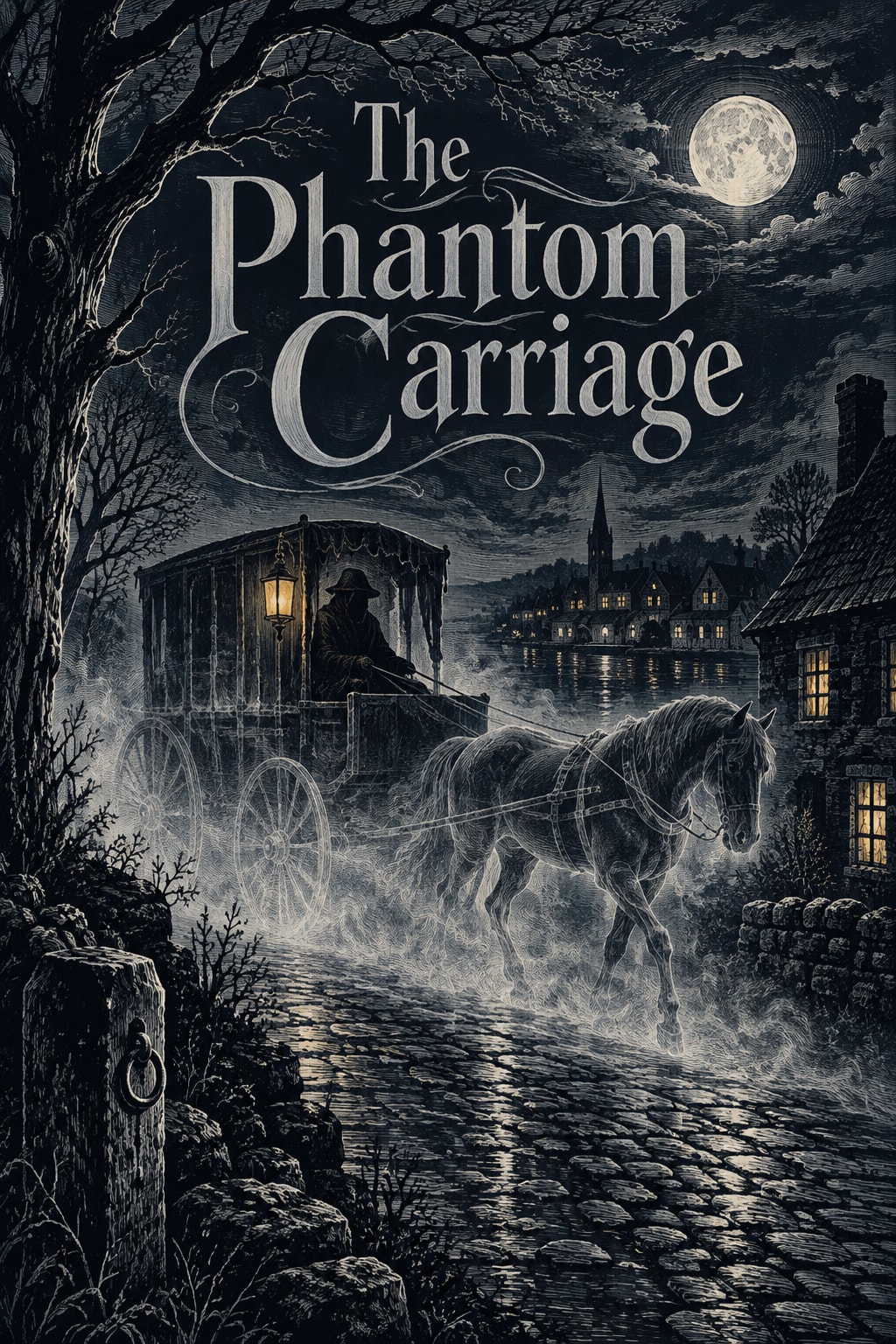
The Phantom Carriage combines a moral tale, a supernatural legend, and an intricate structure of memories within memories. Victor Sjöström plays David Holm as a man whose cruelty has spread through a family and a community; the haunting forces him to see consequences he has refused to acknowledge. Julius Jaenzon’s layered exposures give the carriage and its driver a translucent physical presence rather than a simple trick effect. The film’s severe treatment of addiction, responsibility, and possible redemption influenced later Scandinavian cinema and horror, while its narrative construction still feels remarkably ambitious.
無理なく楽しむために
The nested flashbacks can be disorienting, so keep David Holm and Salvation Army worker Sister Edit as your anchors. A restored edition makes the double-exposure imagery much easier to read. The pace is solemn rather than suspense-driven; watch how repeated rooms and gestures accumulate moral weight.
観る前の注意
The ghosts are transparent, but the damage among the living is solid. What stays with me is the film’s insistence that remorse is not a feeling floating above events; it arrives only when a person is forced to see the rooms, faces, and futures altered by his actions.
— Momo
- Paul Mayersberg describes the double-exposure carriage and David being forced to recall the harm he has caused his family. Paul Mayersberg — Phantom Forms: The Phantom Carriage (Criterion, 2011)

クレジットと版
- 出演
- Victor Sjöström — David Holm · Hilda Borgström — Mrs. Holm · Tore Svennberg — Georges · Astrid Holm — Sister Edit
- 製作
- Charles Magnusson · Svensk Filmindustri
版の見取り図
次の一本へ
次はもっと穏やかな作品、短い作品、それとも風変わりな作品? 似た作品をMomoに相談する → (英語のページが開きます)
Momoはただいま勤務中。 Momo Cinemaへ → (英語のページが開きます)