どんな作品か
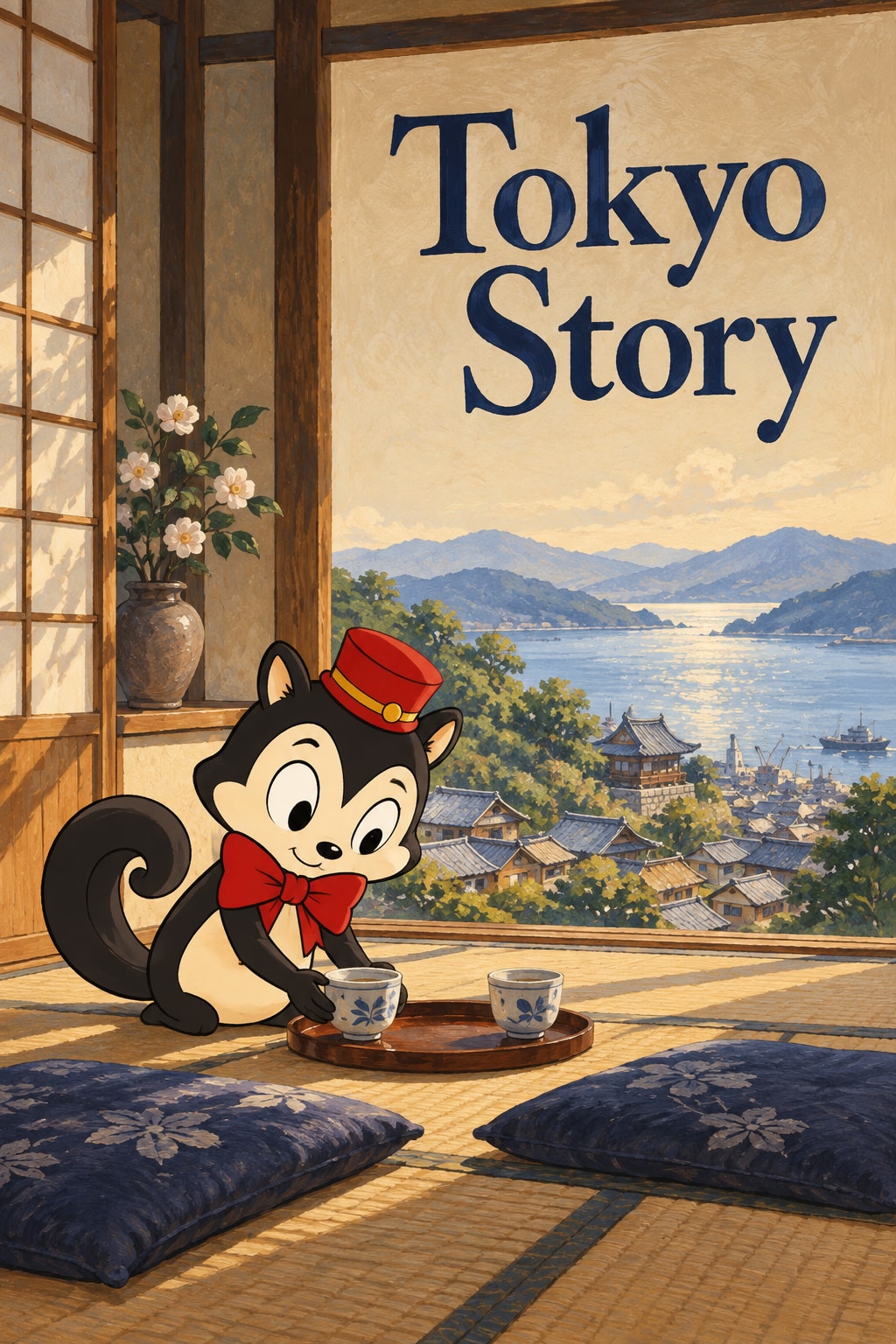
Tokyo Story observes a family visit through everyday rooms, polite conversation, and pauses that say more than open conflict. Yasujirō Ozu's calm, low viewpoint invites attention to small gestures and changing distances between generations. The restraint never makes the emotions smaller; it gives them room to arrive gradually. The film endures because its questions about time, duty, and care feel ordinary in the deepest sense.
無理なく楽しむために
The family relationships matter more than plot, so take a moment to place the elderly parents, their adult children, and their widowed daughter-in-law. Ozu often cuts away before a dramatic arrival or departure and returns to the room afterward. Do not mistake those omissions for missing scenes. The film asks us to notice the emotional weather left behind.
観る前の注意
ノートを開く ↓ ノートを閉じる ↑
Ozu gives empty rooms the dignity of a close-up. A cushion, a corridor, or a view beyond the rooftops can hold what the family is too polite or tired to say. I find the film compassionate because it does not need a villain. Time rearranges everyone's duties, and kindness appears in imperfect, easily missed portions.
— Momo

クレジットと版
- 脚本
- Kogo Noda · Yasujirō Ozu
- 製作
- Shochiku
版の見取り図
版を比較: Tokyo Story: Which Version Should You Watch First?
観る・読むための案内
| Action | Search destination |
|---|---|
| Watch | Check availability on JustWatch |
| Rent | Search rentals on Apple TV |
| Read | Search books on Bookshop.org |
U.S. search destinations · Links checked 2026-07-27 · Stock, editions, prices, and availability can change · Disclosure
次の一本へ
次はもっと穏やかな作品、短い作品、それとも風変わりな作品? 似た作品をMomoに相談する → (英語のページが開きます)
Momoはただいま勤務中。 Momo Cinemaへ → (英語のページが開きます)